
In the 1930s, just as official Nazi Germany policies were marginalizing and forcibly displacing Jews, many countries around the world were adopting harsher policies against immigration. By the late 1930s, the combination increasingly drew refugees to distant Brazil. Brazil, too, had repressive policies towards prospective immigrants, which only worsened during this period, partly as a result of antisemitic prejudices. Nevertheless, it received the second-highest number of German-speaking Jewish refugees in South America, after Argentina. By 1945, around a quarter of the 100,000 Jewish refugees in South America had gone to Brazil. The pre-1933 Jewish communities in Brazil were primarily Sephardic or Eastern European, but this new wave of arrivals led to the formation of a German-speaking Jewish diaspora. Jews from German-speaking regions of Europe predominantly fled to and settled in the southern states of São Paulo, Rio de Janeiro, and Rio Grande do Sul. The metropolitan centers of southern Brazil offered job opportunities and networks of mutual aid that helped the new arrivals find their bearings and establish themselves. Jewish refugees established businesses and commercial networks, were hired by the new universities in São Paulo and Rio de Janeiro, or attempted to gain a foothold in rural outposts known at the time as ‘colonies.’
Many immigrants from backgrounds of relative privilege experienced immigration to Brazil as a drop in their social status. Political associations, social clubs, and Jewish religious communities functioned as important sites of togetherness and assistance. For these exiles, newly founded German-Jewish communities and congregations in São Paulo, Rio de Janeiro, and Porto Alegre quickly became new homes away from home. Very few of them were able to learn Portuguese before their forced displacement, and these congregations doubled as communities of people with a shared language and similar experiences. Particularly for the older generations, the German language remained an important marker of personal identity – despite their experiences of persecution in Nazi Germany. At the same time, newcomers to Brazil were shaped by a lasting engagement with the Portuguese language and Brazilian culture and history, and indeed, most German-speaking Jewish refugees decided to remain in the country after 1945.
Jewish immigrants played marginal roles for most of Brazil’s colonial and migration history. The first modern mutual aid networks, predominantly organized by Jews from Eastern Europe, only emerged in the 1920s and 1930s. Among them was the Sociedade Israelita de Beneficência e Proteção ao Imigrantes (EZRA), which, from the 1920s onwards, provided assistance to Jewish immigrants, mainly in the ports of Rio de Janeiro and Santos.
Although the earliest groups of Jewish settlers in Brazil date back to the sixteenth century, a larger Jewish community only became established from the late nineteenth century onwards. That period saw a relatively large group of Eastern European Jewish immigrants from territories of the former Russian Empire, where they had suffered from poverty and pogroms, totaling around 30,000 Jews by 1929. The activities of the Jewish Colonization Association (JCA), founded in 1891 by the Jewish philanthropist Baron Maurice de Hirsch (1831–1896), cultivated several colonies of Jewish settlers, such as Philipson (1904) and Quatro Irmãos (1911–12) in the Brazilian state of Rio Grande do Sul. In addition, around twenty-five Jewish schools had been established by 1930. Several Brazilian cities developed distinct Jewish neighborhoods, such as Mooca and Bom Retiro in São Paulo, often clustered around such schools.
Alongside these predominantly Eastern European communities with their language, religious customs, and traditions, Brazil also had a smaller Sephardi community descended from settlers from the sixteenth and seventeenth centuries. Sephardi Jews spoke their own language, had their religious customs and musical traditions with roots in Spain, where their ancestors had lived before their expulsion in the fifteenth century. The numerically larger group of Jews from Eastern Europe did not migrate to Brazil until the nineteenth century and developed their own communal structures, supported by individual congregations in São Paulo, Rio de Janeiro, and other Brazilian cities. These included Yiddish-language newspapers such as Di Menshheyt (Porto Alegre) and Dos Idische Vokhnblatt (Rio de Janeiro). The immigration of East European Jews formed part of broader migration movements to Brazil, primarily from Italy, Spain, and Portugal, but also from Germany, Poland, Japan, Syria, and Lebanon. Thus, there was a historical precedent for hopes in the mid-1930s that Brazil would admit a larger number of German Jews and enable the development of a local German-Jewish diaspora.
The consequences of the global Great Depression of 1929, followed in 1930 by the collapse of the coffee market, caused a profound economic and socio-political crisis in Brazil. Power shifted from the previously dominant agricultural elite to the military and the network surrounding President Getúlio Vargas (1883–1954). As a result, the right-wing populist nationalist leadership under Vargas also shifted its approach to immigration and redefined notions of national identity along racialized and ‘ethnic’ lines, adopting more repressive attitudes towards immigrants. In light of the influx of Jewish refugees from Nazi Germany and other European countries, the Vargas government mobilized resentments rooted in both Catholic religious biases and racist ideology. Depending on the circumstances, Jews were defamed as ‘cosmopolitans,’ ‘liberals,’ ‘Bolsheviks,’ ‘internationalists,’ or ‘radicals.’
As a consequence of this radicalization, Brazil’s new constitution of 1934 introduced immigration quotas limiting the admission of newcomers labeled ‘African,’ ‘Asian,’ or ‘Semitic.’ At the same time, it favored groups stylized as ‘farmers’ and ‘white,’ categories that excluded European Jews as such. Jewish refugees were thus subjected to a hostile migration regime and feared the decisions of a given embassy or consulate.
The Jewish community of Brazil, which had around 42,000 official members in 1934, was deeply concerned about changing social and political discourses, particularly in the realm of migration. It therefore established networks of mutual aid, both out of a religiously grounded sense of solidarity and to counter antisemitic stereotypes. In 1931, the Mainz-born gynecologist Luís (Ludwig) Lorch (1894–1969), who had immigrated to Brazil in 1927, and his wife Luíza Klabin Lorch (1901–1975), from a Lithuanian-Jewish family in São Paulo, promoted the founding of a chapter of B’nai B’rith. Their lodge was named after Moses Mendelssohn, the celebrated Jewish Enlightenment philosopher from Germany. Luis and Luíza Lorch were also among the founders of the aid committee Comissão de Assistência aos Refugiados Israelitas da Alemanha (CARIA) in São Paulo in 1933. German Jews continued arriving in Brazil despite restrictive immigration laws. One beneficiary of these new networks was Ahron Arnold Kohn (1883–1955), who reached Brazil as a refugee in 1939.
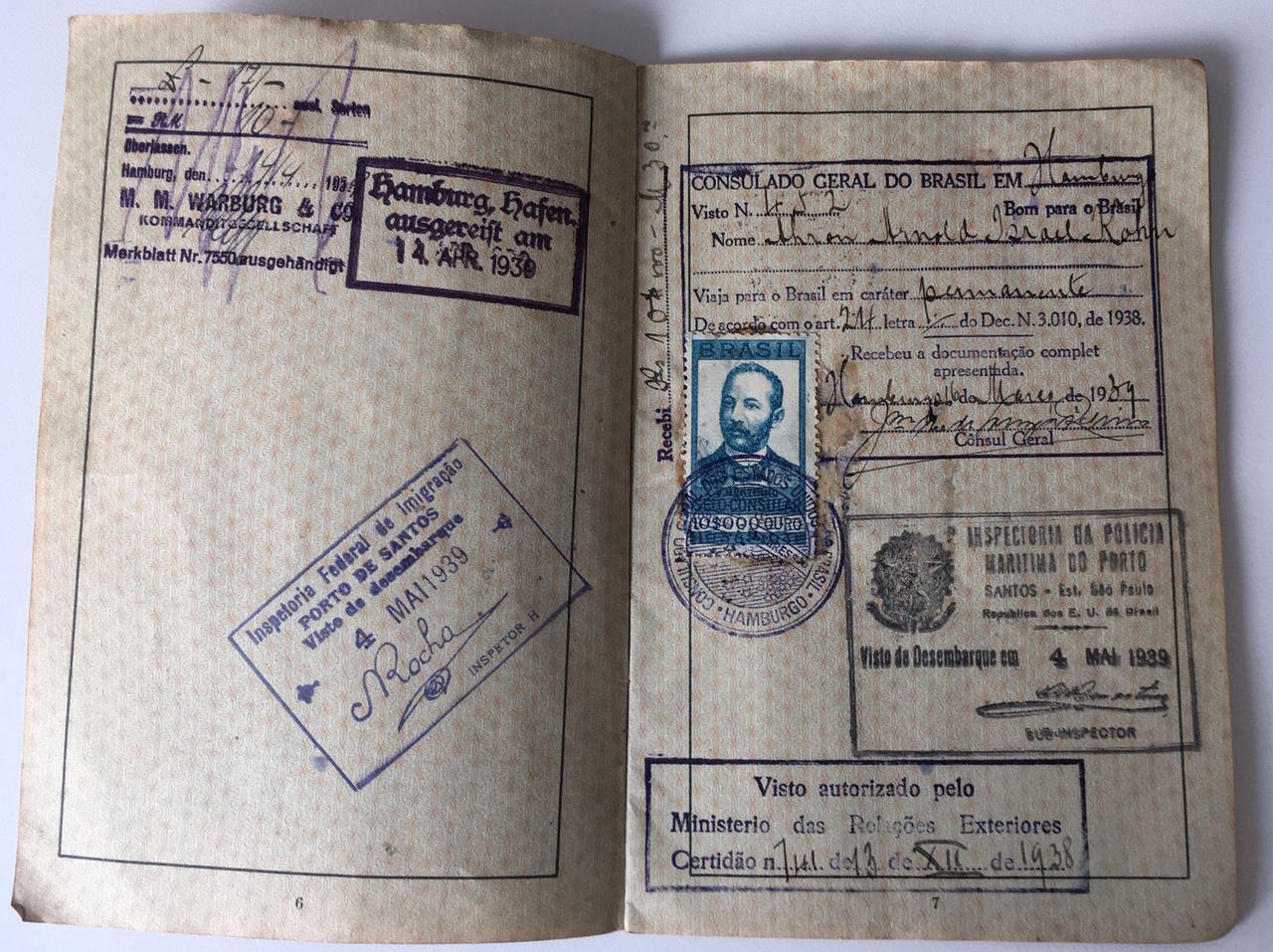
Fig. 1: Brazilian entry visa in the passport of the businessman Ahron Arnold ‘Israel’ Kohn (1883–1955), issued at the Brazilian Consulate General in Hamburg, 16 March 1939; Claudio and Vivian Silberberg family archive, São Paulo, Brazil.
Alongside these networks of mutual aid, the newly founded Jewish religious communities became important points of contact and sites of communal life for many German-speaking Jews. In October 1936, the founding declaration of the Congregação Israelita Paulista (CIP) took place in São Paulo. It was actively supported by many German-speaking émigré families, a few Jewish families from Italy, and even the former rabbi of Heidelberg, Fritz (Frederico) Pinkuss (1905–1994). Together with his wife Lotte Selma Pinkuss, née Sternfels (1912–2003), Pinkuss had fled to Brazil in 1936. He later shaped Jewish religious life in São Paulo as the city’s chief rabbi. That same year, the Sociedade Israelita Brasileira de Cultura e Beneficência (SIBRA) was founded in Porto Alegre in the state of Rio Grande do Sul. This was followed in 1942 by the founding of the Associação Religiosa Israelita (ARI) in Rio de Janeiro. The new congregation’s rabbi was Heinrich (Henrique) Lemle (1909–1978), formerly a youth rabbi in Frankfurt am Main. With help from the World Union of Progressive Judaism, he had managed to flee to Brazil via the UK.
Many German-speaking Jewish families migrated to the metropolitan centers of São Paulo, Rio de Janeiro, and Porto Alegre, where they established their own organizations alongside the existing Sephardic and Eastern European Jewish institutions. These included the three Jewish congregations mentioned above – CIP, SIBRA, and ARI – as well as a variety of cultural and sports clubs and political or social service organizations.
A smaller number of Jewish immigrants signed on to colonial settlement projects such as the community of Rolândia, established in 1932 in the state of Paraná by the Berlin-based Gesellschaft für Wirtschaftliche Studien under the guidance of Oswald Nixdorf (1902–1981), a specialist in tropical agriculture from Bremen. The involvement of the project’s patron Erich Koch-Weser (1875–1944), who was later persecuted based on his Jewish ancestry and fled to Brazil, also attracted German Jews. In 1935, the Jewish Colonization Association (JCA) attempted to establish another agricultural community for Jewish settlers in Resende, a municipality in the state of Rio de Janeiro, thereby creating additional opportunities for newcomers under Brazil’s restrictive immigration laws. The project failed, however, due to increasingly restrictive national anti-immigration policies. Hence, between 1935 and 1937, only around 8,000 German Jews were able to immigrate legally to Brazil, with an unknown number assumed to have overstayed tourist or transit visas.
The potency of certain parts of Nazi ideology also spread to Brazil, where an international wing of the Nazi Party was founded in 1931. The following year, a like-minded Brazilian movement formed, the Ação Integralista Brasileira (AIB), or the Integralists, drawing on nationalist, fascist, and Nazi ideas. Antisemitic stereotypes and prejudices played key roles in these movements and were openly disseminated. For example, the Integralist theorist Gustavo Barroso (1888–1959), through his books A Sinagoga Paulista (A Synagogue in São Paulo, 1937), Brasil, Colônia de Banqueiros (Brazil, a Colony of Bankers, 1934), or through an early translation of the so-called Protocols of the Elders of Zion (1903).
Thus, antisemitic prejudices found ever more inroads into the Brazilian political discourse and were ultimately propagated by the government. With the number of refugees from Nazi Germany and Europe reaching crisis proportions, the Brazilian government under Vargas issued a secret circular on 7 June 1936 ordering all Brazilian embassies and consulates to deny Jews any visas to enter the country. With the proclamation of the ‘Estado Novo’ (the ‘New State’) on 10 November 1937, Brazil was also subscribing to notions of authoritarianism and increasingly nationalistic policies. In September 1938, the immigration laws of 1937 were revised by another circular, which further restricted entry to the country along nationalist and xenophobic lines. Meanwhile, the state also granted exemptions for wealthy individuals and issued special regulations for the fields of art, science, and business. Thus, politically fueled fears of being ‘overrun by foreigners’ and excessive economic competition were accompanied by hopes for the immigration of specialized professionals and foreign capital investments, both of which the Brazilian government associated with Jewish immigrants. Hence, in the 1930s and 1940s, the potency of stereotypes about Jews, whether overtly disparaging or superficially philosemitic, led to contradictory political decisions with a strong impact on the emergence of a new Jewish diaspora in Brazil. For Brazil’s Jewish population, including the new German-speaking Jewish immigrants, this meant an ongoing confrontation with antisemitism in socio-political discourse.
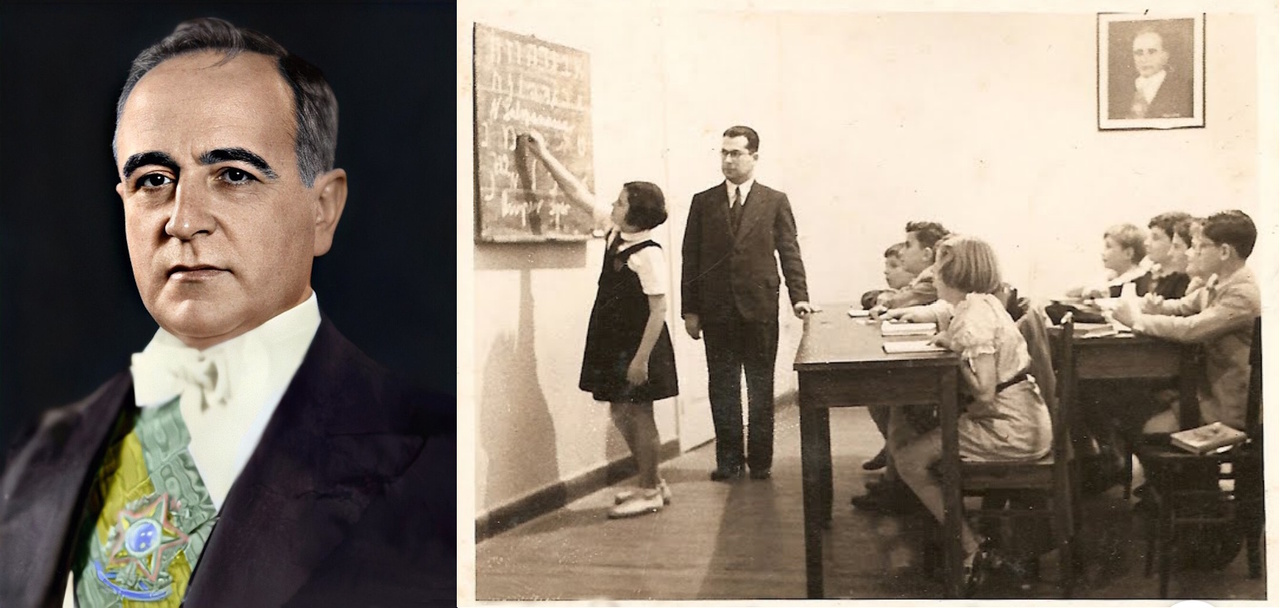
Figs. 2 and 3: Official portrait of President Getúlio Vargas, 1930; Wikimedia Commons https://commons.wikimedia.org/wiki/File:Getúlio_Vargas_-_retrato_oficial_de_1930.JPG.
Among other places, this portrait was on display in a CIP classroom where Rabbi Fritz Pinkuss taught children Hebrew; Jewish Museum of São Paulo.
The exemptions particularly benefited newly established universities, including the Universidade do Distrito Federal in Rio de Janeiro and the Universidade de São Paulo, allowing these institutions to recruit Jewish scholars from Europe, some of whom had been forced out of their positions in Nazi Germany under the so-called ‘Law for the Restoration of the Professional Civil Service’ of 7 April 1933 and now received invitations to Brazilian universities. Among the academics and scientists who found refuge this way was the zoologist Ernst Ludwig Bresslau (1877–1935), who left the University of Cologne in 1933 and went on to establish the Zoological Institute at the University of São Paulo. The botanist Felix Kurt Rawitscher (1890–1957) was forced out of his post as professor at the University of Freiburg in 1933 and fled to São Paulo after receiving an appointment at the university there. The Viennese writer Stefan Zweig (1881–1942), who had visited Brazil in 1936 during his trip to the PEN Congress in Buenos Aires, similarly received a special visa, which allowed him to immigrate to Brazil in 1941.
Many German-speaking Jews, who also tried to escape Austria in larger numbers from 1938 onward, had no such luck. While the majority of diplomatic personnel adhered strictly to the immigration laws, others issued numerous visas despite the prohibition. Among them were Luís Martins de Souza Dantas (1876–1954), Brazilian ambassador to Vichy France, and Aracy Moebius de Carvalho (1908–2011), at the time an employee of the Brazilian Consulate General in Hamburg. Working alongside her future husband, João Guimarães Rosa (1908–1967), the vice-consul to Hamburg at the time, Carvalho issued numerous visas and forged passports until 1942. After the Second World War, Luís Martins de Souza Dantas and Aracy Moebius de Carvalho were honored for their actions as Righteous Among the Nations by Israel’s Shoah memorial museum Yad Vashem.
The annexation of Austria by Nazi Germany, the occupation of the area of Czechoslovakia known as the Sudetenland, and the pogroms of November 1938 dramatically intensified the situation in Europe and prompted rising numbers of German-speaking Jews to seek refuge in Brazil. In 1939, the number of Jews arriving as legal immigrants reached a peak of 4,600, although these numbers declined again until Brazil entered the war on the side of the Allies in August 1942. Nevertheless, this increase in immigration prompted a rise in antisemitism from Brazilian politicians. At the conference held in Évian, France, in July 1938, initiated by US President Franklin D. Roosevelt (1882–1945) in response to the refugee crisis, Brazil’s representative Hélio Lobo (1883–1960) emphasized his country’s hospitality, yet stressed the importance of existing immigration laws and the rejection of large immigrant groups, thereby underscoring the Brazilian government’s restrictive stance.
Escaping Nazi Germany and immigrating to a largely unfamiliar country whose language most did not speak posed enormous challenges for many German-speaking Jews. The move often entailed ruptured career paths, downward social mobility, and the loss of a once-stable sense of self. Struggles over social status, experiences of alienation and uprootedness, and questions of how to maintain former German-Jewish identities elicited a wide range of responses that were often highly complex, emotionally charged, or religiously inflected. Stefan Zweig, for example, wrote about his country of refuge in the book Brasil, País do Futuro (Brazil: Land of the Future, 1939–41), which explicitly praised Brazil’s prospects for development and presented the country’s model as an alternative to Nazi Germany. This position was criticized by several oppositional Brazilian intellectuals, who felt that the book failed to critique the emerging Vargas dictatorship or adequately distance itself.
In his literary writing, including the semi-autobiographical works The World of Yesterday and The Royal Game (both published posthumously in 1942), Zweig negotiated the complex circumstances and burdens of exile. His suicide in Petrópolis on 22–23 February 1942, together with his second wife Lotte Zweig, née Altmann (1908–1942), was a particularly profound shock to German-speaking Jewish exiles. In his German suicide note, which he titled ‘Declaração’ (‘Declaration’ in Portuguese), Zweig thanked “this wonderful country of Brazil” but also noted that “the world of my native tongue has perished for me and my spiritual home, Europe, is destroying itself.” See Stefan Zweig’s digitized Declaração (with German original and English translation): https://stefanzweig.digital/o:szd.thema.5/sdef:TEI/get?locale=en. He further emphasized his age and his lack of strength, which prevented him from starting afresh: two major challenges facing many German-speaking Jews in Brazil. At Zweig’s funeral, which had the pomp almost befitting a state occasion, Rabbi Lemle honored the famous Austrian writer and his achievements.
At the same time, Lemle – like Pinkuss of the CIP (São Paulo) and the rabbis of the SIBRA (Porto Alegre) – were calling for a collective new beginning. Together with solidarity for their co-religionists, this meant leaving behind the emotional stress and psychological strain of displacement and survival and integrating into Brazilian society. Thus, the largely German-Jewish communities of CIP, SIBRA, and ARI became more than just religious communities. They offered their members venues for socializing, sports, communal discourse, financial support, and legal assistance. Distinguishing themselves from the pre-existing Jewish communities and associations, which were predominantly Sephardic or Eastern European, these congregations set out to preserve their own traditions and to promote cohesion and a sense of belonging among their members. These traditions included, among others, those of Liberal Judaism, the idea of the Einheitsgemeinde (unified congregation), on which the CIP had been modeled, and a broad range of sporting activities and youth programs.
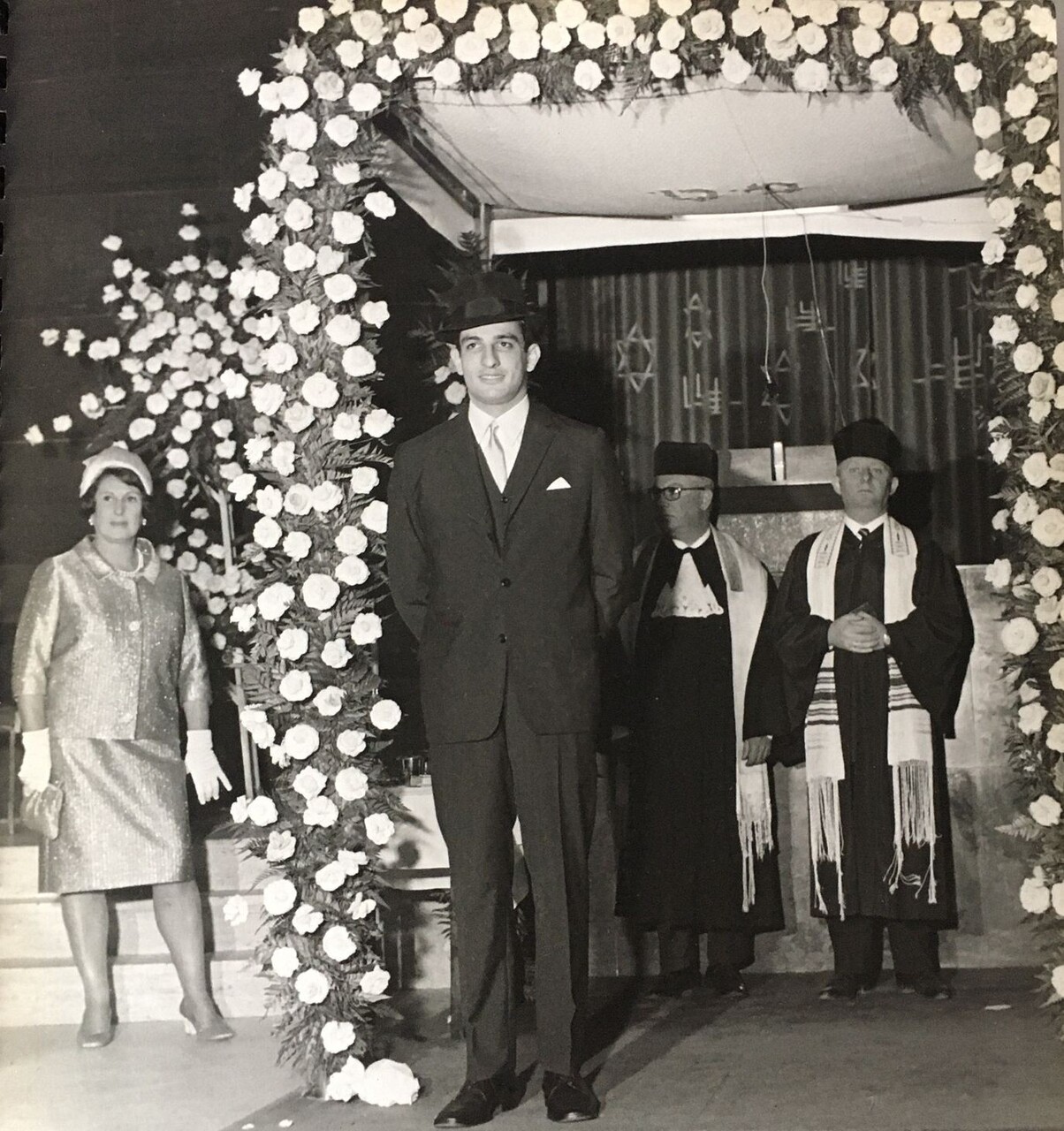
Fig. 4: Wedding of Claudio and Vivian Silberberg on 16 May 1968 at the CIP, São Paulo. In the background, Rabbi Pinkuss and Cantor Obermann; family archive of Claudio and Vivian Silberberg, São Paulo, Brazil.
Establishing youth centers, youth groups, and recreational or educational centers went along with these activities. In addition, the congregations were keen to build networks in order to bolster their own ideals in Brazil and to connect their congregations with one another, as well as with outlying colonial settlements such as Rolândia.
In their community-building work, many German-speaking Jews often built bridges between the Jewish community and Brazilian society, as they were involved in both spheres and did not consider them separate. One of these ‘bridge-builders’ was Alfred Hirschberg (1901–1971), a Jewish communal leader from Berlin, who fled to Brazil via the United Kingdom in 1940. Hirschberg brought his extensive experience as a representative of the Centralverein deutscher Staatsbürger jüdischen Glaubens (Central Association of German Citizens of Jewish Faith) and an editor of that association’s newspaper to his new work for the Crônica Israelita (São Paulo). Founded in 1938 and published fortnightly, the newspaper served Hirschberg and his colleagues – including the Berlin-born literary critic Anatol Rosenfeld (1912–1973) – as a medium of German-Brazilian exchange. Crônica Israelita was initially published in German, later bilingually in German and Portuguese, and eventually predominantly in Portuguese until 1969.
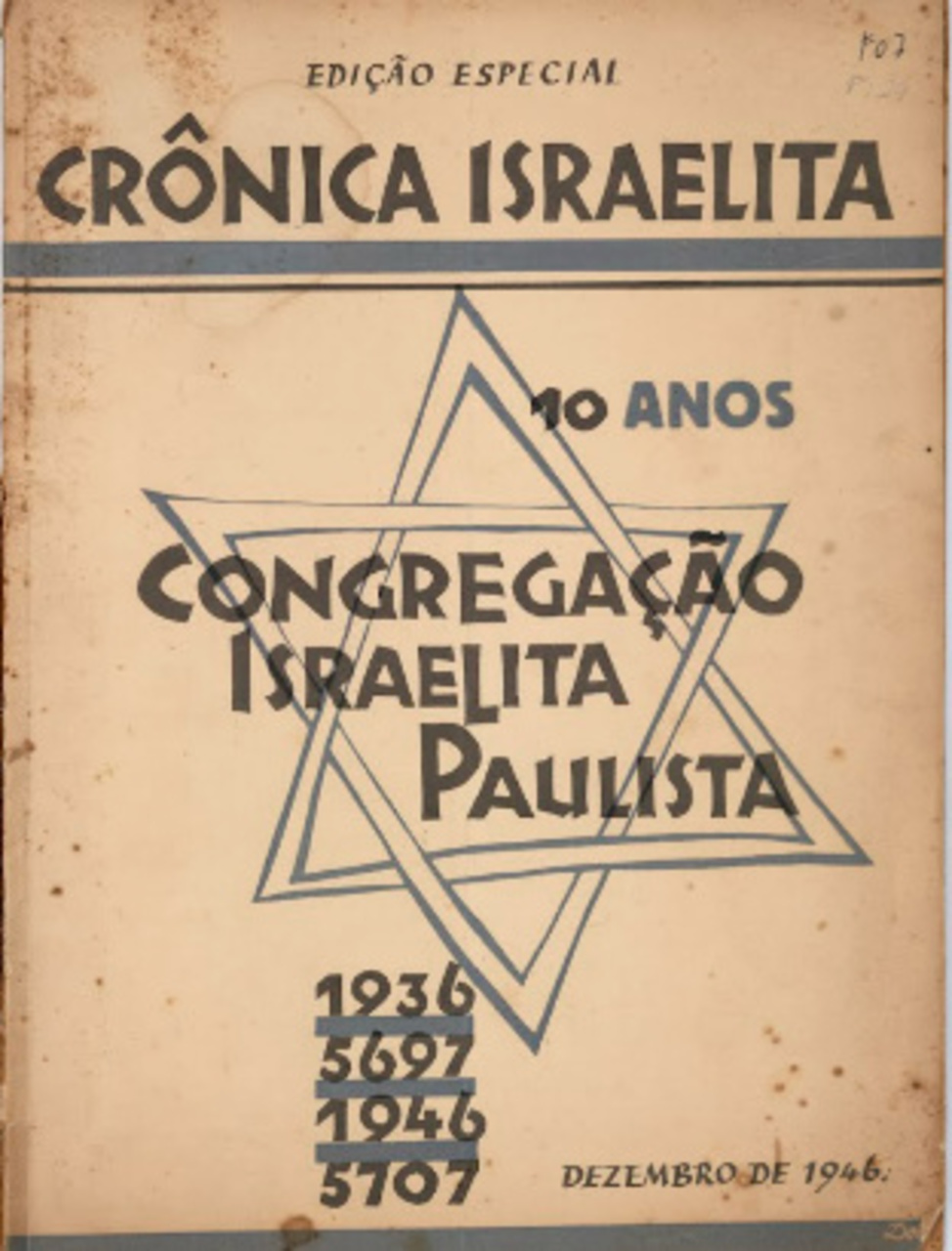
Fig. 5: Special issue of the Crônica Israelita marking the tenth anniversary of the CIP in December 1946; Jewish Museum of São Paulo.
Francisco (Franz Hermann) Gotthilf (1923–2012), born in what was then Breslau (now Wrocław, Poland), likewise created connections between the Jewish and non-Jewish worlds as a presenter on the radio and later television program Mosaico. Integrating into Brazilian society and engagement in social, artistic, and civic life were crucially important for many former exiles. Most regarded Brazil as their new home, and only a small minority felt drawn to migrate onward to another destination, such as the United States or Palestine, later the new State of Israel. Nevertheless, many found the prospect of integrating into Brazilian society quite challenging. The experiences of Nazi persecution and immigration to Brazil, paired with the knowledge that many relatives and friends had been murdered, profoundly marked their later lives, as illustrated by the example of the Berlin banker and politician Hugo Simon (1880–1950). After a long odyssey via several European countries, he arrived in Brazil in 1941. Simon had once been esteemed in Germany as a banking expert and art patron, but could only find work in Brazil as a farmer and ‘colonist.’ After the end of the war, he was forced to question his sense of self and nationality, ultimately dying stateless in 1950.
After the Second World War, questions of belonging and individuals’ attitudes towards their countries of origin remained pressing in the country’s (German-)Jewish communities alongside the challenges of daily life in Brazil. In 1947, the Brazilian government allowed around 7,000 displaced persons to immigrate, followed in subsequent decades by further waves of Jewish migration from North Africa, the Middle East, and Hungary. In 1966, Brazil’s Jewish community numbered approximately 125,000 people within a national population of 85 million. The majority lived in the centers of Rio de Janeiro (50,000), São Paulo (45,000), and Porto Alegre (12,000), while smaller communities had also been established in Recife, Salvador de Bahia, Belo Horizonte, and Curitiba. In 1948, the Confederação Israelita do Brasil (CONIB) became the official representative for the Jewish congregations, including in the political sphere, and many Jews from German-speaking countries played a part. At the same time, the congregations founded by German-speaking Jewish families valued their independence and formed their own South American umbrella organization, the CENTRA, in the 1950s. In this association across borders, reflecting the transnational fabric of the German-Jewish diaspora, representatives came together to address questions of belonging and the preservation of religious traditions.
While emphasizing their own traditions, German-speaking Jews also regarded integration into Brazilian society as an important mission. With the construction of the CIP-affiliated Etz Chaim Synagogue in central São Paulo in 1952, or the erection of the ARI synagogue in Botafogo, Rio de Janeiro, in 1961, the congregations made themselves visible in their respective cities. Other organizations, such as the Hebraica sports and cultural club and the Hospital Israelita Albert Einstein in São Paulo, helped inscribe (German-)Jewish communities into the urban fabric, underscoring their position and their rightful place in Brazilian society.
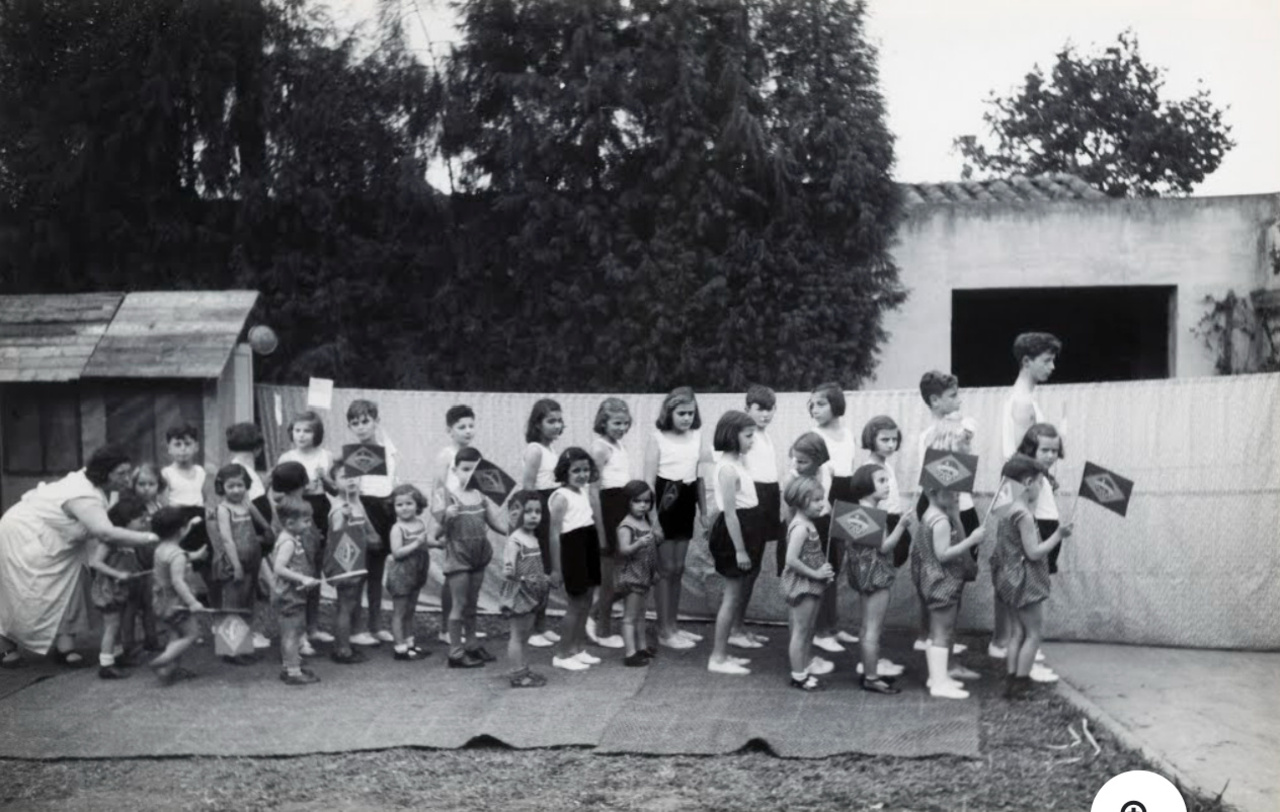
Fig. 6: Children of different ages with the Brazilian flag at a CIP children’s home in Campos Elíseos, São Paulo, 1941. Photograph by Hans Günter Flieg (1923–2024); Jewish Museum of São Paulo.
Jewish religious congregations, for example, under Rabbis Pinkuss and Lemle, were thus one active sphere of belonging and civic engagement. After fleeing from Germany to Rio de Janeiro in 1941 on a collective visa, Susanne Eisenberg Bach (1909–1997) made a name for herself in Brazil as a bookseller and scholar of exile studies. She reflected on her experiences of displacement and Brazilian society in her autobiography Karussell: Von München nach München (1983, Carousel: From Munich to Munich), which she wrote after returning to West Germany. The journalist and writer Ernst Feder (1881–1964) fled to Brazil in 1941 and was part of the circle around Stefan Zweig, which he documented in literary form in his book Diálogos dos grandes do mundo (Conversations of the Greats of the World, 1950). Despite having built a broad network, including ties to the CIP, and attained public prominence, he returned in 1957 to his home city of Berlin, where he subsequently fell into obscurity.
Eva Sopher née Plaut (1923–2018), by contrast, remained in Brazil like the majority of German-Jewish émigrés, having fled there with her family from Frankfurt am Main in 1936. As director of the Theatro São Pedro in Porto Alegre and as cultural manager of the associated gallery and the Pro-Arte art festival, she used art and culture to build bridges of various kinds. A similar approach was taken by the previously mentioned journalist Anatol Rosenfeld, who had fled from Berlin to Brazil in 1936 on a tourist visa and initially supported himself through odd jobs. After learning Portuguese, he wrote for a range of newspapers, including the Crônica Israelita, the Jornal de São Paulo, and O Estado de São Paulo, and became a cultural mediator of German art and literature in Brazil through his articles.
These few briefly sketched life stories give just a glimpse into the biographies of the approximately 25,000 German-speaking Jews who managed to escape to Brazil between 1933 and 1945. On the one hand, they developed a distinct diasporic identity and a specific sense of belonging; on the other, they also became part of both Jewish lifeworlds and Brazilian society. Alongside a sense of belonging to Brazil, many of these Jews also came to identify strongly with Zionism and the newly founded State of Israel. There had been Zionist associations in Brazil since the early twentieth century, near the beginning of the movement, including Tiferet Zion in Rio de Janeiro and Achavat Zion in São Paulo, which later were able to exert broader influence. After 1948, however, only a small number of Jews emigrated to Israel. Instead, most German-speaking Jews in Brazil made themselves at home.
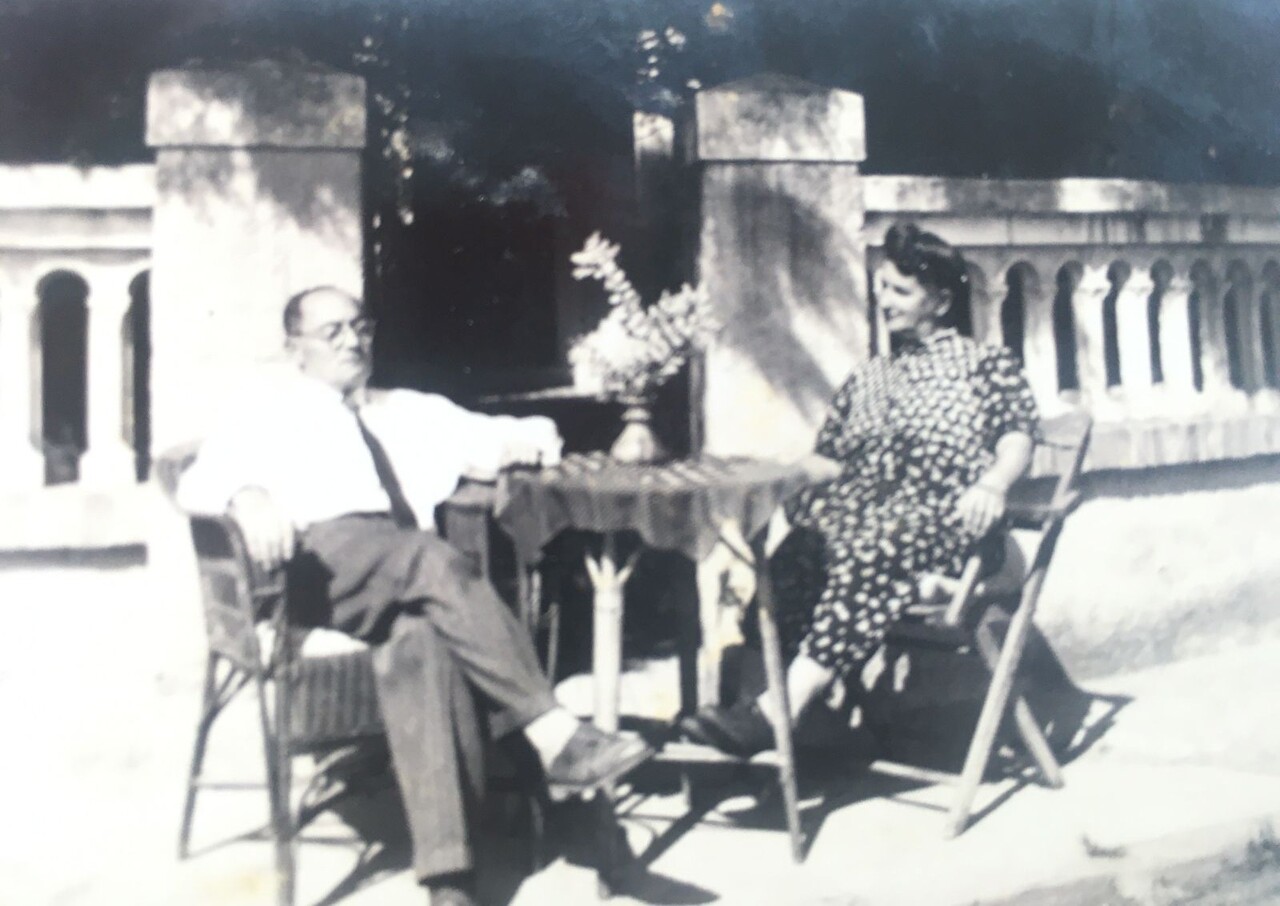
Fig. 7: Ahron Arnold Kohn and Emma Kohn (1882–1958) in front of their house in São Paulo, around 1945; family archive Claudio and Vivian Silberberg, São Paulo/Brazil.
From the 1950s and 1960s onward, many German-speaking Jews in Brazil, now Brazilian citizens, once again found themselves negotiating questions of belonging and legal status – including whether to seek the restoration of German citizenship and how to pursue so-called Wiedergutmachung (reparations). These issues took on particular urgency in the context of Brazil’s military dictatorship (1964–1985), which revived fears of renewed persecution and social exclusion.
Responses to these challenges varied widely and once again reveal the deeply personal ways in which experiences of displacement, exclusion, and persecution were processed across different generations. Alongside these private, family-based processes, institutional initiatives played an important role in preserving the heritage of German-speaking Jews in Brazil and in addressing the injustices of Nazi rule. Jews not only from Germany but also from Austria, Czechoslovakia, and other parts of Central Europe drew on the German language and culture, as well as on a specifically German-Jewish identity shaped over centuries, as the basis for a shared group identity. One expression of this effort was the establishment in 2006 of the Casa Stefan Zweig, a museum and research center located at Zweig’s former residence in Petrópolis.
Alongside the Jewish congregations, newly established cultural and educational institutions also became important spaces for exploring, preserving, and transmitting history and culture. One such institution is the Jewish Museum of São Paulo (Museu Judaico de São Paulo), which reopened in 2021 at the Beth-El Synagogue, a building originally constructed in 1929. The reopening of the museum, which remains partially housed within the synagogue, was co-financed by the German Federal Foreign Office.
The preservation and study of the history of forced migration and exile, as well as the cultural and intellectual history of German-speaking Jews in Brazil, therefore constitute an important field of inquiry. Such perspectives allow scholars today to assess the consequences of Nazi persecution and policies of mass murder, while also highlighting the intergenerational effects of displacement and expulsion. More broadly, they shed light on Brazilian histories of migration and culture, as well as on the history of the diaspora, with its many interconnections and processes of adaptation.
Brazilian Jewish Oral History Project Records, 1979–1986, at the Jacob Rader Marcus Center of the American Jewish Archives:
Institute for the History of German Jews in Hamburg (IGdJ) – Online exhibition, “Nothing. Just Leave!”: Escape from Germany and New Beginnings in Buenos Aires, Montevideo and São Paulo: https://keydocuments.net/exhibition/emigration-south-america
This work is licensed under a Creative Commons Attribution - Non commercial - No Derivatives 4.0 International License. As long as the material is unedited and you give appropriate credit according to the Recommended Citation, you may reuse and redistribute it in any medium or format for non-commercial purposes.
Dr. Björn Siegel (https://www.igdj-hh.de/en/igdj/team/dr-bjoern-siegel) is a historian and has served as Deputy Director of the Institute for the History of German Jews in Hamburg since 2025. He lectures at the University of Hamburg and co-founded the podcast Jüdische Geschichte Kompakt with Prof. Miriam Rürup. His research focuses on Jewish migration, philanthropy, naval history, and biographical studies.
Alongside Anna Menny, he curated the online exhibition “Nothing. Just Leave!”: Escape from Germany and New Beginnings in Buenos Aires, Montevideo and São Paulo (2022/2024) (https://keydocuments.net/exhibition/emigration-south-america). Among his most recent publications are: “‘We were Refugees and Carried a Special Burden‘: Emotions, Brazilian Politics and the German Jewish Émigré Circle in São Paulo, 1933–1957,” , in: European Judaism 54:1 (2021), 27–44, and (with Karen Körber) (ed.), Deutsch-jüdische Geschichte und Gegenwart. Herausforderungen und Perspektiven am Beginn des 21. Jahrhunderts, Göttingen: Wallstein, 2025.
Björn Siegel, A ‘Land of the Future’? German-Speaking Jews Find Refuge and New Beginnings in Brazil from the 1930s Onward (translated by Jake Schneider), in: (Hi)stories of the German-Jewish Diaspora, May 08, 2025. <https://diaspora.jewish-history-online.net/article/gjd:article-24> [October 21, 2026].
 This work is licensed under a Creative Commons Attribution - Non commercial - No Derivatives 4.0 International License. As long as the material is unedited and you give appropriate credit according to the Recommended Citation, you may reuse and redistribute it in any medium or format for non-commercial purposes.
