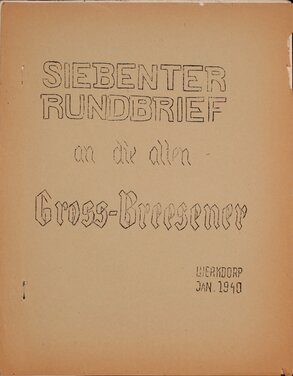
Born in Wetzlar, Hans Rosenthal (1919–1973) was one of around 370 young people who participated in agricultural training at the Gross-Breesen Training Farm between 1936 and 1942. This non-Zionist institution, which was established and run by the Reichsvertretung der Juden in Deutschland (Reich Representation of Jews in Germany), was located north of Breslau (Wrocław). It offered an alternative to the Hakhshara farms that aimed to prepare young Jews for emigration to Mandatory Palestine. During the November Pogroms in 1938, Rosenthal or ‘Juwa,’ as he was called by the other trainees, was arrested along with the head of the farm, Curt Bondy (1894–1972), the farm’s Jewish staff members, and Rosenthal’s peers of legal age, all of whom were deported to Buchenwald concentration camp. In the spring of 1939, Rosenthal and his parents were finally able to emigrate to Brazil, where his father, while still in Germany, had purchased land in Rolândia in the southern Brazilian state of Paraná. The excerpt from the letter dated 1 October 1939 is from the seventh ‘Rundbrief an die alten Gross-Breesener’ (Circular to the Former Gross-Breesen Trainees) dated January 1940. These circulars were compiled at irregular intervals from the letters of former Gross-Breesen trainees.
At first, the circulars also included reports from the training farm. They were intended not only to maintain a connection and sense of community among the former trainees, who had been scattered all over the world as a result of emigration and flight. By intensifying this mutual experience, the circulars served to strengthen a sense of identity. For 65 years, from 1938 to 2003, they offered an important forum for mutual exchange. Over the decades, they thus developed into a testimony of the former Gross-Breesen trainees’ divergent paths through life and constituted a paradigmatic mirror of the transnational character of the German-Jewish diaspora. Dating from the early phase of their history, Rosenthal’s letter shows through its detailed description of the climactic conditions and agricultural methods in Rolândia that the young authors shared their experience and knowledge regarding various geographic circumstances and agricultural forms with one another and thereby mutually supported each other in establishing new lives in their respective countries of refuge.
With the aim of realizing settlement activities in Brazil, the British investment company Paraná Plantations Syndicate Ltd. (PPS) founded the Companhia de Terras Norte do Paraná (Company for the Northern Territories of Paraná, CTNP) in 1925, which was responsible for the operational settlement and colonization business in Brazil. Three years later, it bought up the majority of shares in the Companhia Ferroviária São Paulo-Paraná (São Paulo-Paraná Railway Company, CFSPP). In 1932, the German Gesellschaft für wirtschaftliche Studien in Übersee (Society for Economic Studies Overseas, GWS) signed a contract with the PPS on the basis of which the CTNP reserved a sizable area of land for exclusive German settlement. This led to the foundation of the settlement Rolândia, which in the 1930s became a refuge in the Brazilian jungle for an increasing number of individuals fleeing persecution by the Nazi regime.
A pivotal factor in this development was a barter deal that the former Reichstag deputy of the Center Party Johannes Schauff (1902–1990) had negotiated together with the former Reich Minister and Vice-Chancellor Erich Koch-Weser (1875–1944) and the tropical agriculturalist Oswald Nixdorf (1902–1981): Whoever acquired railway materials in Germany would receive entry and settlement permits for Brazil along with land portion certificates in Rolândia. Following an initial wave of emigrants to Rolândia consisting of political opposition members, mostly from the Catholic milieu, increasing exclusion and persecution measures led increasing numbers of Jewish families and refugees to also seek refuge there.
The fact that the colonization process in Rolândia was undertaken by various groups and at various points in time meant that the local community had a heterogeneous makeup. Political, religious, social, economic, and cultural differences necessarily led to tensions. As many German settlers were receptive to or adherents of National Socialism and a local chapter of the Nazi Party/Foreign Organization had been founded in Rolândia as early as 1935, many Jewish emigrants preferred to keep to themselves and to remain at a distance from these residents of Rolândia. Instead, they established contacts with other German Jews in the cities.
There are varying accounts of the number of Jewish emigrants in Rolândia. While Geert Koch-Weser (1905–?), Erich Koch-Weser’s son, cited 25 families, other sources indicate 291 individuals of Jewish descent, of whom 150 had acquired land. One of these was Heinrich Kaphan (1893–1981) from Schroda (Środa Wielkopolska) in Pomerania, who is mentioned in the letter. He was one of the few agriculturalists from among the Jewish refugees and had emigrated to Brazil with his family in 1936. Others included the Frankfurt-born lawyer Max Hermann Maier (1891–1976) and his wife Mathilde Maier, née Wormser (1896–1997), the latter of whom held a PhD in chemistry, the lawyer Friedrich Ernst Traumann (1877–1953), Oskar Altmann (1880–1948), one of the leading directors of the Mannesmann factories in Düsseldorf, and Rudolf Isay (1886–1956), a renowned patent attorney and trust expert, along with their families.
The Kaphans and Maiers collectively ran a farm belonging to both families, the Fazenda Jaú, which lay by the river of the same name. Both families were actively engaged in securing the emigration of Gross-Breesen trainees to Rolândia. A so-called students’ house was even established for the trainees on the fazenda. However, despite a trip undertaken to Paraná by a special commission of the Reich Representation of Jews in Germany, which also included a representative from Gross-Breesen, and despite years of negotiations, the project ultimately failed due to Nazi decrees and the restrictive, antisemitic immigration policies of the regime of President Getúlio Vargas (1882–1954). Hans Rosenthal would thus be the only Gross-Breesen trainee who successfully emigrated to Rolândia. In his comment appended to the letter, Curt Bondy expressed his regret about this circumstance. At the time, he had not yet given up hope that more trainees from the training farm would follow. Rolândia was even considered as a possibility for a complete ‘New Gross-Breesen’ settlement.
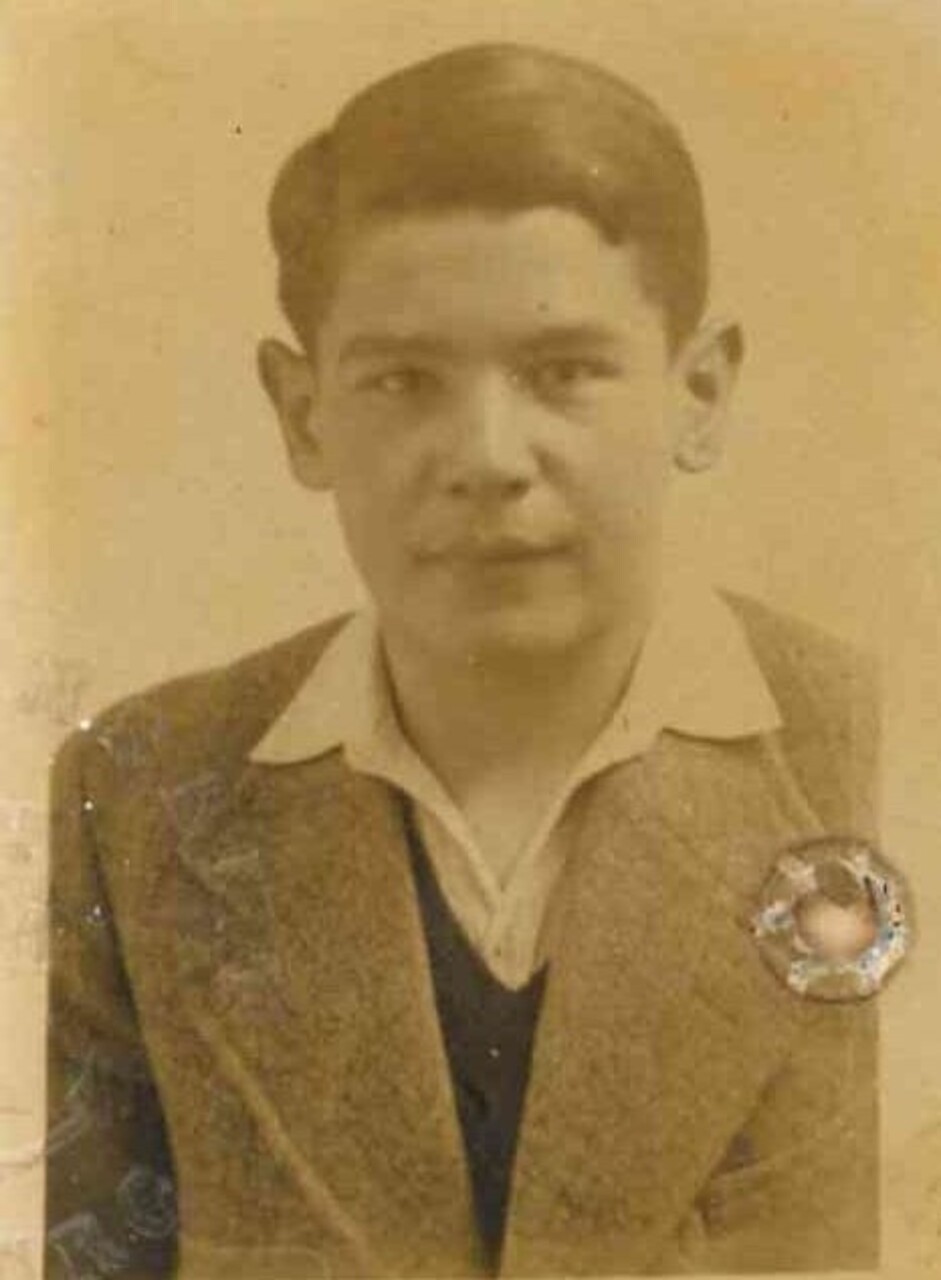
Fig. 1: Hans Rosenthal around 1936; Inge M. Rosenthal Collection, Box 1, Folder 2, AR 10476 / MF 634, Leo Baeck Institute, New York.
When Rosenthal arrived in Rolândia in 1939, the emigrants had already put the difficult early years behind them. The cultivation of the hitherto unpopulated Brazilian interior had placed great demands on these people. Most of these Jews were academically trained, came from bourgeois backgrounds, and belonged to the urban upper-middle and higher classes. Now, they saw themselves forced to give up their formerly refined lives for a new existence that was at first characterized by utter deprivation. Before they could begin to build a house on an acquired lot, they first had to clear the existing jungle. The emigrants were faced with flora and fauna unknown to them and subjected to a subtropical climate. Transportation consisted of horses and horse-drawn carriages, which were also deployed for agricultural labor. There was no electricity, no telephone, and no radio. Medical provisions were rudimentary. As they were primarily responsible for the household and raising children, women saw themselves faced with additional challenges in these difficult early years.
However, this painful austerity and the emigrants’ tireless, intrepid efforts ultimately paid off: They were not only filled with pride at owning and cultivating their own land, as Rosenthal wrote in his letter: “It is a wonderful thought for me to perhaps soon be standing on my own property.” The magic and bountiful fertility of tropical nature also compensated for many of the horrors and hardships that they had been forced to endure.
Despite the difficult circumstances, the emigrants placed a lot of emphasis on offering their children the best possible education. Some families took along private tutors. So, for example, Eleanor Eyck (1913–2009), the daughter of the Berlin-based historian Erich Eyck (1878–1964), accompanied the Kaphan family, who were friends of her family, to Rolândia in order to instruct their three children along with other families’ children. The teacher couple Wilhelm (1904–?) and Anita Speyer (1904–?), who had worked at various Jewish schools in Berlin before their emigration from Germany, also taught in Rolândia. They moved to São Paulo in 1940 to run the Casa da Juventude (Youth Club) of the Congregação Israelita Paulista (Israelite Congregation of São Paulo, CIP). Founded by German-Jewish emigrants in São Paulo in 1936, the CIP, under the leadership of its first rabbi, Fritz Pinkuss (1905–1994), had a formative influence on liberal Judaism in Brazil and South America. It became one of the largest Jewish communities on the continent.
Although Portuguese naturally formed part of the syllabus, the emigrants were especially invested in teaching their children subjects from the German educational canon, including Greek and Latin. Else Traumann (1888–1978), a trained concert singer, additionally gave the children music and piano lessons. The children rode to the Fazenda Gilgala from their own fazendas, especially for these lessons. There, Mathilde Maier also taught classes on religion and the Hebrew language and disseminated the foundations of Jewish history and religion to the younger generation.
Despite, or perhaps precisely because of the wildness of the local nature, the emigrants were unwilling to give up the refinement of their German-Jewish upbringing. For many of them, it was of fundamental importance to preserve their German culture and language, as this also served their self-assurance. Literature played an important role in this context. Some emigrants had been able to take their extensive libraries along to Rolândia. Literature enabled them to return to a world from which they had been expelled, and thus their libraries became emblems of their cultural identity. The emigrants placed a lot of value on lending each other books and discussing their reading. They often read while out horse-riding and sometimes named their animals after characters in novels. Some of them rediscovered the works of the German author Johann Wolfgang von Goethe (1749–1832) and perceived him as a consoler, teacher, and companion. In his 1942 letter to his friends from Gross-Breesen, Rosenthal also recommended that they read Goethe’s Wilhelm Meisters Lehrjahre (Wilhelm Meister's Apprenticeship, 1795/96), which he regarded as a trove of deep and practical philosophies.
Recitation evenings, readings, theater performances, and concerts offered the emigrants an opportunity to emerge from the social isolation imposed on them by the fazendas, which mostly lay many kilometers apart, and to see one another. The Traumann family’s Fazenda Gilgala was one of the farms constituting a focal point for the cultural life of the community. Thus, Rolândia developed into a kind of spiritual center in the Brazilian interior and, with the founding of the cultural association Pró Arte Rolândia in 1953, these initially privately organized cultural activities received an institutional framework. As one of its co-founders and heads, Max Hermann Maier actively shaped the community’s cultural life. Hundreds of events dedicated to art, literature, music, scholarship, and theater, for which participants traveled to Rolândia from elsewhere in Brazil and abroad, especially from Germany, served to introduce the public to German intellectual works alongside the history, economy, culture, and everyday life of Brazil.
Due to their isolation in the jungle, the emigrants were not only invested in maintaining their German culture, but also in establishing contacts with those peers living in Rio de Janeiro, São Paulo, and Porto Alegre who had suffered a similar fate. These contacts took many different forms. It is particularly noteworthy that eleven of the Jewish families in Rolândia joined the CIP in São Paulo and were thus integrated into the latter community. The Speyer couple, moreover, acted as an intermediary for the CIP after joining the organization, connecting children and teenagers from the Jewish community in São Paulo and their local settlement. There were also personal contacts between emigrants in Rolândia and those in the large cities, including the acquaintance between Rosenthal and Alfred Hirschberg (1901–1971), a co-founder of Gross-Breesen and the chairman of its working committee, who had emigrated to Brazil in 1940 and lived in São Paulo. Children and teenagers from Rio de Janeiro, São Paulo, and Porto Alegre spent vacations or longer stays with relatives and friends in Rolândia, while children and teenagers from Rolândia went to the cities, for example, to attend school there. Some of them lived with the Speyer couple or with other family friends in São Paulo. All of this contributed to a sense of community. Although there was no center of German-speaking emigrants in Brazil, Rolândia exerted a sort of unifying force and constituted a mutual experience for the entire community in the country.
In his letter, Rosenthal listed the vegetables and grains with which the emigrants began to establish a new livelihood as settlers in Rolândia. Beans, rice, corn, soybeans, and cotton, as well as animal husbandry, proved to be dependable sources of income in the early years. Rosenthal vividly described the various methods of sowing the respective crops and pointed to a significant change relating to the planting of coffee bushes. In those years, Rolândia and Paraná were becoming another important coffee-producing region in Brazil due to their highly fertile terra roxa or red soil.
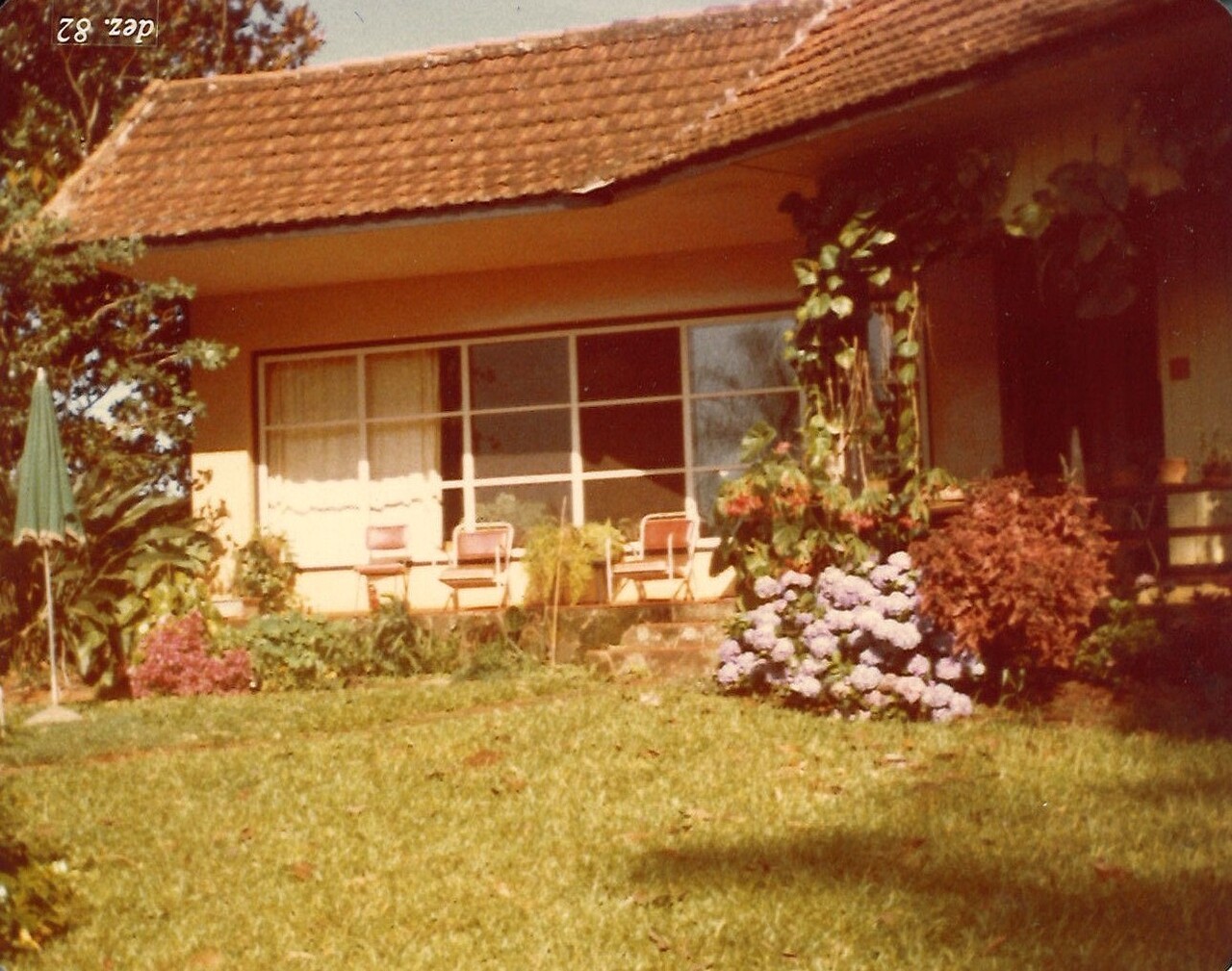
Fig. 2: Fazenda Nova Breesen in Rolândia, 1982; Archive of the Martius Staden Institute, São Paulo.
Rosenthal completed his training under Kaphan’s guidance. In 1942, after working as a farm administrator on various fazendas, he took the land that his father had acquired through the aforementioned barter deal, made it arable, and established his own fazenda. He never doubted what his future fazenda should be called: Nova Breesen. With this name, he expressed not only his hope that other friends would follow him, but also his everlasting attachment to Gross-Breesen. Despite the relatively short time they had spent there, their time at Gross-Breesen had been formative for Rosenthal and many others, and they would maintain this memory for the rest of their lives.
The coffee boom of the late 1940s and early 1950s brought the emigrants financial prosperity and led to an economic upsurge in Rolândia, from which the entire region of northern Paraná profited. While many former Gross-Breesen trainees ceased working in agriculture in their respective countries of exile, Rosenthal, like several other emigrant families in Rolândia, expanded his estate and ran four other businesses alongside his farm. Although their number was relatively small, the Jewish refugees who had fled National Socialism had a formative influence on the development of the settlement.
In contrast to most other agricultural settlement projects in Latin America in which Jewish emigrants took refuge, Rolândia was a success story and grew to become an aspiring small city that is today home to around 72,000 people. Coffee, as well as soybeans, corn, and wheat, became its most important products. Animal husbandry also developed into an important source of income.
Although life and work in nature initially presented an almost insurmountable challenge, it was precisely this direct, physical contact with nature that allowed the emigrants to literally put down roots in Brazil and to establish a close connection with their country of refuge. Not least due to the fertility of its subtropical landscape, Rolândia became a permanent, new home for Rosenthal and most of the other emigrants. With its fazenda Nova Breesen, which is still run by the Rosenthal family today, Rolândia is, moreover, probably the only place in the world in which the memory of Gross-Breesen is kept alive on a farmstead.
Rolândia Collection, BR documents: https://dokumente.ufpr.br/en/rolandia.html
Marlen Eckl, “‘Ich suchte eine Zuflucht, und ich fand eine Heimat…’ – Das deutschsprachige Exil in Brasilien, 1933 – 1945”, in: Deutsch-Brasilianische Beziehungen, Bd. 1: http://www.brasil-alemanha.com/kapitel/20jh/Ich-suchte-eine-Zuflucht-und-ich-fand-eine-Heimat.php
Flucht in den Dschungel. (Film by Michael Juncker, Germany, 1999): https://vimeo.com/ondemand/fluchtindendschungel
Caio Koch-Weser “Rolândia in Brasilien” (Opening address for the exhibition ‘German-speaking Exiles in Brazil’(1933–1945), German Exile Archive, German National Library,Frankfurt am Main 2013): https://www.yumpu.com/de/document/read/23018012/caio-koch-weser-rede-zur-eroffnung-der-ausstellung-mehr-
Biographical entry in the “Spurensuche” project of the German Alpine Club (DAV) on: https://spurensuche.dav-frankfurtmain.de/de/biografien/details/mathilde-maier.html
Biographical entry in the “Spurensuche” project of the German Alpine Club (DAV) on: https://spurensuche.dav-frankfurtmain.de/de/biografien/details/max-hermann-maier.html
Max Hermann Maier, Collection on Emigration to Brazil and Rolândia: https://www.ifz-muenchen.de/archiv/zs/zs-2283.pdf
“Alles andere als romantisch”, in: DER SPIEGEL 17/49: https://www.spiegel.de/politik/alles-andere-als-romantisch-a-459249fd-0002-0001-0000-000044436115
This work is licensed under a Creative Commons Attribution - Non commercial - No Derivatives 4.0 International License. As long as the material is unedited and you give appropriate credit according to the Recommended Citation, you may reuse and redistribute it in any medium or format for non-commercial purposes.
Dr. Marlen Eckl is a historian and literary scholar whose research explores German-speaking exiles in Brazil, twentieth-century Brazilian-Jewish history and literature, and the broader history of Brazil from 1933 to 1945. Her publications include Stefan Zweig und Jakob Wassermann – Eine Lebensbekanntschaft im Licht ihrer Korrespondenz (1908–1933) (co-authored with Jeffrey B. Berlin, Würzburg 2023); Von der Exilforschung zur Exilerfahrung. Zum Jahrhundertleben eines transatlantischen Brückenbauers. Festschrift zu Ehren von Guy Stern (co-edited with Frederick A. Lubich, Würzburg 2022); ‘Das Paradies ist überall verloren.’ Das Brasilienbild von Flüchtlingen des Nationalsozialismus (Frankfurt am Main, 2010), as well as the German translations of Albert Dines’ Brazilian biography of Stefan Zweig, Die Tragödie des Stefan Zweig (Frankfurt am Main, 2006) and the Rolândia novel by Luis S. Krausz, Das Kreuz des Südens (Berlin, 2019).
Marlen Eckl, From Gross-Breesen to Rolândia – Refuge and New Beginnings in the Brazilian Interior (translated by Tim Corbett), in: (Hi)stories of the German-Jewish Diaspora, May 08, 2025. <https://diaspora.jewish-history-online.net/article/gjd:article-18> [September 29, 2026].
 This work is licensed under a Creative Commons Attribution - Non commercial - No Derivatives 4.0 International License. As long as the material is unedited and you give appropriate credit according to the Recommended Citation, you may reuse and redistribute it in any medium or format for non-commercial purposes.