
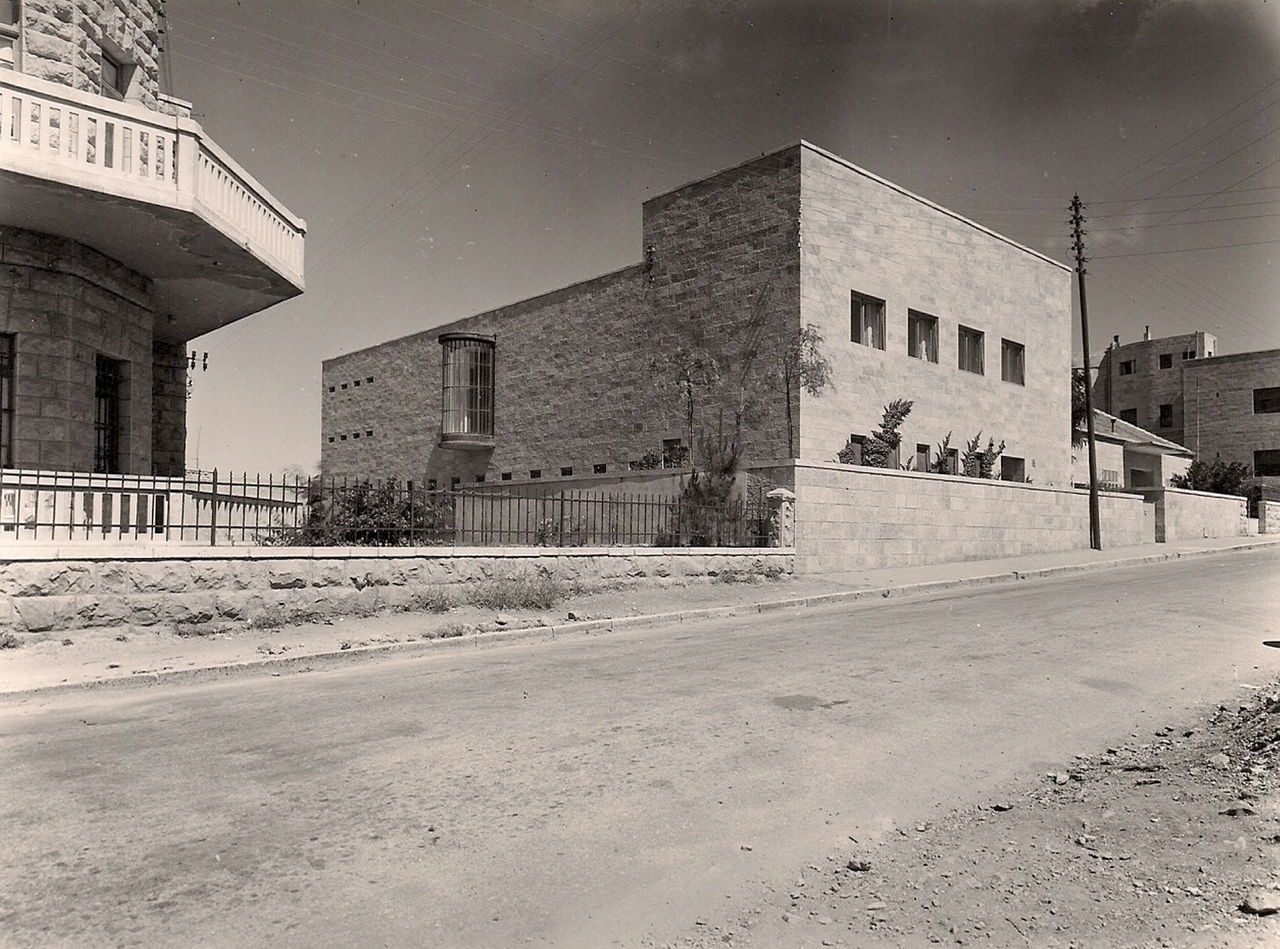
Fig. 1: View from the southeast of the library building, seen from Balfour Street, photographed by Alfred Bernheim around 1938; Israel Museum, Jerusalem.
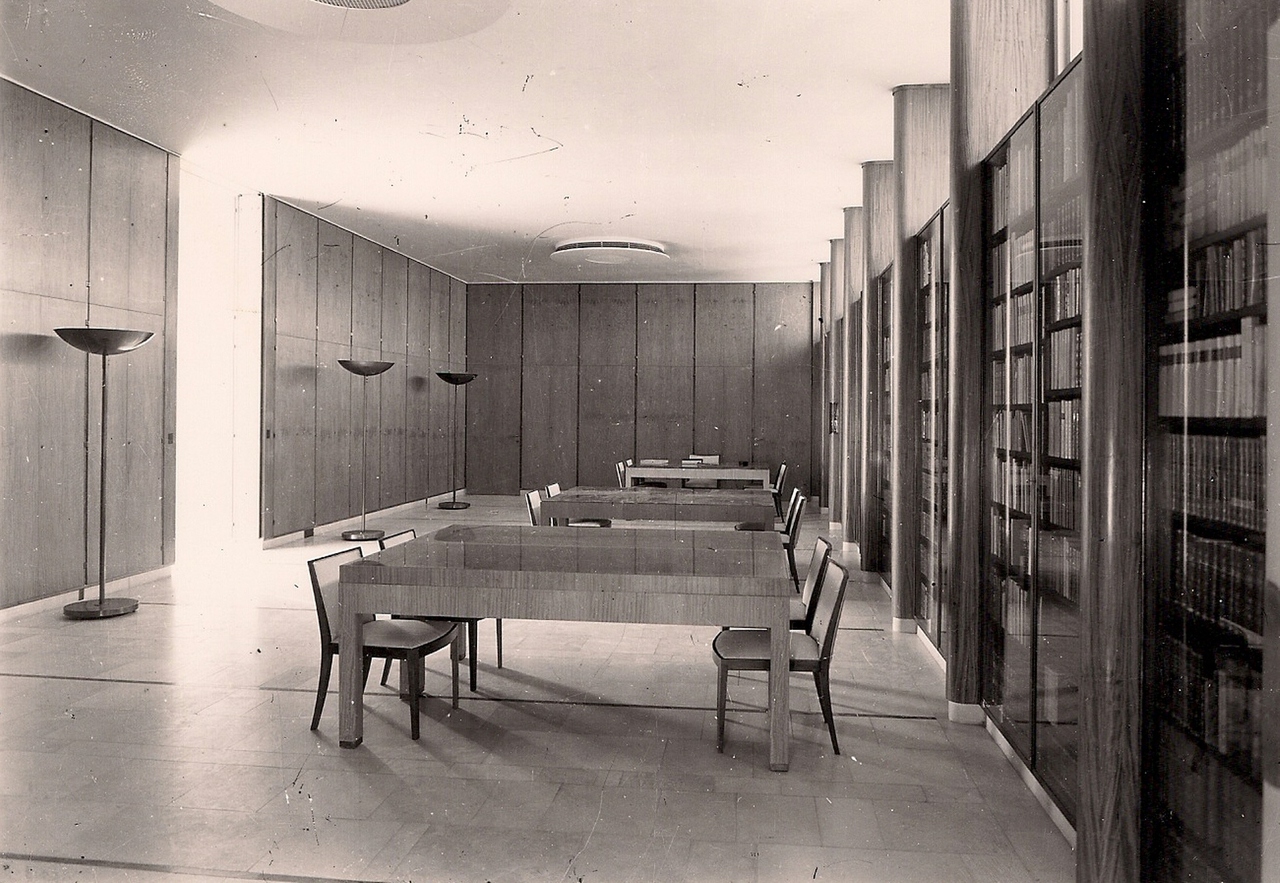
Fig. 2: The large reading room and lecture hall on the top floor of the Schocken Library, photographed by Alfred Bernheim around 1938; Israel Museum, Jerusalem.
This work is protected by copyright and may only be reproduced and published with the consent of the rights holder. It may be downloaded for scholarly or private use.
The library building constructed in the Rehavia neighborhood of Jerusalem (Balfour Street 6) between 1935 and 1936 for the bibliophile businessman and publisher Salman Schocken (1877–1959) is a rarity: Not only is it preserved as an authentic architectural structure, including its interior furnishings, it also continues to serve its original purpose into the present day – since 1961 under the aegis of the Jewish Theological Seminary. Designed by the renowned architect Erich Mendelsohn (1887–1953), who immigrated from Berlin in 1934, it was conceived by Schocken as a semi-public space of academic research and encounter.
Schocken’s book collection, which could be salvaged from Germany just in the nick of time, originally comprised around 60,000 volumes – including numerous original manuscripts, valuable Judaica and Hebraica, as well as first editions of German classics. Mendelsohn created a home for this collection consisting of the outside of a formally reserved two-story structure made from pale limestone (meleke). On the inside, the library exudes a bright, almost cheerful atmosphere. The large reading room on the upper floor, which consists entirely of satinwood, is augmented with a protruding semicircular glass oriel window. Schocken’s precisely cataloged collection of books – which is today no longer located in its entirety in Jerusalem – is housed in three low storage rooms at the rear of the building. The library building occupies almost all of the narrow, elongated property, leaving only a modest strip for plants and a south-facing terrace. In a sense, the Schocken Library embodies the architectural presence of a German-Jewish ‘intellectual aristocracy’ in Israel and today testifies to German-Jewish cultural heritage.
The Schocken Library in Jerusalem, edited in: (Hi)stories of the German-Jewish Diaspora, <https://diaspora.jewish-history-online.net/source/gjd:source-2> [October 25, 2026].