
This work is protected by copyright and may only be reproduced and published with the consent of the rights holder. It may be downloaded for scholarly or private use.
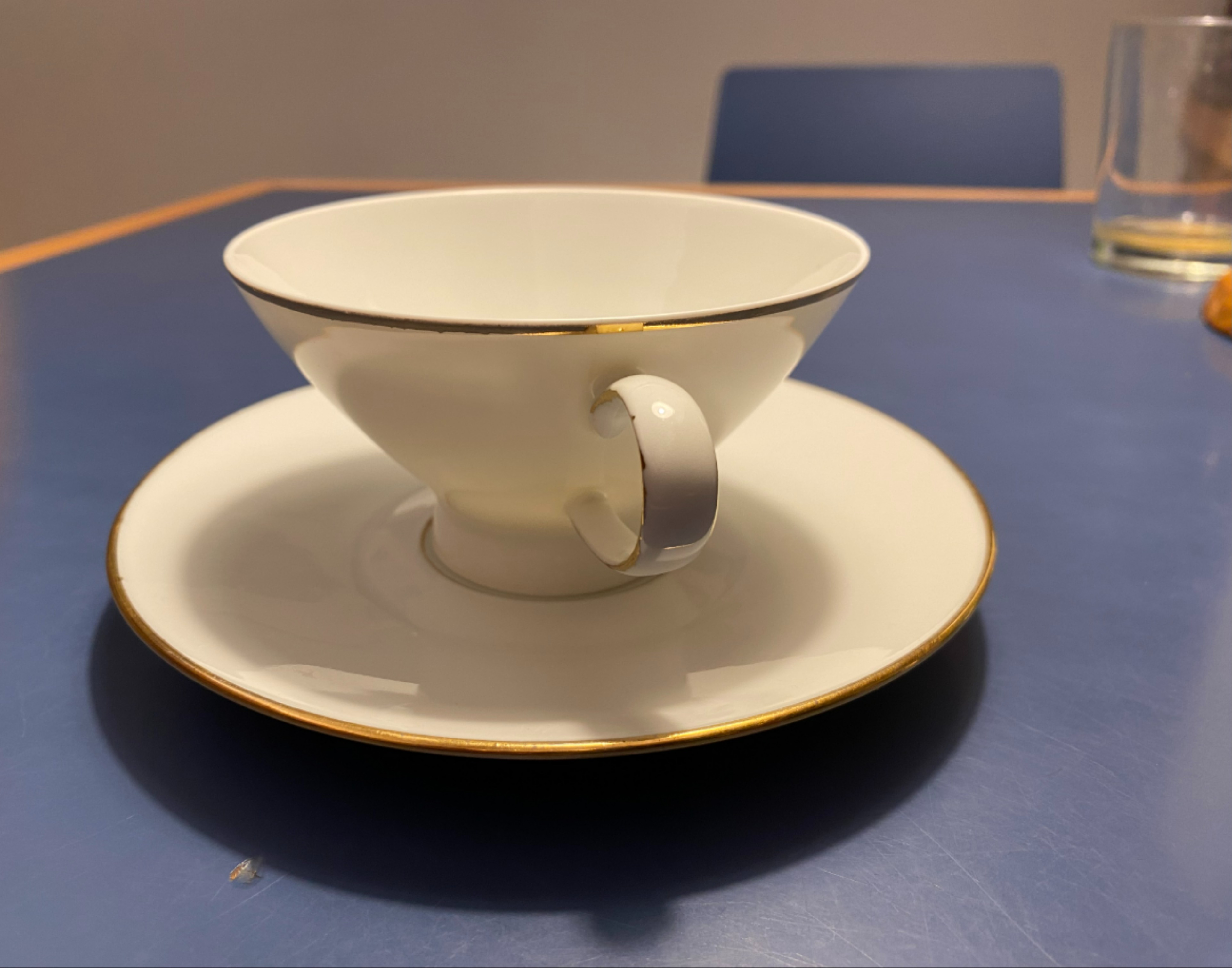
The photo shows a porcelain cup of the famous German company Rosenthal, a traditional brand that has been known since the late nineteenth century for its high-quality porcelain, glass, and ceramic products. In the picture, the cup is sitting on the dining table in the Jerusalem apartment of David Heyd (born 1945), a professor emeritus of philosophy at the Hebrew University. Heyd belongs to the second generation of Shoah survivors in Israel. His father, Hans Heydt (1913–1968), fled Nazi Germany in the spring of 1934, traveling from his home city Cologne via Italy to Jerusalem. He was later followed there by his mother, Bertha Heydt, née Levy (1892–1975), and his sister Liese Heydt (1921–1988).
Before fleeing, Bertha Heydt had consigned all of her home furnishings to a Cologne-based removals company for transportation to British Mandatory Palestine, including the coffee set and many other familiar pieces of furniture and household items belonging to the family. Although employees of the removals company stole the family silver and other valuables from the waiting container before its transportation, the Rosenthal coffee set reached its destination along with the rest of the cargo unscathed.
This is how the remaining belongings of the family made their way from Cologne to Bertha Heydt’s new apartment in Jerusalem and later also partly to the apartments of her children and grandchildren. Her grandson David Heyd received the coffee set along with some champagne flutes, a floor lamp, a desk, and a cupboard. The cups, glassware, and furniture form a symbolic bridge across the painful ruptures that Nazi persecution and the Shoah inflicted on the family’s biography. The conscious use of these objects allows the Heyd family to maintain the memory of their German-Jewish past to this day, even if they have long since regarded themselves as an Israeli family.
The pictured coffee cup is a source of material culture. It stands for many other household items that belonged to the everyday life of Jewish families in Germany. Extensive inventories listing complete home furnishings down to the last detail can be found in many case files from postwar restitution processes. These lists offer insights into the domestic and everyday culture of German-Jewish families before the Shoah. In many cases, the home furnishings enumerated in these lists had to be left behind or were expropriated and irretrievably lost. In other cases – like that of Bertha Heydt – the refugees were able to save these objects.
Familiar objects like the Rosenthal coffee set accompanied their owners when they arrived in new, initially unfamiliar surroundings. Here, they not only served practical purposes; they were also charged with meanings, memories, and emotions. Historicizing such objects sheds fresh light on the relationships between material culture, migration history, and everyday culture in the German-Jewish diaspora.
The Rosenthal coffee cup on David Heyd’s kitchen table in Jerusalem, 2024, edited in: (Hi)stories of the German-Jewish Diaspora, <https://diaspora.jewish-history-online.net/source/gjd:source-13> [September 30, 2026].