
Switzerland remained neutral during the Second World War and escaped invasion and occupation. Its small Jewish population – well under one percent of all residents with Swiss citizenship – therefore enjoyed a degree of security and, in retrospect, unusual continuity at the heart of Europe. Jewish life in Switzerland faced no fundamental cultural or political threat and remained protected. Jewish communities, aid organizations, and private individuals made tremendous efforts to help victims of antisemitic persecution across Europe. Their ability to offer refuge, however, was severely constrained. Even before German Jews fled en masse in 1938–39, the Swiss government had opposed issuing visas to Jews. Its asylum policy remained restrictive. In the early years of the crisis, its approach could be summed up as “entry solely for the purpose of onward travel.”
Nevertheless, this small, quadrilingual country, surrounded by members of the Axis alliance, became an important cultural, logistical, and economic hub for German-speaking exiles and Jews. Its significance as a place of refuge for German-speaking Jews during the Nazi era far exceeded what the statistics on immigration and permanent settlement might imply. In early 1933, political refugees and intellectuals could still enter Switzerland relatively easily, generally posing as tourists. Many of those fleeing neighboring Austria after the so-called ‘Anschluss’ (annexation) in March 1938 likewise escaped by way of Switzerland. During the war, however, strict border enforcement beyond the official crossings, including surveillance, arrests, and expulsions, made it extremely difficult to cross the border illegally.
For most refugees, Switzerland was merely a transit country. The government did not recognize racist persecution as grounds for asylum or establish special quotas for European civilians fleeing terror. Indeed, foreign nationals were not granted permission to remain in the country during the Second World War except in rare cases. Beginning in 1944, even those granted temporary refuge on humanitarian grounds between 1939 and 1945 were ordered to leave Switzerland, whether or not they wished to return to their countries of origin or were able to do so. The requirement that refugees move on shaped both legal and illegal emigration from Germany, Austria, Czechoslovakia, and France during the early years of Nazi rule. After the regime’s defeat, this policy once again limited their choices as they considered where to build a future, settle permanently, and acquire citizenship.
It is difficult to assess the impact of immigration by German-speaking Jews after 1933 on Jewish culture within Switzerland. There is little evidence that the established communities or their social milieu underwent a systematic shift. This may have been partly because Germany and Switzerland had already maintained close ties and a lively exchange over the preceding decades.
German-speaking Jewish culture in Switzerland had taken shape during the nineteenth century through immigration from Alsace and southern Germany. As restrictions on foreign Jewish immigration eased toward the end of the century, an urban Jewish middle class emerged out of the small enclaves of the northern cantons. Officially recognized religious communities nevertheless remained the exception, and scarcely any of the rabbis who served in Switzerland during the nineteenth and twentieth centuries were Swiss citizens.
Immediately after Adolf Hitler (1889–1945) was appointed chancellor and the Reichstag fire in February 1933, many of those who sought temporary safety in Switzerland were at risk because of their political or social activism. Professional, political, and family connections made it easier to leave at short notice, as did access to a vacation home. Foreign nationals could also obtain permits to remain for several months for educational purposes, so enrolling at the University of Zurich or the University of Basel was one of the few legal options available. Hermann Levin Goldschmidt (1914–1998), for example, had been forced to abandon his traineeship in publishing in Berlin. He enrolled at the University of Zurich in 1938 and completed a doctorate in philosophy in 1941. Ten years later, the philosopher of religion received a regular Swiss residence permit. As the founder of the Freies Jüdisches Lehrhaus (Free Jewish House of Learning) in Zurich, he made important contributions to interfaith dialogue and to philosophical approaches to history shaped by the Shoah.
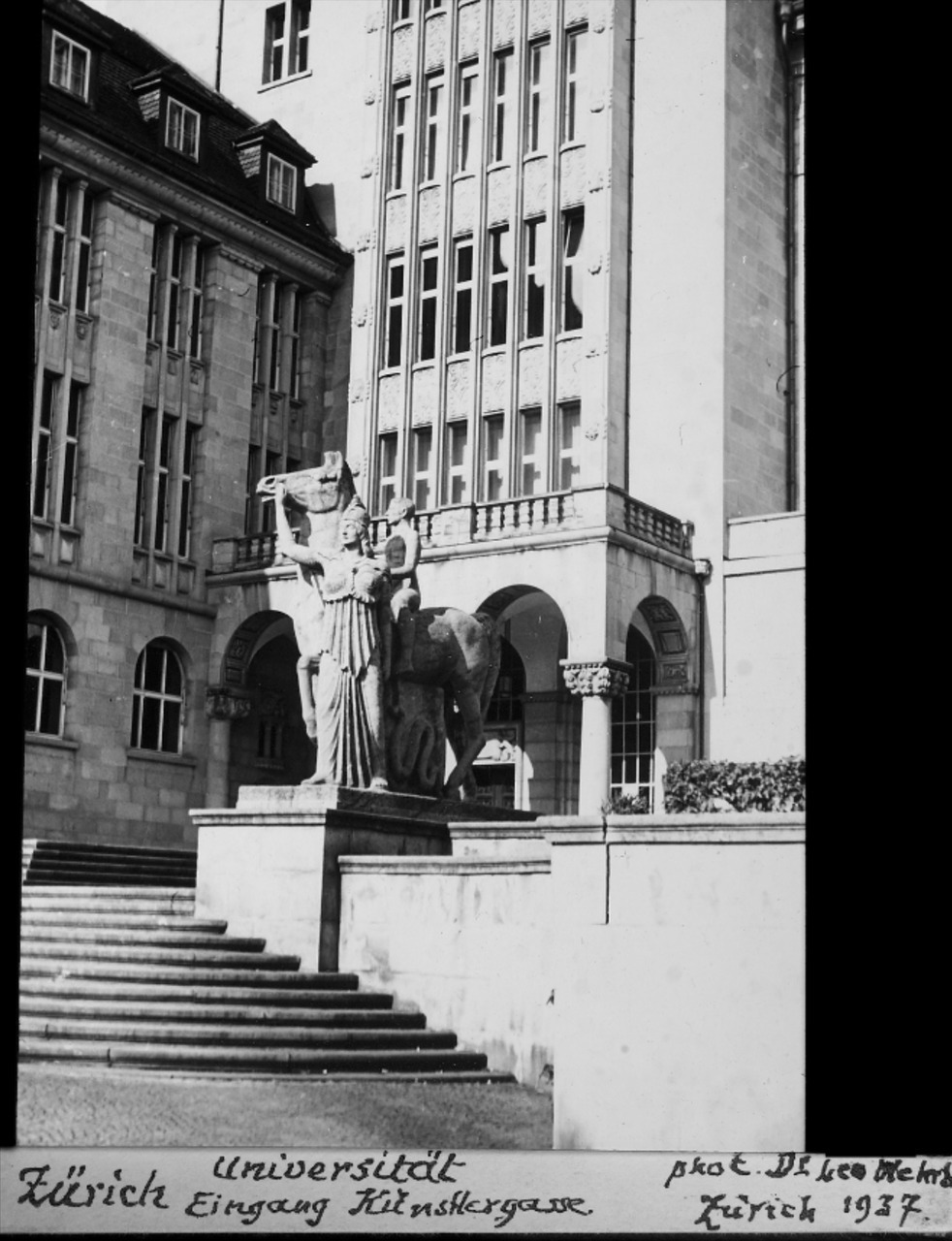
Fig. 1: Main building of the University of Zurich, Künstlergasse entrance with a sculpture by Otto Kappeler (1884–1949), 1937; Leo Wehrli, CC BY-SA 4.0, via Wikimedia Commons.
As a rule, however, ‘emigrants’ were not welcome and were denied permission to remain in Switzerland. Political asylum – and with it official ‘refugee’ status – was granted to only a small number of public figures and left-wing politicians, most of them men. Between 1933 and 1945, Switzerland admitted just 644 recognized ‘political refugees,’ some of whom remained only temporarily. Although they were guaranteed the right to stay, their ability to work and express political opinions was severely restricted. Lesser-known activists, as well as individuals and groups persecuted on racial grounds, had no right to remain. ‘Jewish descent’ and religious affiliation were explicitly excluded as grounds for asylum. The authorities instead classified these applicants as ‘foreign nationals’ or ‘emigrants.’ These official designations indicated that the people concerned had no residence permits, were required to report to the police frequently, and were not authorized to work at all. Even in fields such as medicine, where skilled workers were clearly in short supply, regular employment rarely provided a path to legal status. The physician Käte Frankenthal (1889–1976), who was active in public health and politics, had been forced to leave Berlin in 1933. With the support of colleagues, she was able to work temporarily at a Swiss clinic. Yet because her residence had not been properly registered, she was eventually expelled from the country. After passing through several more waystations, she reached the United States at the age of 46 and began a second career as a psychoanalyst.
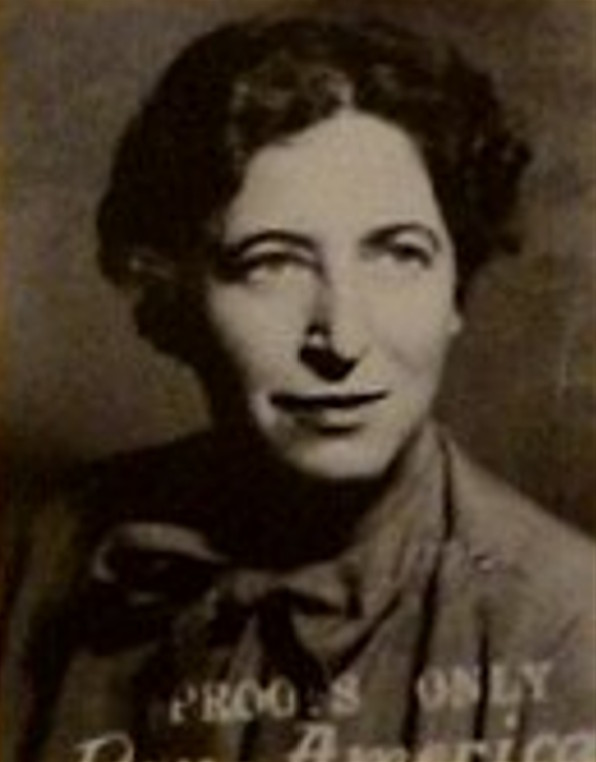
Fig. 2: Physician and Social Democratic politician Käte Frankenthal; CC0, via Wikimedia Commons.
The movement known as ‘spiritual national defense’ sought to shield Switzerland from German influence, especially left-wing and socialist ideas. In many cantons and federal government departments, this philosophy dominated both immigration policy and its implementation. Anti-Jewish and antisemitic attitudes routinely shaped the decisions of public authorities. Refugees could only extend their stay if they declared their intentions for onward migration and had a guarantee of financial support from a local Jewish community or individual. Well-known and wealthy émigrés had a better chance of securing residence permits through petitions, personal connections, and financial guarantees. Many people seeking refuge were nevertheless deported. Others were intercepted at Switzerland’s borders with Germany, France, Austria, or Italy and handed over to the authorities on the other side.
Switzerland, a small Alpine country with a population of 4 million, temporarily admitted a total of 290,000 foreign nationals, children brought to the country for respite, and military internees during the Second World War. Around ten percent of these registered refugees were Jewish. At the beginning of the war, there were 5,000 Jewish emigrants in Switzerland. By the end of 1943, the country was sheltering 22,000 foreign Jews. It is estimated that a similar number tried unsuccessfully to cross the border without papers. A further 10,000 had already had their visa applications rejected by Swiss consulates. The introduction of special travel restrictions for German Jews as early as the fall of 1938 is indicative of Switzerland’s approach. Only those who could present a visa for a third country were allowed to cross the border. The Swiss government had previously reached an agreement with the German Reich to mark the passports of Jewish travelers with a large J, making them easier to identify during routine border checks.
For those who arrived in the 1930s and 1940s, there was virtually no prospect of becoming naturalized. During this period, even long-term residents – Jewish or otherwise – were denied Swiss citizenship. Emigrants did not begin to be naturalized until 1951, when an international refugee agreement placed the 7,000 to 8,000 people who had remained in Switzerland on the same legal footing as other settled foreign nationals. Some applicants then had to wait a further ten to fifteen years. By the time they gained voting rights, became liable for military service, and acquired full freedom to choose where they lived, they had long since become integrated into Swiss society.
At first, the Swiss state refused to accept any responsibility for Jewish migrants during their stay in or passage through the country. Private organizations and individuals stepped in instead, particularly political, academic, and religious groups offering refugee aid. Beginning in 1938, local Jewish communities established temporary accommodation centers at their own expense and assumed full responsibility for running them. The hasty exodus from Austria following the ‘Anschluss’ and from Germany after the November pogroms meant that most refugees initially found themselves in camps run by Jewish communities. These imposed strict rules, including regulations governing the refugees’ conduct in public. In 1940, the federal refugee authorities ordered that emigrants be housed in camps and assigned to compulsory labor. Those who had previously lived in private accommodation were consequently called up for labor service and confined to federal camps.
Even people who had lived in Switzerland before 1933 lost their residency status. They were reclassified as ‘refugees’ and became dependent on welfare provided by Jewish communities. Jewish families of Polish nationality, for example, were stripped of their citizenship by the Polish government in July 1939 and then faced deportation from Switzerland. Despite having trained and worked in the country, they were reduced to the status of ‘emigrants’ without rights.
A second border closure in the summer of 1942 marked a sharp turning point. The Swiss government ordered severe measures against unauthorized border crossings, including ‘turning back’ refugees, and required all new arrivals to be interned. These foreign nationals and stateless people came under direct federal authority and were placed in closed institutions, residential facilities, or camps, often in rural areas and small towns. Even those permitted to live in private accommodation had to remain within their district. They needed official permission to travel elsewhere in Switzerland, see a doctor, or attend classes. Civilian refugees’ freedom of movement – already restricted since 1938 – was now severely curtailed.
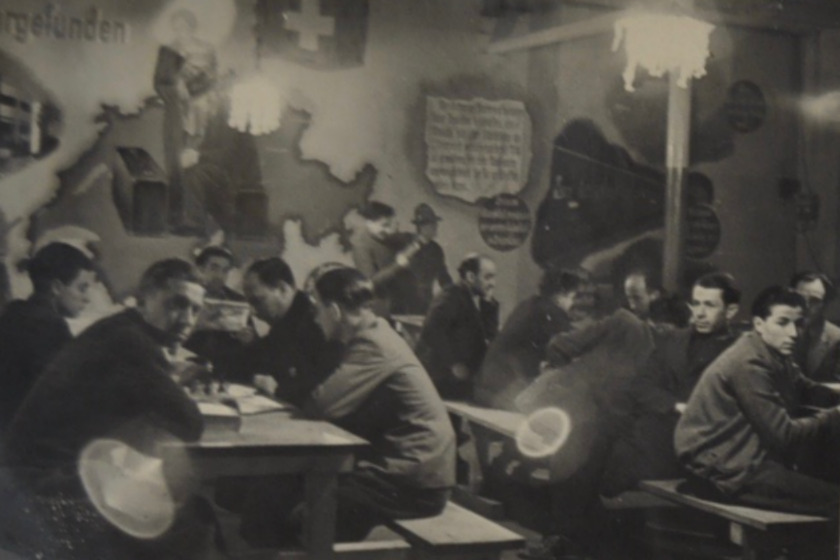
Fig. 3: Common room for refugees at the Diepoldsau reception camp, Diepoldsau, St. Gallen, 1938; Jewish Museum of Switzerland, JMS 930-1. CC BY-SA 4.0, via Wikimedia Commons.
Visits to the camps by rabbis, religious teachers, and social workers required approval from the federal government or the military command. Local Jewish communities, sections of the Swiss population, and other aid committees nevertheless remained in contact with interned military and civilian refugees. They provided emergency assistance, clothing, and food, including kosher food.
Families faced the additional hardship of being divided into separate, gender-segregated camps. Children were also housed separately in children’s homes or placed with foster families, both Jewish and non-Jewish. The remote rural locations left many refugees isolated, while linguistic and cultural differences created further difficulties.
Private associations and political or religious networks provided almost all the political and financial support available to asylum seekers. The Swiss Federation of Jewish Communities (Schweizerischer Israelitischer Gemeindebund, SIG) coordinated the principal bodies across the country. For this purpose, the SIG established its own Central Committee for Refugee Aid (Zentralkomitee für Flüchtlingshilfe) in 1933. The SIG placed the practical support of refugees in the hands of the Association of Swiss Jewish Poor Relief Organizations (Verband der Schweizerischen Israelitischen Armenpflege, VSIA), which was reorganized in 1943 as the Association of Swiss Jewish Welfare Organizations (Verband Schweizerischer Jüdischer Fürsorgen, VSJF). By the end of the war, the association and its local committees had assisted around 23,000 people who were financially dependent, prohibited from working, and in some cases confined to camps. In addition to handling legal, medical, and financial matters, another VSJF department organized cultural activities and religious support.
International Jewish organizations also operated their own programs in the country. These included the Organization for Rehabilitation through Training (Organisation Réconstruction Travail, ORT), which promoted vocational training for young people. In 1945 alone, ORT Switzerland provided training to a total of 2,023 emigrants. Adolescents and young adults who spoke Italian, French, or German were more likely to enroll in regular vocational training programs.
Programs for children had a particularly wide reach. The Swiss Aid Organization for Emigrant Children (Schweizerisches Hilfswerk für Emigrantenkinder, SHEK) and other associations organized ‘Kindertransports’ from Germany and occupied Europe, maintained children’s homes in France for orphans and unaccompanied children, and arranged stays in Switzerland where children could recuperate. In 1938, the SHEK arranged for 300 children from Jewish orphanages in Germany to enter Switzerland. The association also cared for children who had entered Switzerland illegally with the help of paid guides.
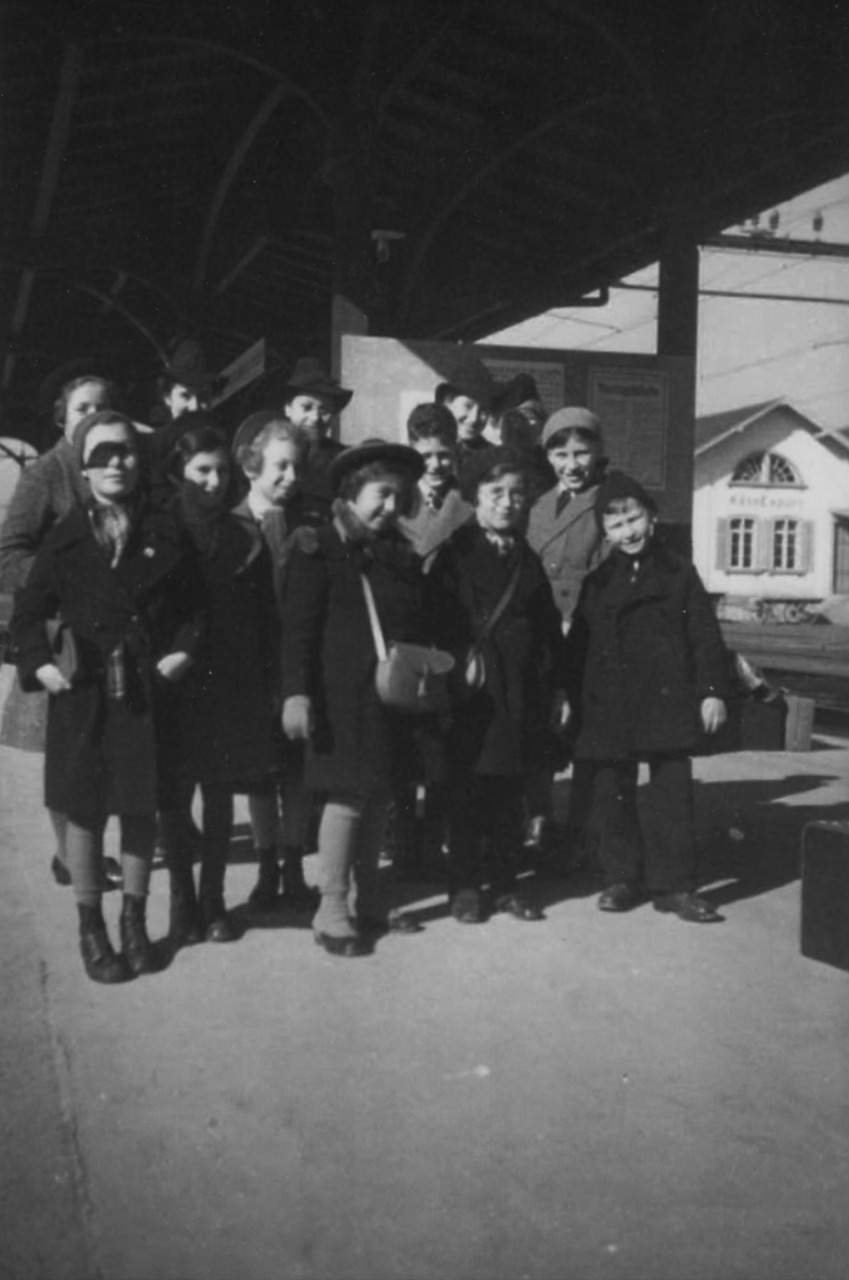
Fig. 4: Entering Switzerland. Group portrait of Jewish children at Weinfelden station, 1939; Archives of Contemporary History, ETH Zurich: BA BASJ Archive / 418.
Young adults generally obtained visas by securing places at Swiss universities. From the summer of 1933 onward, however, such visas were restricted to the duration of the semester. Swiss universities already had a substantial international student population, which grew still further in 1933. In 1933, foreign students outnumbered Swiss students among new enrollments at the University of Basel across fields of study – a first for the university. By the summer of 1933, a total of 1,100 Jews were studying or pursuing doctorates at Swiss universities; fewer than ten percent of them held Swiss citizenship. The German-speaking universities thus offered an immediate social and academic foothold, but no path to permanent residence. Students rarely found regular employment in Switzerland or secured paid academic positions, as the sociologist René König (1906–1992) did in Zurich.
Ernst Ludwig Ehrlich (1921–2007), who escaped from hiding in Berlin to Switzerland in 1943, was one of the small number of refugees able to begin studying despite having been imprisoned and to complete a degree after the war. The scholar of Jewish studies received his doctorate in Basel in 1950 and remained there for the rest of his life. He rose to become the European director of the international Jewish organization B’nai B’rith.
Between 1933 and 1952, an estimated 66 million Swiss francs were spent on initial support for migrants. Swiss Jewish communities supplied one-third of this sum, with the rest covered by foreign aid organizations, especially the American Jewish Joint Distribution Committee (JDC). This figure illustrates how much those persecuted by the Nazi regime relied on international support, even in Switzerland.
It is harder to quantify the strategic and political assistance provided by foreign aid organizations and international associations, but this was crucial to helping refugees migrate onward. For example, the emigration aid department of the Swiss Federation of Jewish Communities worked closely with the Berlin, Paris, and New York offices of HICEM, an umbrella organization formed by three major Jewish aid agencies. Beginning in 1933, the Jewish Agency (JA) in Jerusalem maintained a Swiss branch, the Palestine Office, first in Basel and later in Geneva. From Geneva, the Comité International pour le Placement des Intellectuels Réfugiés (International Committee for the Placement of Refugee Intellectuals) organized legal and illegal means of escape and onward migration.
The press and publishing industry in German-speaking Switzerland generally offered journalists and writers a wide range of opportunities to continue their work. However, prohibitions on employment severely restricted the publishing activities of Germans granted temporary refuge. Many intellectuals and journalists wrote under pseudonyms for newspapers, academic journals, and political magazines. Several émigré authors formerly associated with the feuilleton sections of German newspapers, for example, wrote for Basel’s National-Zeitung.
Due to both domestic and foreign policy, newspaper and book publishers generally did not create dedicated series, columns, or thematic issues catering to German-speaking exiles. The historian Kristina Schulz has shown that the Swiss Writers’ Association (Schweizerischer Schriftsteller-Verein, SSV) also opposed attempts by German-speaking immigrants to make a new start in the Swiss press, viewing them as competitors. The journal Mass und Wert, published from 1937 to 1940 expressly as a platform for ‘free German culture,’ was a notable exception.
The prominent Berlin medical publisher S. Karger moved its headquarters permanently to Basel in 1937, but at first lost its authors and its readership. For example, the 1939 German first edition of The Civilizing Process by the sociologist Norbert Elias (1897–1990) did not reach many readers.
Europa Verlag, based in Zurich, ranked among Europe’s leading publishers of exiled authors. The Swiss couple Emil Oprecht (1895–1952) and Emmie Oprecht (1899–1990) had already published works by writers on the European left. Beginning in 1933, they used Europa Verlag to provide direct assistance and publishing opportunities to migrants. Their list included the poet Else Lasker-Schüler (1869–1945), who had initially emigrated to Zurich in 1933 and wrote Das Hebräerland (The Land of the Hebrews) for publication by Oprecht in 1937. The philosopher Karl Löwith (1897–1973), who was living temporarily in Japan, published his history of philosophy From Hegel to Nietzsche with Europa Verlag in 1941. The book contributed to his postwar reputation in Germany.
In cooperation with Schauspielhaus Zürich, the Oprechts also published and staged works by exiled playwrights. After the war, Europa Verlag published Erich Kästner’s (1899–1974) The Animals’ Conference (1949), the first postwar German children’s book to feature illustrations by Walter Trier (1890–1951), who had emigrated to England.
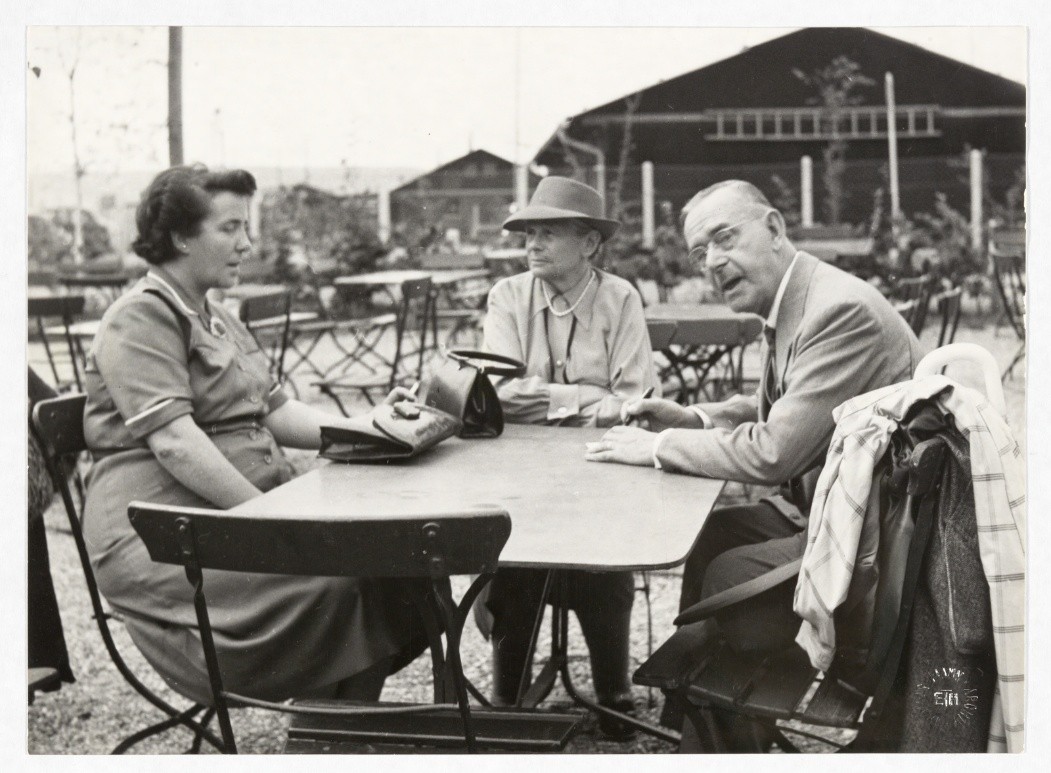
Fig. 5: Emmie Oprecht, Katia Mann, and Thomas Mann at Kloten Airport near Zurich, 1950; ETH Library Zurich, Thomas Mann Archives / photographer: unknown / TMA_3385.
Victor Goldschmidt, a small family business in Basel, played a central role in religious publishing. Founded by a Lithuanian Torah teacher in 1902 as a bookstore and Judaica shop, the company added a publishing division in 1951. It reissued classic Rödelheim editions following Ashkenazi custom – prayer books, schoolbooks, and sacred writings, often in bilingual editions – for use in ritual and study.
Beginning around 1900, Switzerland’s German- and French-speaking Jewish middle classes increasingly distanced themselves from Eastern European immigrants. This led to the formation of subgroups internally and externally perceived as distinct. Under the political conditions of the 1930s and 1940s, however, the family, social, and cultural bonds between established residents and newcomers proved stronger than these differences. Despite linguistic differences, the small group of Jewish emigrants was united by the shared experience of having no rights and depending on others in daily life. Regardless of country of origin, people formed groups based on religious, political, or Zionist affiliation.
Migrants could turn to religious, Zionist, and Christian organizations, as well as left-wing groups and socially engaged intellectuals, for local support. The Neubühl Werkbund housing estate outside Zurich had a reputation as a haven for politically active artists. In central Zurich, many local residents helped migrants evade the authorities by arranging clandestine accommodation. Intellectual émigrés met and exchanged ideas in the reading room of the Central Office for Social Literature (Zentralstelle für soziale Literatur) in the Predigerkirche, where they could read German newspapers from across the political spectrum for free. This institution of the Swiss labor movement – now the Swiss Social Archives in Zurich – was headed by the welfare official Paul Kaegi (1891–1964). His Jewish wife Regina Kaegi-Fuchsmann (1889–1972), a women’s rights activist and executive director of Swiss Workers’ Relief, greatly expanded support for migrants.
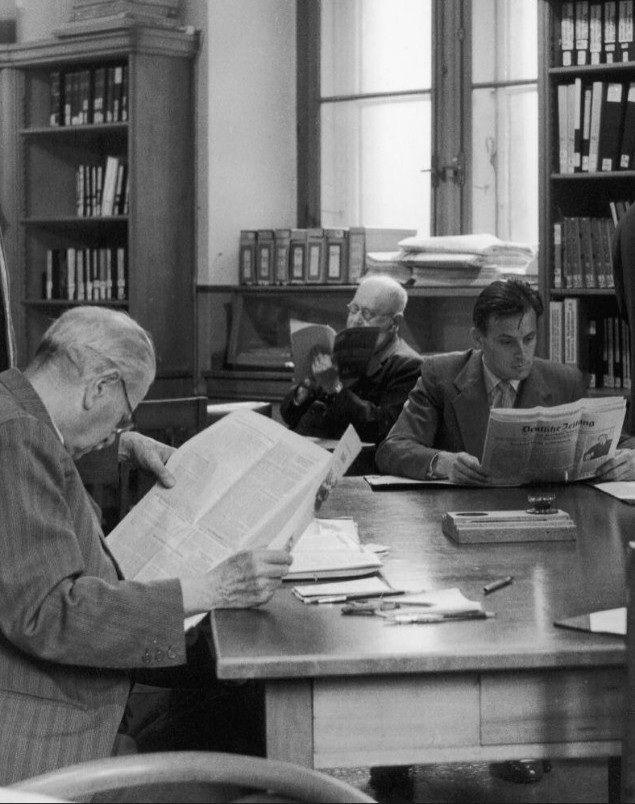
Fig. 6: Three men reading in the reading room of the Swiss Social Archives, 1956. Photo W. E. Baur, Zurich; Archives of the Swiss Social Archives, F 5009-Fx-015.
Employment prospects for scholars from Germany at Swiss universities deteriorated dramatically after 1933. Recent research confirms that efforts to keep German influence at bay, coupled with xenophobic and antisemitic rhetoric, effectively prevented foreign scholars from settling in Switzerland – in fields extending well beyond law and the humanities. By contrast, the Swiss branch of the Institute for Social Research represented a strategic attempt, begun in 1931, to prepare an institutional framework for the academic exodus from Germany. The idea was that Switzerland, as a neutral country, would serve as a hub for international scholarly associations and intellectual exchange.
The philosopher Max Horkheimer (1895–1973) had laid the groundwork for networks in Geneva and Zurich as well as Paris and London. After the Institute for Social Research in Frankfurt was forcibly closed, the Société Internationale de Recherches Sociales in Geneva became its legal successor. The center brought together several German sociologists in 1933–34, although most were officially ‘tourists’ without work permits. Only Horkheimer received a temporary residence permit, prompting the institute to seek a long-term alternative in another country. Most of its staff managed to emigrate to the United States.
Nevertheless, exiled scholars and professionals enriched Switzerland’s cultural and intellectual life. Scholar and rabbi Joseph Prijs (1889–1956) made a particularly important contribution to Jewish studies through his research on Hebrew manuscripts and early printed books in Swiss collections. Prijs had emigrated with his family from Munich to Basel. Unable to obtain a long-term residency or work permit, he devoted himself to this foundational work in Hebrew bibliographic research at the University Library of Basel.
Swiss theater benefited greatly from German-speaking exiles. This was particularly true for the Schauspielhaus Zürich, whose company and program provided a stage for many refugee artists beginning in 1933, including premieres that attracted international attention. Other Swiss theaters and the Zurich cabaret Die Pfeffermühle (The Peppermill) also helped politicize cultural life. These opportunities rarely led to long-term engagements, however, and the impression that the theaters had become German exile clubs made it harder for individual artists to earn a living.
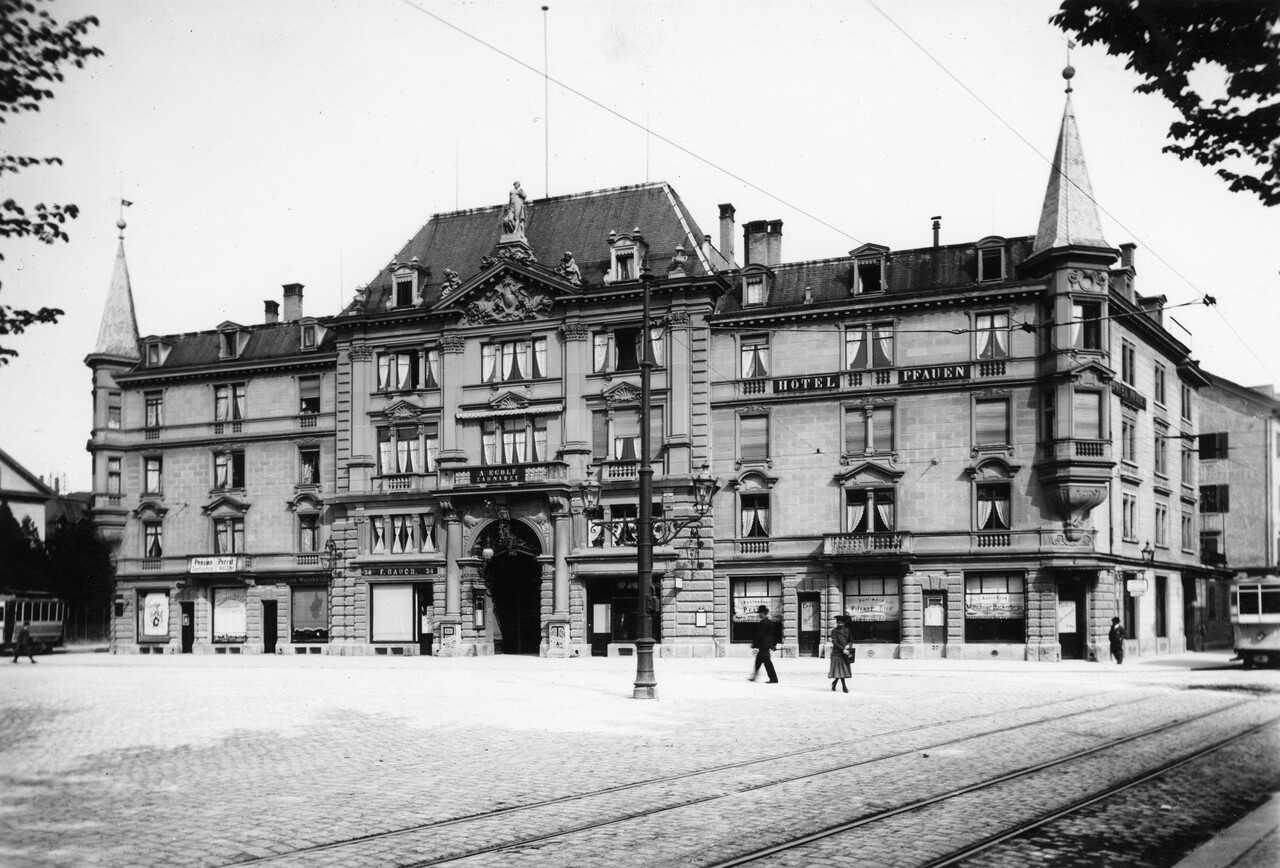
Fig. 7: The Schauspielhaus Zürich on Heimplatz, 1903; Adolf Moser, CC0, via Wikimedia Commons.
After the Second World War, Switzerland became more important to writers seeking a German-speaking or Central European alternative to their countries of origin. Katia Mann (1883–1980) and Thomas Mann (1875–1955), for example, returned there from the United States. The actor and screenwriter Salka Viertel (1889–1978), who had previously lived in the United States, also moved to Switzerland. Wolfgang Hildesheimer (1916–1991) made his home in Graubünden in 1957, while Hermann Kesten (1900–1996) spent his final years in Basel. After the war, the Hamburg-born lawyer Ruth Liepman (1909–2001) founded one of the first literary agencies in Zurich to bring German-language literature to international audiences.
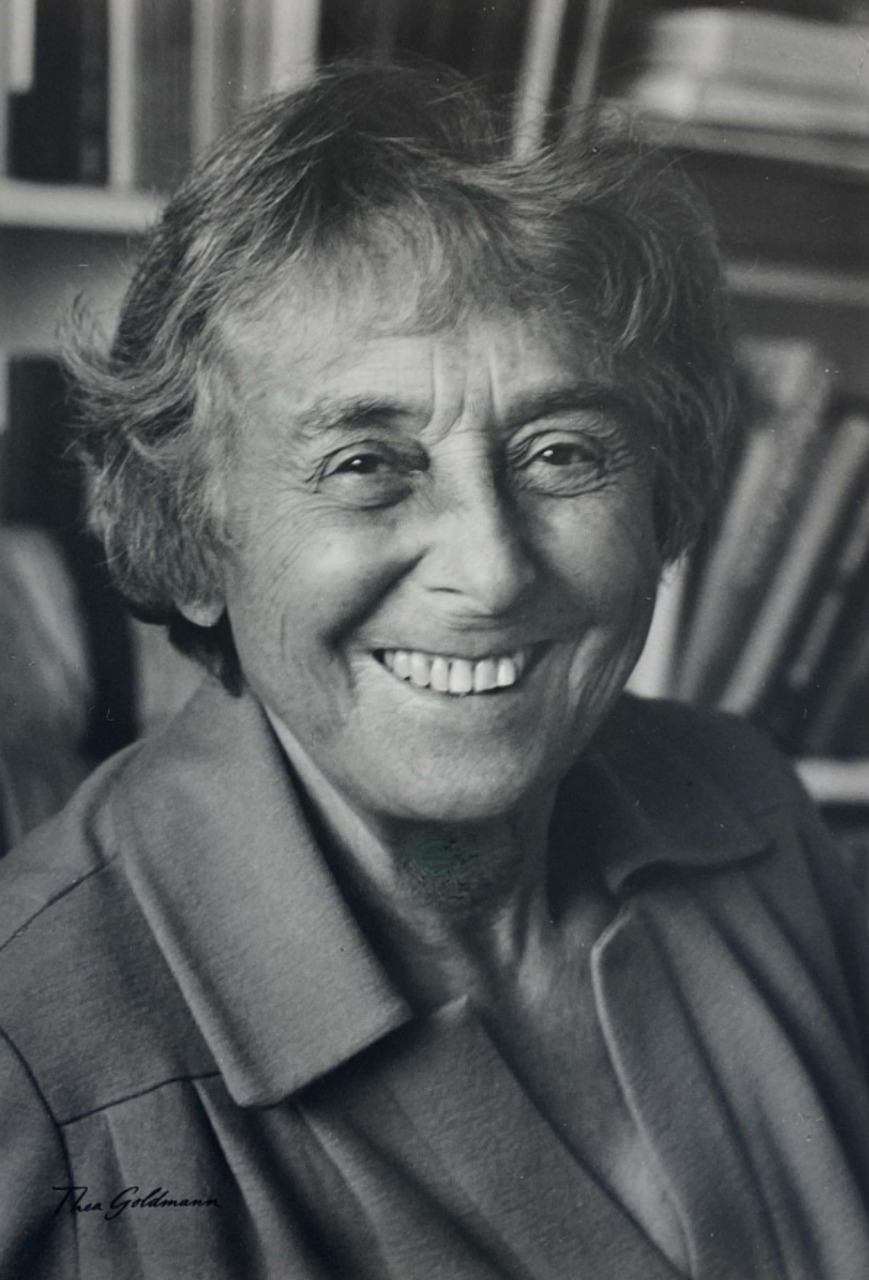
Fig. 8: Ruth Liepman, Zurich, ca. 1970, photograph by Thea Goldmann; Liepman AG, Marc Koralnik.
After the war ended in 1945, the Swiss authorities stepped up efforts to encourage émigrés who had been granted temporary refuge to either return home or move on. Even families with school-aged children, teenagers, and university graduates had to leave the country. The painter Wladimir Sagal (1898–1969), a stateless migrant, was denied permanent asylum in 1948 despite being married to a Swiss woman with whom he had two children.
Representatives of the Jewish communities broadly supported limiting the length of refugees’ stays and treating Switzerland as a transit country. In 1945, however, the Swiss Federation of Jewish Communities (SIG), the official representative body of Swiss Jews, identified a conflict between ‘Jewish consciousness’ and encouraging émigrés to return to the successor states of the German Reich. The Federation therefore advocated for the former refugees either to migrate elsewhere or return to Poland, where many had been born.
Swiss Jews who had fled overseas as victims of Switzerland’s own fascist movement or out of fear of a German invasion returned home after 1945. One of them was Ferdinand Rieser (1886–1947), the director of the Schauspielhaus am Pfauen, an independent theater in Zurich. Following fierce public attacks, he had moved to the United States in 1938 and hoped to build on his prewar success when he returned in 1947.
Other European émigrés who chose or were forced to return from places such as Latin America could settle in Switzerland only if they could demonstrate sufficient income from employment or a pension. The Shoah survivor Otto Frank (1889–1980), father of Anne Frank (1929–1945), also moved from the Netherlands to Basel in the 1960s. Thus, it was the Anne Frank Fonds in Switzerland that oversaw the worldwide dissemination of the diary written by his daughter, who had been murdered in the Bergen-Belsen concentration camp.
Centers such as the La Charmille retirement home in Riehen were not established until after the war. Opened in 1947, this institution gave Shoah survivors and émigrés a sense of community. The retirement home, which relocated to Basel in 2002, enabled residents to live a Jewish life and offered them a shared space in which to discuss traumatic memories. The historian Selma Stern (1890–1981) and the writer Gertrud Isolani (1899–1988), for example, lived at La Charmille. At the same time, the Diaspora institution became a cultural center for the entire region, hosting readings, theatrical performances, and exhibitions.
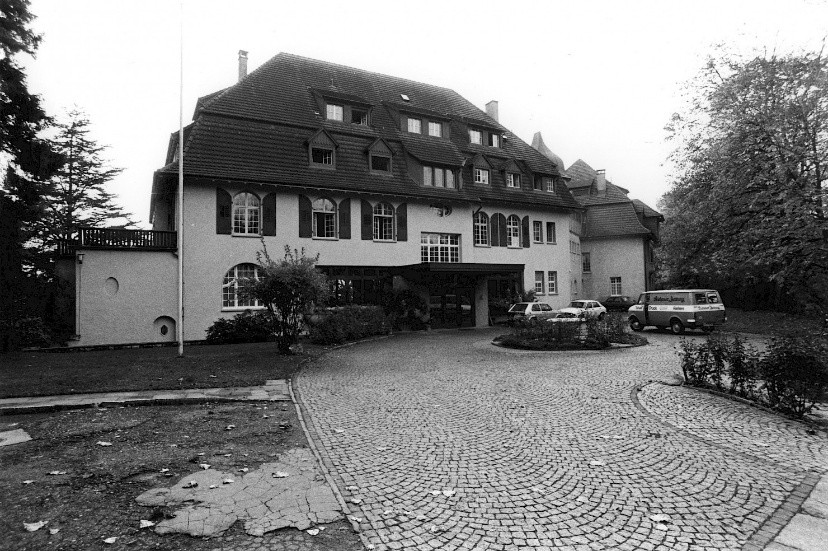
Fig. 9: The La Charmille retirement home in Riehen, Switzerland, around 1970. Photo: Andreas F. Voegelin; Riehen Municipal Documentation Center, RIE B. 1 02450-00.
The Israelitische Cultusgemeinde Zürich (Jewish Community of Zurich, ICZ) founded its library in 1939 in direct response to the destruction of religious and cultural collections in the German Reich. An entire library from Germany formed the core of the collection. It was later supplemented by books brought by migrants, along with 4,000 volumes from the unique historical collection of the Jewish Theological Seminary in Breslau (now Wrocław).
Founded in Basel in 1966, the Jewish Museum of Switzerland pioneered the establishment of independent Jewish museums in postwar Europe. In addition to preserving objects and documents from private estates, it provided a semi-public setting for discussion among Jews in the Diaspora, including both local residents and international visitors.
A working group established at the Swiss Federal Institute of Technology Zurich (ETH Zurich) in the late 1960s developed into an academic center for documenting and researching contemporary Jewish history. Since 2006, its Archives of Contemporary History (AfZ) has played a central role in collecting, cataloging, and documenting sources on the modern history of Swiss Jewry, as well as conducting research and raising public awareness of that history. Its holdings include the archival records of the SIG, Jewish weekly newspapers, and collections of private papers.
The so-called Ludwig Report, submitted to the Swiss Federal Council in 1957 by the law professor Carl Ludwig (1889–1967), examined Swiss refugee policy during the Shoah and prompted the country’s first wave of reflection and debate. Within Jewish circles in Switzerland, too, people questioned whether enough had been done to support European Jews – and whether those efforts had been effective. The close cooperation between representatives of Jewish organizations and Swiss authorities and politicians was controversial. Critics argued that Swiss Jewish representatives had failed Jews from Eastern European countries in particular by doing too little to counter official Switzerland’s antisemitic propaganda and the closure of the border in 1942.
A second phase of critical reassessment and controversy among different interest groups and communities of memory began in the late 1990s. Inquiries by the World Jewish Congress (WJC) into dormant assets belonging to Shoah victims in Switzerland sparked a heated debate about Swiss neutrality and refugee policy. At the same time, they placed enormous pressure on Jewish individuals and organizations in Switzerland to define their relationship to national identities and the notion of a ‘shared Jewish destiny.’ In response, the government appointed the Independent Commission of Experts Switzerland – Second World War (1996–2002). Its findings radically transformed historical understanding of Switzerland’s foreign economic and political relations and its treatment of refugees. The commission’s reports reached a wide audience, ultimately prompting Swiss society as a whole to confront this chapter of its past. The hardships, dangers, and persecution faced by Jews in Switzerland and abroad – as well as efforts to rescue victims of persecution – could no longer be regarded as merely Jewish concerns.
The public showed considerable interest in and sympathy for claims for compensation and reparations brought against Swiss banks and the government by foreign representatives and members of Switzerland’s Jewish community. The historian Thomas Maissen has used the term ‘memory refused’ to describe this belated confrontation with the Swiss narrative of neutrality between 1989 and 2004. Thomas Maissen, Verweigerte Erinnerung: Nachrichtenlose Vermögen und Schweizer Weltkriegsdebatte 1989–2004, Zürich: Neue Zürcher Zeitung, 2005.
The assessment of the state’s refugee policy and its antisemitic arguments and practices during the period of Nazi persecution remains politically contentious. Historical reassessments also required representatives of Jewish communities to face difficult questions about whether they had exhausted their political options.
In 1995, Suhrkamp Verlag published a purported Shoah memoir by a Swiss author writing under the pseudonym Binjamin Wilkomirski. The book was received as a moving literary account of a Jewish orphan’s experiences, but was later shown to be a fraudulent appropriation of Jewish victimhood rather than an authentic autobiographical account. Since then, such claims of Jewish or victim identity have been known in Switzerland under the name ‘Wilkomirski syndrome.’
In a 2004 essay on Jewish identities in Switzerland marking the centenary of the Swiss Federation of Jewish Communities, psychoanalyst Madeleine Dreyfus (b. 1951) wrote that the departure of most Jewish refugees from Switzerland at the end of the war was “a loss for Switzerland that has scarcely been mourned.” Madeleine Dreyfus, “Jüdische Identitäten in der Schweiz,” in: Schweizerischer Israelitischer Gemeindebund, Jüdische Lebenswelt Schweiz, Zürich: Chronos: 2004, 367. According to Dreyfus, this absence continued to shape both the country and its Jewish community, largely unnoticed, into the early twenty-first century.
Over the past twenty years, at least, much has changed in the way this history is publicly commemorated. One example is the Stolperstein – a small memorial plaque set into the sidewalk – installed in 2024 for Rosa Solomin, née Fuchs (1912–1977), on Kornhausgasse in Basel. After fleeing Austria in 1938, Solomin lived at this address in the Jewish Community of Basel’s refugee home. After the war, she was forced to leave Switzerland as a ‘mentally ill foreigner,’ as the authorities described her. Solomin died in 1977 in a psychiatric institution in Austria, her country of origin. Life stories such as hers provide an important complement to accounts of prominent individual exiles in Switzerland. The living conditions of most Jewish asylum seekers during and after the Shoah were a far cry from those of the better-known exceptions.
Switzerland’s role as a host country and second home for persecuted German-speaking Jews is only one part of this history. Swiss citizens, too, suffered fascist persecution, faced mortal danger abroad, or risked their lives to rescue others. The broad-based Swiss Memorial for the Victims of National Socialism initiative, launched in 2019, introduced a new emphasis. It sought to broaden public understanding of Switzerland’s past by drawing attention both to the country’s political complicity in injustice and to the suffering and deaths of individual citizens. In 2023, the government approved plans for a central memorial site in Bern and an educational center in the canton of St. Gallen.
Swiss Federation of Jewish Communities: https://swissjews.ch
Historical Dictionary of Switzerland: https://hls-dhs-dss.ch
Gaby Knoch-Mund/Robert Uri Kaufmann/Ralph Weingarten/Jacques Picard/Philipp von Cranach: “Judentum,” Historisches Lexikon der Schweiz, 1 February 2016: https://hls-dhs-dss.ch/de/articles/011376/2016-02-01/.
Stefanie Mahrer, Department of History, University of Basel, Exilland Schweiz: Kulturschaffende und Intellektuelle im Schweizer Exil in den Jahren 1933 bis 1950: https://exilschweiz.hypotheses.org/
Swiss Memorial for the Victims of National Socialism: https://swissmemorial.ch
This work is licensed under a Creative Commons Attribution - Non commercial - No Derivatives 4.0 International License. As long as the material is unedited and you give appropriate credit according to the Recommended Citation, you may reuse and redistribute it in any medium or format for non-commercial purposes.
Prof. Dr. Susanne Bennewitz has been Professor of Social and Cultural Sciences at the Faculty of Design at Trier University of Applied Sciences since 2018, following previous positions in Heidelberg and Basel. Earlier, she worked both academically and as a freelancer for publishers, museums, and companies, drawing on her academic background in literary studies, computer science, and Jewish studies (Free University of Berlin), as well as her doctoral research on Jewish urban society in Basel in the 19th century (University of Basel). Her publication, Ein Zimmer in den Tropen. Briefe aus dem Exil in Guatemala (1937–1940) (A Room in the Tropics: Letters from Exile in Guatemala (1937–1940)), Berlin: Hentrich & Hentrich, 2013, combines a source edition with contextualizing essays.
Susanne Bennewitz, Switzerland as a Stopover: A Safe Haven Close at Hand (translated by Jake Schneider), in: (Hi)stories of the German-Jewish Diaspora, March 16, 2026. <https://diaspora.jewish-history-online.net/article/gjd:article-55> [October 20, 2026].
 This work is licensed under a Creative Commons Attribution - Non commercial - No Derivatives 4.0 International License. As long as the material is unedited and you give appropriate credit according to the Recommended Citation, you may reuse and redistribute it in any medium or format for non-commercial purposes.


