
After the November Pogroms in 1938, tens of thousands of Jews tried to leave Nazi Germany. Although the United Kingdom’s immigration policy remained strict, this country, along with a few others, announced that it would accept Jewish children and teenagers. The so-called Kindertransports to the United Kingdom from 1938 to 1939 would become one of the greatest rescue missions before the outbreak of the Second World War.
Two out of the roughly 10,000 saved ‘Kinder,’ as the participants call themselves today, were the Augsburg-born twins Ernst (1925–1941) and Rudolf Farnbacher (1925–1946). Although the transports saved thousands from being murdered in the Shoah, they only temporarily brought salvation for the two brothers: The public register of the English district of Howdenshire near Leeds shows that Ernst Farnbacher committed suicide two years after his emigration, aged only 16. The medical record shows that he died by self-strangulation “whilst the balance of his mind was disturbed.” Five years later, Hendon District near London recorded an almost identical entry in the register referencing a poison, potassium cyanide. In 1946, Rudolf Farnbacher took his own life at the age of 21. He had presumably discovered only a short while previously that his parents had been murdered in Auschwitz.
Suicides were very rare among the roughly 10,000 Jewish children and teenagers who fled to the United Kingdom. Yet the records concerning the Farnbacher twins evince the enormous psychological pressure with which these young participants in the transports were confronted. Their case also adds a hitherto underappreciated dimension to the story of the transports, which have to date been regarded as a tragic, but above all successful, rescue operation.
Ernst and Rudolf Farnbacher were born in Augsburg in 1925 to a liberal Jewish family of businesspeople. Their mother, Frieda Farnbacher, née Reis (1895–1943), was a trained kindergarten teacher and, as such, took on the household responsibilities and raised the boys. Meanwhile, their father, Fritz Farnbacher (1885–1943), ran the wholesale toy business Wernecker und Farnbacher together with his brother. This established family business was one of the first of its kind in Germany and employed over one hundred individuals.
Ernst Farnbacher was the elder of the twins and technically skilled. He liked producing things with his hands. Rudolf Farnbacher was more sensitive, contemplative, and not as technically interested as his brother. Their older sister, Gertrud Farnbacher (1919–2018), attended a Catholic girls’ school and celebrated her bat mitzvah in 1936 at age 16. She provided most of the available information on the lives of her brothers. Ernst and Rudolf Farnbacher themselves left behind very little information. Sources like the two register entries in England include only scant traces of their lives. A lot can only be reconstructed by examining the experiences of other ‘Kinder.’ Gertrud Farnbacher was the only member of her core family to survive the Shoah.
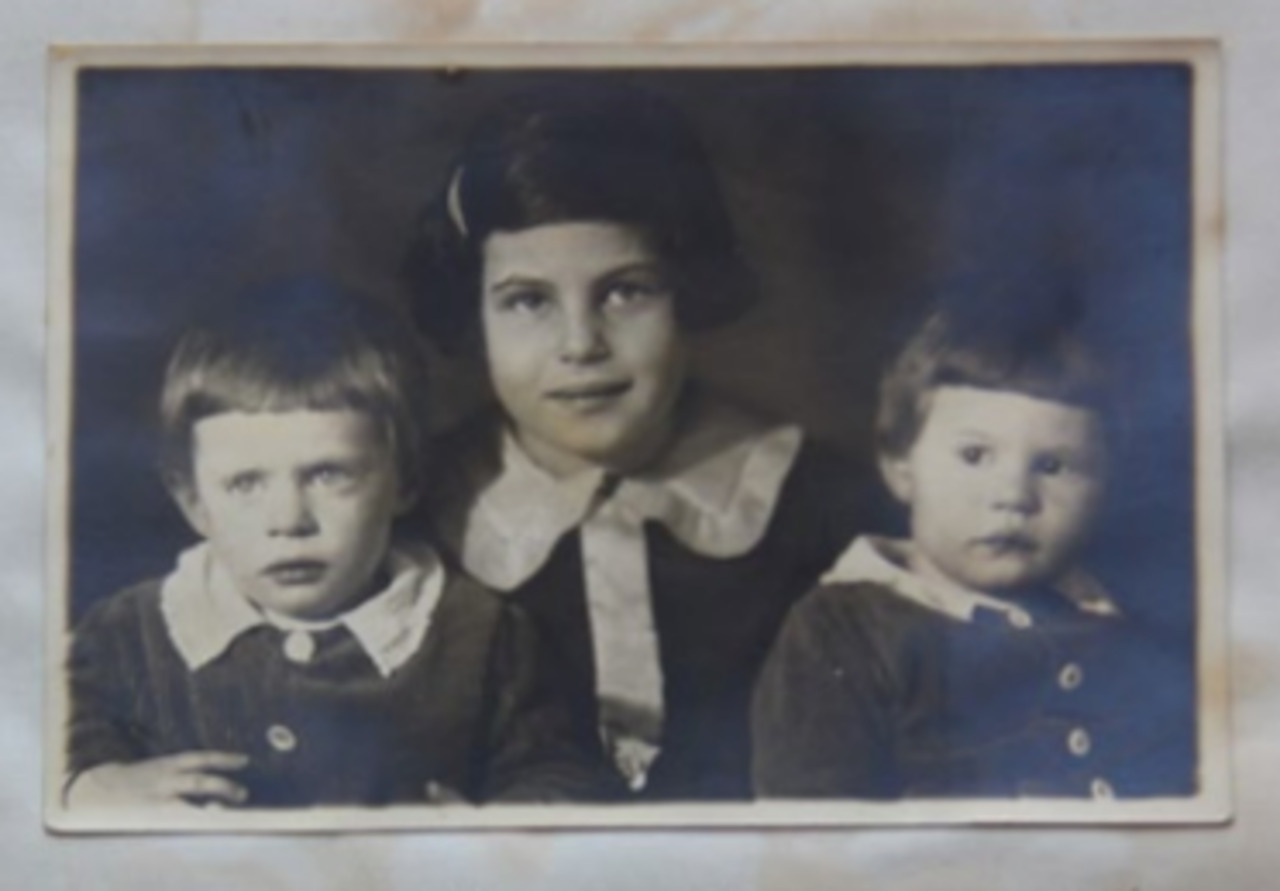
Fig. 1: Rudolf and Ernst Farnbacher with their sister Gertrud Farnbacher, 1926; Augsburg City Archive / Gertrud Farnbacher Estate.
From the mid-1930s, Nazi persecution measures in Germany were increasingly impacting Jewish children. They found themselves being victimized by teachers and were forced to quit schools and clubs. Many therefore, retreated into private structures and focused more strongly on their Jewish lives: In Augsburg, for example, the Private Tennisgesellschaft Augsburg (Augsburg Private Tennis Club), which was established in 1933 with its own courts, became an important focal point for Jewish families. The twins also spent their free time there. That same year, the Nazis listed the family business Wernecker und Farnbacher in a public call for boycott. Just a few years previously, the business had been celebrated in the Buch der alten Firmen der Stadt Augsburg (Book of Old Companies in the City of Augsburg) as one of the city center’s biggest employers.
Like many other Jews, the Farnbarcher family felt an increasing desire between 1933 and 1935 to leave Nazi Germany due to antisemitic persecution. The family planned first to relocate its business to the United States. The boys’ uncle, Otto Farnbacher (1884–1958), sent his son to the United Kingdom in 1935, and Gertrud Farnbacher left her family one year later. The twins were eleven at the time. Their sister first traveled to the Francophone part of Switzerland before going to Berlin in 1938 to attend a commercial school. There, she witnessed the November Pogroms, which entailed the internment of tens of thousands of Jews and the murder of hundreds. She subsequently returned to Augsburg for a short period in order to arrange her emigration. Her contacts in Switzerland proved helpful in this endeavor: The parents of a friend from her former school offered her a position as a maid in the United Kingdom, which meant she could leave Nazi Germany in March 1939. Gertrud Farnbacher thus became one of around 20,000 young women who were able to flee to the United Kingdom with a domestic permit during the so-called maids’ emigration.
In the meantime, the situation for Jews in Augsburg had deteriorated significantly. In September 1938, the family business was ‘Aryanized’ and sold for a ridiculous sum. Shortly after the November Pogroms, Fritz and Otto Farnbacher were arrested and interned for several weeks in the Gestapo prison in Augsburg. By this point at the latest, emigration had become the family’s highest priority.
After the November Pogroms in 1938, Jewish aid organizations in the United Kingdom were able to secure permission at least for children and teenagers to temporarily enter the country. Previously, at the Évian Conference, the international community of states had rejected the prospect of allowing any meaningful number of Jews to emigrate to their countries. The issue of accepting Jewish refugees had also been discussed at this conference in July 1938. The British government shortly thereafter agreed to the Kindertransports on the condition that a guarantee of fifty pounds per child was set aside and that all costs for accommodations were covered.
The first transport from Berlin took place in early December 1938. The transport traveled by train across the Dutch border and then by ferry to the United Kingdom. The Refugee Children‘s Movement (RCM) in London was responsible for organizing the transport and distributing the children and teenagers. Under great time pressure, this organization took care of guarantees, accommodations, and donations along with other concerns on behalf of the emigrants and their (host) parents. The United Kingdom took in around 10,000 children and teenagers, with other countries soon also allowing them to immigrate, such as the Netherlands, Sweden, and Switzerland. Altogether, some 20,000 children and teenagers could be saved, most of whom came from Germany and Austria, some of whom also came from Poland and Czechoslovakia.
Transnational networks constituted one of the most important factors in successfully fleeing from the Nazi sphere of power. After her arrival in the United Kingdom, Gertrud Farnbacher also tried to help her family emigrate. However, despite her strident efforts, her attempts to arrange for her parents to flee remained unsuccessful. At first, her brothers were also not granted a place on the transports. When Gertrud Farnbacher personally visited the RCM in London, she was told that all the available places had been taken. Only when she began sobbing out of desperation were her brothers included on the list after all.
Documents from the archives in Augsburg show that their first attempt at emigrating failed in July 1939, yet the reasons for this have not yet been ascertained. Perhaps they did not have enough time to prepare. In many cases, the would-be emigrants had only twenty-four hours from the moment they were notified of their acceptance onto the transports until their departure. The participants were between 2 and 17 years old. One month after their failed attempt, the Farnbacher twins finally managed to flee: On 23 August 1939, the now 14-year-old brothers were accepted onto one of the last transports. Each individual was allowed only one item of luggage. The Nazis had forbidden the participants from taking any larger sums of money and jewelry. For Ernst and Rudolf Farnbacher, this was salvation at the eleventh hour: Less than two weeks later, the transports came to an abrupt end following the outbreak of the Second World War.
In the United Kingdom, a shortage of staff and financial means quickly led to big problems. At first, most of the ‘Kinder’ were placed with private families, and later in educational institutions. Special programs were aired on the British radio asking for urgent donations. The situation deteriorated further with the beginning of the war: Older teenagers were arrested as they were suspected of being German spies. In hindsight, almost all of the ‘Kinder’ reported short- or long-term psychological effects of their emigration: guilt, anger, resentment, and grief over being forced to leave behind their immediate environments and their tearful and traumatizing farewells from their parents. Many recalled debilitating fear for the relatives, difficulties adjusting, and a hard time fitting in, if at all, sometimes even years or decades later. Only about half of the ‘Kinder’ would ever see their parents again.
Ernst and Rudolf Farnbacher were initially housed together in a rural boarding school in Kent. This was a reform school founded by Anna Essinger (1879–1960), a German reform pedagogue from a Jewish family. Essinger had founded a progressive boarding school near Ulm in 1926, but following the Nazi assumption of power in 1033, she chose to emigrate to the United Kingdom. Dozens of rescued ‘Kinder’ were housed at her institution until the end of the Second World War. Despite their fears for the families, many of them recalled their time at the boarding school as the happiest of their lives. Aside from the sense of community there, this was especially due to the teaching staff: Consisting of renowned scholars and artists, many had themselves fled and thus had a special understanding of the situation of the ‘Kinder.’
Anna Essinger was involved in the organization of the Kindertransports from 1939 onwards. Her view that housing the children in a school-like environment would be better for them than placing them with host families was rather unpopular at the time. To be sure, problems soon arose in the host families, for example, when they had expected a more religious or less religious child, had trouble accepting the rudimentary linguistic skills and sometimes strange-seeming behaviors of the traumatized children, or expected the children to perform domestic chores in gratitude for being rescued.
There are also no ego-documents about the Farnbacher twins from the time they spent at the reform school. It is known, however, that their school time ended after two years due to their age. The RCM subsequently made a decision with far-reaching consequences: The twins were to be separated. Although the organization generally tried not to separate siblings, this was sometimes unavoidable for logistical reasons. Ernst Farnbacher was sent to Leeds, where he attended a school of the Organization for Rehabilitation through Training. There, Jewish teenagers received technical training in preparation for emigration to British Mandatory Palestine. Just a few weeks later, Ernst Farnbacher took his own life at the age of 16. Due to a lack of funds, his siblings were not able to attend his funeral.
It cannot be reconstructed today whether Fritz and Frieda Farnbacher learned of their son’s suicide back in Augsburg. Since the outbreak of war, only a few families in Germany had regular contact with their children. In March 1943, the twins’ parents were deported to Auschwitz concentration and extermination camp, where they were murdered in the gas chambers immediately upon arrival.
After the completion of his training, Rudolf Farnbacher moved to London, where his sister lived. The siblings had only seen each other a few times since the suicide of their brother. Only now did they see each other more often. In London, Rudolf Farnbacher began an apprenticeship at a chemical factory. Shortly after the end of the war, he met a girl, but she received a visa to the United States and emigrated. Shortly thereafter, the siblings discovered that their parents had been murdered. In June 1946, Rudolf Farnbacher decided to end his life by ingesting potassium cyanide. He was 21 years old.
Gertrud Farnbacher emigrated to the United States in 1951, where she later changed her name to Karen Hillman. In 1994, she wrote a few letters to Gernot Römer (1929–2022), a journalist in Augsburg. Therein, she cited some of the possible reasons for her brothers’ suicides. On the one hand, the boys, who had grown up in a sheltered environment in Augsburg, missed their familial surroundings. On the other hand, their despair was presumably also caused by difficulties with the language and fitting in, as was reported by many other ‘Kinder.’ Most of the children at first only spoke little English, if any at all. The separation of the brothers probably also contributed to their suicides, as did their worry about their parents and later the knowledge of their parents’ murder. Many of the ‘Kinder’ also reported feeling some form of survivor’s guilt, as is generally known from Shoah survivors. Many ‘Kinder’ took years to understand that their parents’ decision to give them away had by no means been a punishment, as they’d felt at the time, but had rather saved their lives.
The so-called Kindertransports numbered among the greatest rescue operations of Jews before the outbreak of the Second World War. They protected around 20,000 Jewish children and teenagers from continued direct persecution by the Nazis, including around 10,000 of them in the United Kingdom. Research on the transports began in the 1980s, as several ‘Kinder’ went public with their stories. The transports have since then been regarded, not only in the United Kingdom, as a tragic but successful rescue story, to which numerous forms of documentation and many memorials have been dedicated to date.
Only in the past decade or so have aspects beyond this narrative of salvation come further into focus. They have contributed additional dimensions to the interpretation of the Kindertransports. This includes, for example, the fact that many of the survivors became violent as a result of their traumatic experiences and the lack of psychological care. Many of those affected suffered from depression and attachment disorders. Numerous ‘Kinder’ reported extreme insecurity and enduring fear of loss, which sometimes also had an impact on their own children and grandchildren. The young age of the individuals affected meant that they frequently lost not only their families, but also their mother tongues and thus also their connections to their own origins.
Suicides, particularly those occurring so close to the events in question, have been documented only in very few cases. Yet the fact that they occurred at all is not mentioned in most of the personal accounts of the transports. Those ‘Kinder’ who did not consciously engage with the transports as a memorable part of the Shoah from the 1980s onward generally left few traces in historiography. This is also true of the tragic biographies of the Farnbacher twins from Augsburg. Sources like the two register entries from Howdenshire and London could help to expand our perspective on the Kindertransports.
Rudolf Farnbacher, Augsburg Memory Workshop. Available online: https://gedenkbuch-augsburg.de/biografien/rudolf-farnbacher
Ernst Farnbacher, Augsburg Memory Workshop. Available online: https://gedenkbuch-augsburg.de/biografien/ernst-farnbacher
Ann-Kathrin Rahlwes, “The Family Was Jewish…”: Biographical Learning Using the Example of a German-Jewish Family. Frankfurt am Main: Fritz Bauer Institute, 2024. Available online: https://www.fritz-bauer-institut.de/fileadmin/editorial/publikationen/paedagogik/unterrichtsmodule/UM-07_Familie.pdf
Holocaust Hero Sir Nicholas Winton (That’s Life), BBC television program, United Kingdom, 1988. Available online: https://www.youtube.com/watch?v=OqqbM1B-mPY
Kindertransport – Into a Strange World, documentary film by Mark Jonathan Harris, USA/Germany, 2000.
One Life, feature film by James Hawes, See-Saw Films, United Kingdom, 2023.
This work is licensed under a Creative Commons Attribution - Non commercial - No Derivatives 4.0 International License. As long as the material is unedited and you give appropriate credit according to the Recommended Citation, you may reuse and redistribute it in any medium or format for non-commercial purposes.
Alexander Weidle, M.Ed., is a research associate for science communication at the Leibniz Institute for the History and Culture of Eastern Europe (GWZO) and is working on a dissertation project about the community-building practices of the ‘Bukovina Germans.’ Previously, he worked at the Leibniz Institute for Jewish History and Culture – Simon Dubnow on an educational project. His research interests include cultures of remembrance and oral history, as well as the history of (forced) migration in the modern era, particularly ‘flight and expulsion.’ In his master’s thesis, “Two of 10,000” (2018), Weidle explored the historiography of the ‘Kindertransporte’ using the example of the Farnbach twins.
Alexander Weidle, Two out of 10,000: The Farnbacher Twins from Augsburg and the ‘Kindertransports’ to the United Kingdom (translated by Tim Corbett), in: (Hi)stories of the German-Jewish Diaspora, June 10, 2025. <https://diaspora.jewish-history-online.net/article/gjd:article-29> [October 12, 2026].
 This work is licensed under a Creative Commons Attribution - Non commercial - No Derivatives 4.0 International License. As long as the material is unedited and you give appropriate credit according to the Recommended Citation, you may reuse and redistribute it in any medium or format for non-commercial purposes.
