
Born on June 15, 1889 in Sambor, Austria-Hungary (today Sambir, Ukraine)
Died on October 20, 1978 in Klosters, Switzerland
Occupation: Actress, screenwriter, salonnière
Migration: United
States, 1928 | Switzerland, 1960
“The greatest achievement in my life is probably to have created the image of a very courageous woman. Nobody will ever know what it has cost me.” Salka Viertel, Diary, 17th February 1961, DLA, quoted in Katharina Prager, „Ich bin nicht gone Hollywood!“: Salka Viertel. Ein Leben in Theater und Film, Wien: Wilhelm Braumüller Universitätsverlag, 2007, 261. This is how the actress and screenwriter Salka Viertel pinpointed her self-perception in her diary in 1961, during the early stages of work on her memoir.
Born to a liberal, middle-class Jewish family in the Austro-Hungarian crownland of Galicia, she defied the expectations for a young woman of her background and trained as an actress. Between 1910 and 1928, Viertel had numerous engagements in the German-speaking sphere, including theatres in Berlin, Vienna, Leipzig, Hamburg, and Düsseldorf. Having married the poet and theatre director Berthold Viertel (1885–1953) in Vienna in 1918, she followed him to Hollywood with their three sons in 1928. While her husband’s attempt to establish himself as a film director and screenwriter remained largely unsuccessful, Viertel became a highly-paid screenwriter for the American film production company MGM, as well as one of the foremost networkers within both film industry circles and the German-speaking exile community. Falling out of favour with the studios during the post-war McCarthy era due to her left-leaning political convictions and earlier anti-fascist activism, Viertel returned to Europe. In 1960, she settled in Klosters, Switzerland.
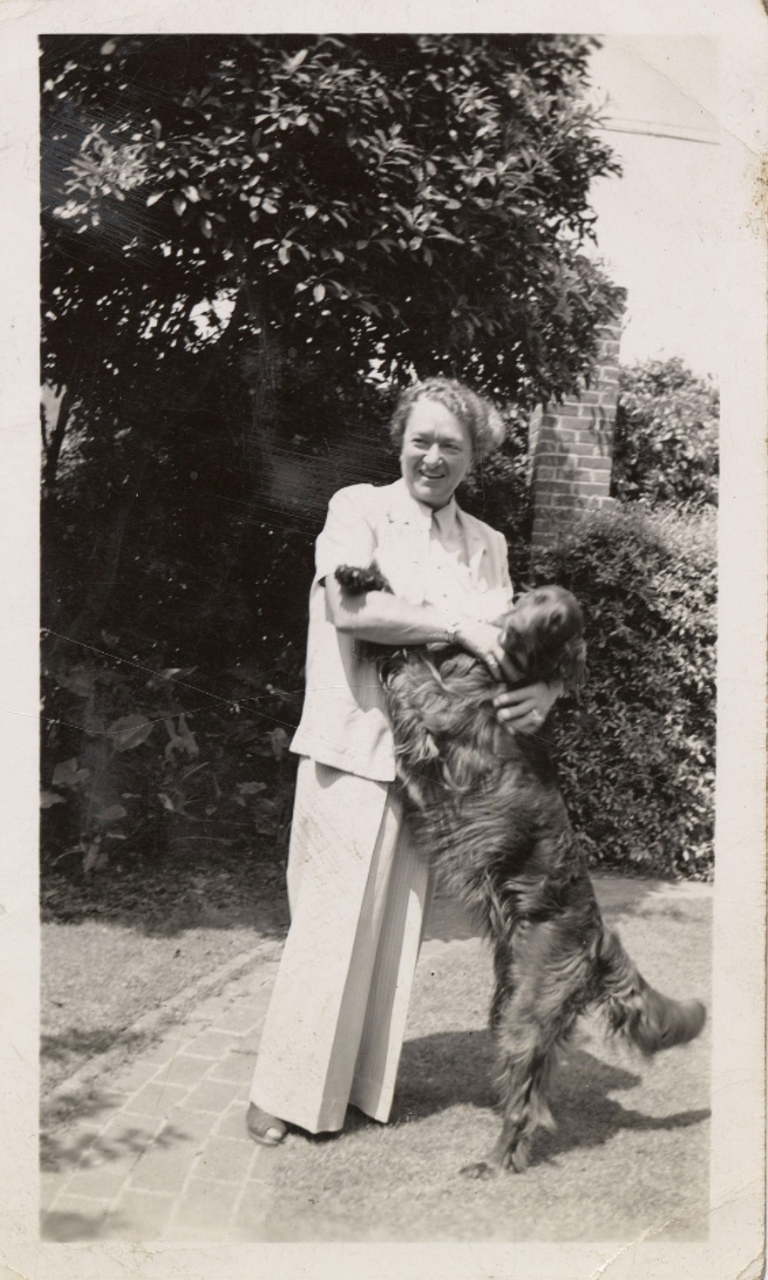
Fig. 1: Salka Viertel, around 1930; Deutsches Literaturarchiv Marbach, B 80.57/35; B 2010.Z 1.003 (5230-50), © unknown.
Salka Viertel, née Salomea Sarah Steuermann in 1889, was the first of four children born to her parents Joseph Steuermann (1852–1932), then a successful lawyer and the first Jewish mayor of Sambor (Sambir), and Auguste Steuermann (1867–1953), née Amster. A condition for their marriage had been that Viertel’s mother, who came from a German-speaking Russian Jewish family from Czernowitz (Chernivtsi) in the Bukovina, learnt Polish for her husband, whom Salka Viertel described as „assimilated into Polish-Austrian society”. In addition to Polish and German, Viertel grew up speaking French with her family and governesses, and Russian and Ukrainian with servants. The Steuermanns’ preference for German and Polish functioned as a linguistic marker of their acculturation, signalling their identification with the Austro-Hungarian upper middle class.
In turn, the family’s distancing from Yiddish – which Viertel refers to in her memoir as a “harsh idiom” that they neither spoke nor understood – reflected their sense of distance from what they perceived as more traditional Yiddish-speaking Jews, whose way of life and social position contrasted with their own. However, they shared a sense of Jewish identity. As Viertel recalled in her memoir: “I knew that we were Jewish, but we certainly did not belong to those strange people in long black kaftans, with beards and sidelocks, and we did not understand their harsh idiom. Still, we were not Christians either, although we had a Christmas tree and sang Christmas carols. Our parents never went to church – but also they never went to the synagogue.” Salka Viertel, The Kindness of Strangers, 12. Although the Steuermanns were largely non-practising and identified with the German-speaking bourgeois milieu, it is important to note that Joseph Steuermann refused to be baptised, which would have enabled him to accept attractive professional appointments in Vienna that were occasionally offered to him.
Both due to the Steuermann family’s social standing and their residence on the rural Vychylovka estate, Salka Viertel and her siblings were initially educated at home by German and French governesses and a Polish tutor. Once a year, they sat exams as external candidates at a local school. Unlike her siblings, Viertel then attended a co-educational boarding school in Lemberg (Lviv) for two years. This was primarily motivated by her orthopaedic problems, for which she was able to access better treatment in the regional capital. Returning to stay with her family in 1902/03, she was already determined to train as an actress, having become fascinated by the theatre. While her parents disapproved of Viertel’s wish, they allowed her to audition informally with a theatre director in Lemberg, hoping that he would discourage her. Instead, the director conceded that she had talent. The Steuermanns continued to oppose their daughter’s chosen career, instead trying to find a suitable match in marriage for her. After the premature death of her fiancé in 1907, Viertel auditioned at the Kaiserliche Akademie (Imperial Academy), but was rejected, allegedly due to her strong Slavic accent. However, the renowned German actor and acting teacher Alexander Roempler (1860–1909) agreed to tutor her free of charge, under the condition that Viertel worked on losing her accent.
Having debuted in Pressburg (Bratislava) as Medea in Franz Grillparzer’s (1791–1872) eponymous play in 1910, Salka Viertel’s career in German-language theatre over the next 18 years comprised a variety of supporting and lead roles. After she had terminated her first contract in Teplitz-Schönau (Teplice) early – owing to a breakdown of professional relations, mostly due to the persistent sexual harassment she faced from the director and various members of the cast – Viertel appeared on stage in Zurich, then in Berlin. She was cast in supporting roles in productions by associates of the Austrian-born Jewish theatre director Max Reinhardt (1873–1943) at the Deutsches Theater. In 1911, Viertel appeared in Orestie, stage-managed by Reinhardt himself. Reinhardt later found refuge in the United States following Nazi Germany’s annexation of Austria in 1938, which brought Viertel into closer contact with him.
In 1913, Viertel returned to Vienna to join the ensemble of the Neue Wiener Bühne. Having met the poet, writer, and theatre maker Berthold Viertel in 1916, who was also from an acculturated Jewish family of Galician origin, they married in a synagogue in Vienna in 1918. However, from the early years of their marriage, they spent long periods of time apart, owing to the demands of their respective careers: From late 1918 to early 1919, Viertel was with the Münchner Kammerspiele, while her husband worked in Dresden. She subsequently transferred to Leipzig, then to Dresden as a guest performer, having given birth to her sons Hans (1919–1999) and Peter Viertel (1920–2007). Between late 1921 and 1923, Viertel commuted to Hamburg, performing at the Schauspielhaus. In the following year, she joined her husband’s own theatrical venture in Berlin, the Expressionist theatre company Die Truppe. After the birth of their third son, Thomas Viertel (1925–2009), they were involved with the Schauspielhaus in Düsseldorf. However, the failure of Die Truppe in 1924 had left the spouses in considerable financial difficulty. The solution finally presented itself in 1928, when Berthold Viertel signed a contract with Fox Film Corporation as a screenwriter and director, and they moved to Hollywood. There, they encountered many other first- or second-generation Jewish migrants, most of whom were of Eastern European origin. Having built impressive careers in Hollywood, many supported later German-speaking arrivals such as the Viertels. Occasionally, however, tensions arose due to some later immigrants’ prejudices against the commercial aspects of work in the studio system.
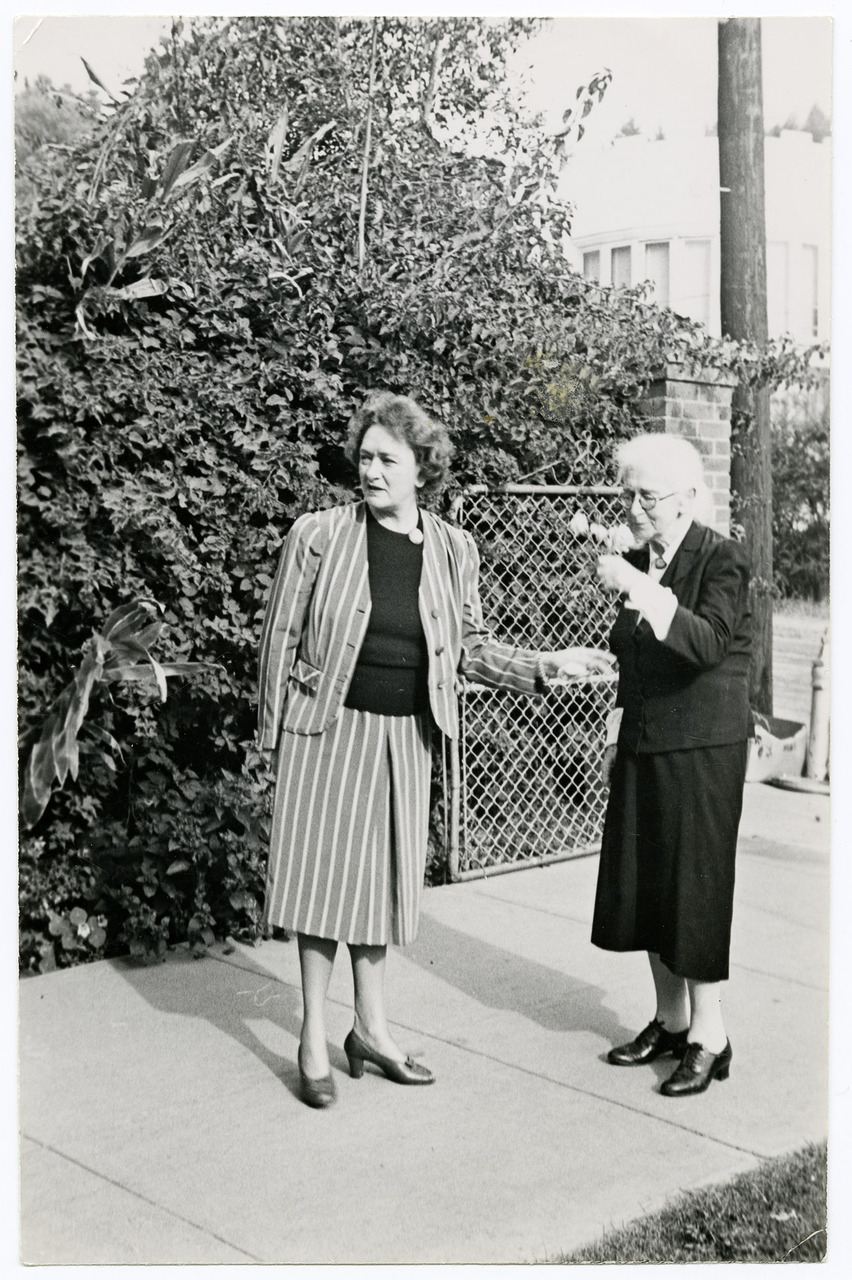
Fig. 2: Salka Viertel with her mother, Auguste Steuermann, in Santa Monica, around 1945; Deutsches Literaturarchiv Marbach, B 80.57/18; B 2010.Z1.004 (5231-10), © unknown.
Adjusting from a busy, if varied, career as a stage actress in Weimar Germany to the life of a homemaker with mostly social obligations in Hollywood left Salka Viertel with a feeling of arrested momentum. She had minor roles in two films, one directed by her husband and another by her friend Wilhelm Dieterle (1893–1972), a German-born actor and director. She was also cast in a supporting part in the German-language remake of the star actress Greta Garbo’s (1905–1990) first and highly successful “talkie”, Anna Christie (1930).
Viertel had met and befriended Garbo at a party hosted by the director Ernst Lubitsch (1892–1947) in the same year. Lubitsch, born in Berlin to Jewish parents from Belarus and Germany, had already migrated to Hollywood in 1922. However, Viertel felt that she was too old and not attractive enough to continue her acting career in the movies. Instead, encouraged by Garbo, she turned to screenwriting. In this way, Viertel assumed the position of her family’s main breadwinner, like many other female immigrants from Central Europe. Under a lucrative contract with MGM, she produced five scripts between 1933 and 1941 for movies in which Garbo starred, including the highly acclaimed Queen Christina (1933).
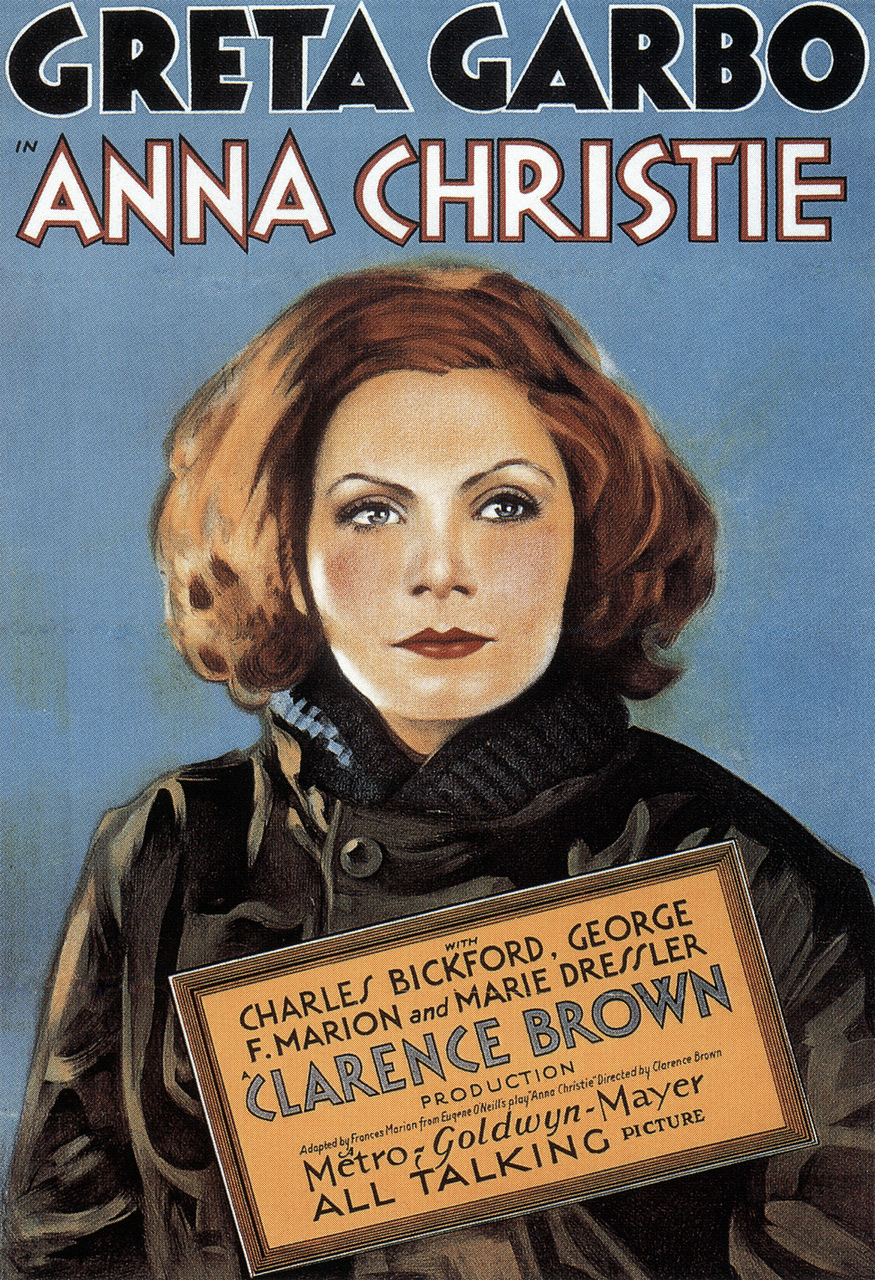
Fig. 3: Greta Garbo in a promotional poster for Anna Christie (1930), a film for which Salka Viertel wrote the German-language screenplay; Wikimedia Commons.
By contrast, Berthold Viertel had struggled to adjust to the demands of work within the studio system, which he found too commercialised. From 1931, he spent extended periods of time in New York for work, and subsequently moved between Vienna, London, and the United States. The Viertels had intended to stay in the United States for only three years. However, the worsening political situation in Europe led Salka Viertel to remain in Hollywood with their sons, who had quickly adjusted to their new environment. Together with them, she became a U.S. citizen in 1939. Berthold Viertel had been stateless since he was deprived of his Austrian citizenship on racial grounds in 1938, but was only naturalised as a U.S. citizen later in 1944. Unlike their sons, Berthold and Salka Viertel did not identify as culturally American, but retained a Central European identity. “Mein Herz was denkst Du von mir – Ich bin nicht gone Hollywood”, Salka Viertel, telegram, 13th November 1931, DLA, quoted in Katharina Prager, “Ich bin nicht gone Hollywood!“: Salka Viertel. Ein Leben in Theater und Film, Wien: Wilhelm Braumüller Universitätsverlag, 2007, 1. Salka told her husband via telegram in 1931, using a contemporary phrase to signal her refusal to adopt the commercial and assimilatory values associated with the American film industry.
Having moved to Santa Monica in 1929, their spacious house at 165 North Mabery Road quickly became a social hub thanks to Salka Viertel’s ingenuity as a networker. Their address not only served as a ‘haven for the homeless’ (‘Hafen der Heimatlosen’) for artists who had fled Europe, as Berthold phrased it, but also attracted Hollywood creatives and celebrities, enabling the two groups to mingle. In this regard, Viertel’s gatherings have been compared to the German-Jewish tradition of the salon, an important space for encounters between Jews and non-Jews. Viertel herself is rightly remembered as a latter-day “salonnière”; like the two most important hostesses in the tradition, Rahel Varnhagen (1771–1833) and Henriette Herz (1764–1847), she turned her home into a site of cultural translation in the broadest sense. Viertel also used her standing for activism on behalf of Jewish friends, family, and acquaintances still trapped in Europe. Viertel was a founding member of the aid organisation European Film Fund, which was formed in Hollywood by German-speaking immigrants before the outbreak of the war. It supported a large number of exiled writers living in dire conditions. Viertel also privately helped Jewish refugees in fleeing to the United States by organising their travel, raising money, and procuring affidavits and visas. This made her actively involved in establishing a transnational aid network and creating a community in exile.
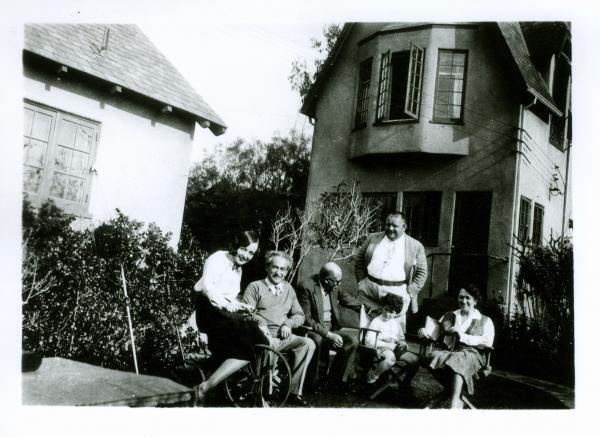
Fig. 4: Salka Viertel’s home in Santa Monica, which became famous for its Sunday salons. From left to right: The German actress Dita Parlo (1908–1971), Berthold Viertel, the Austrian composer Arnold Schönberg (1874–1951), son Thomas Viertel, the German actor Heinrich George (1893–1946), and Salka Viertel, early 1930s, © unknown.
As late as 1941, Viertel was able to bring her 74-year-old mother, Auguste Steuermann, to Los Angeles, having funded and helped enable her journey by rail from Sambor to Moscow and from Moscow to Vladivostok, and from there by boat to the United States. However, despite Viertel’s desperate efforts, she was unable to help her youngest brother, Zygmunt Steuermann (1899–1943), a renowned Polish footballer, do the same. Clinging to the hope that he had been able to flee with retreating Soviet troops, she learnt only in 1947 that he had been murdered by the German occupiers. While Viertel’s father had passed away in 1932, her sister, the actress Rosa Gielen, née Steuermann (1891–1972), survived the Second World War in Argentina. She returned to Vienna in 1948 with her husband, the German-born director Josef Gielen (1890–1968), who later led the Burgtheater, Austria’s national theatre. Viertel’s younger brother, Eduard Steuermann (1892–1964), meanwhile, had found refuge in the United States. He was a pianist and composer who later became famous for his Beethoven recitals.
The family’s story of displacement, loss, and survival reveals the disruptions, dispersions, and occasional returns that marked twentieth-century diasporic life. From Sambor’s pre-war Jewish population of roughly 8,000, only around 160 people were estimated to have survived the Shoah.
With Greta Garbo having effectively retired from filming after Two-Faced Woman (1941), Salka Viertel found opportunities for work within the Hollywood studio system harder to come by. Additionally, her support for anti-fascist causes and activism for refugees during the Second World War resulted in her being watched by the FBI from 1942. Growing anti-communist anxiety in the United States led to reinforced surveillance of individuals and groups that were suspected of membership in the Communist Party, culminating in the McCarthy trials of the post-war period. Viertel’s long-standing friendships with key defendants exacerbated her difficulties in finding employment. Similarly, her application for a passport was delayed due to suspicions that she was a Communist.
Having amicably divorced Berthold Viertel in 1947, who had returned to Europe that year, Viertel was finally issued a passport in 1953, just after her ex-husband had passed away. In the same year, she gave up her permanent residence in Hollywood, subsequently travelling between the United States and Europe as a freelance screenwriter. From 1957 onwards, she kept an English-language diary in order to practice for her memoir.
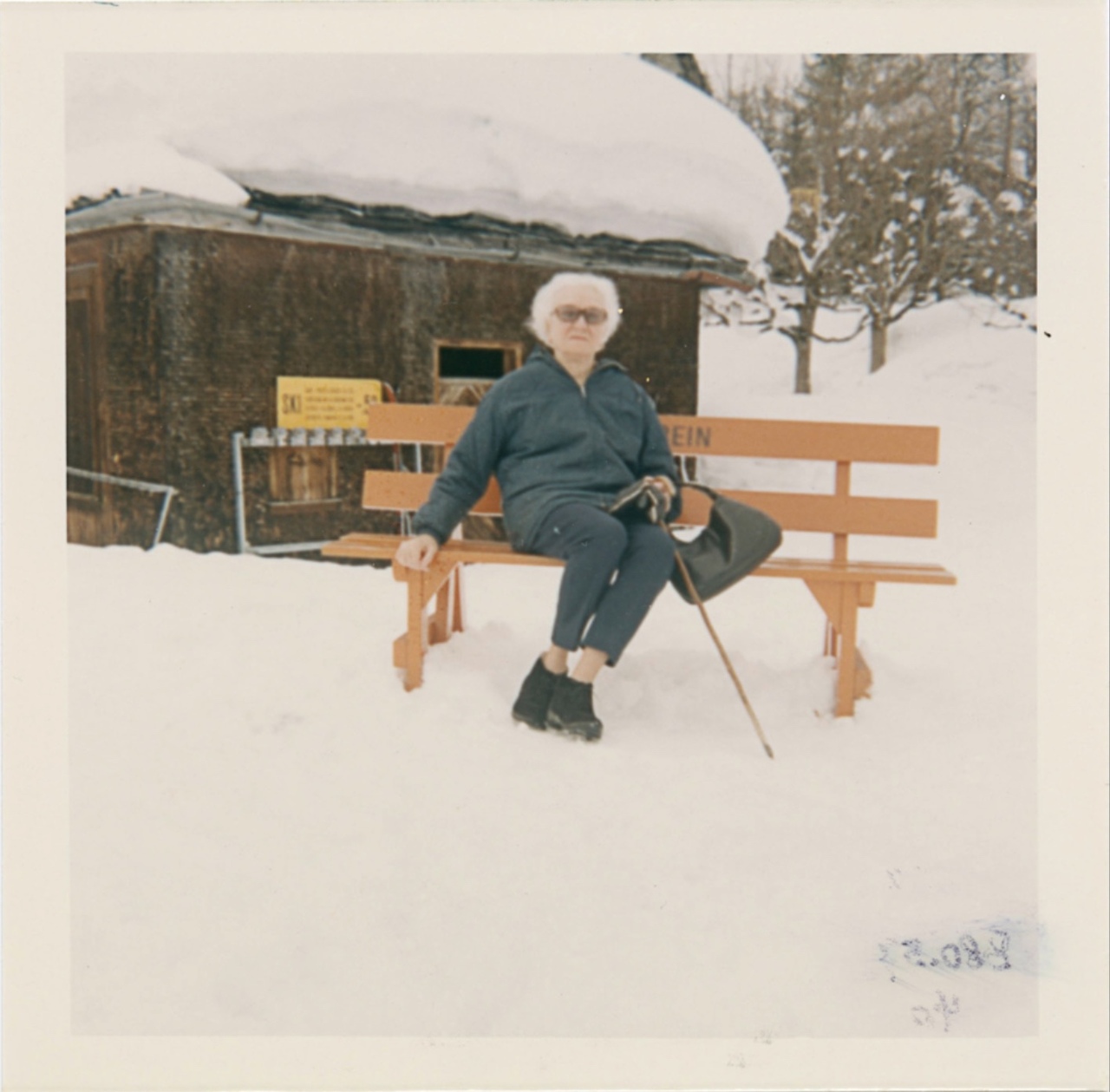
Fig. 5: Salka Viertel in Klosters, Switzerland, around 1960; Deutsches Literaturarchiv Marbach, B 80.57/41; B 2010.Z.004 (5230-64), © unknown.
Viertel eventually settled in the predominantly German-speaking village of Klosters, Switzerland, in 1960. Her son Peter Viertel, by then a successful writer, spent parts of the year with his family there. Working on her memoir throughout the 1960s, it was finally published as The Kindness of Strangers in 1969 and in German translation in 1970, entitled Das unbelehrbare Herz: Ein Leben in der Welt des Theaters, der Literatur und des Films. Salka Viertel died in Klosters in 1978.
In recent years, Viertel’s life story as a Galician-born, multilingual artist whose frequent migrations predate her move to the United States in 1928 has been met with more interest than ever before. Having utilised her transnational network to help many others escape persecution in Europe, she is rightly being re-appreciated as a central figure in the German-speaking Jewish diaspora. Today, Viertel’s legacy as an actress, screenwriter, and transnational networker is honored in Klosters, where a bridge over the Landquart River bears her name.
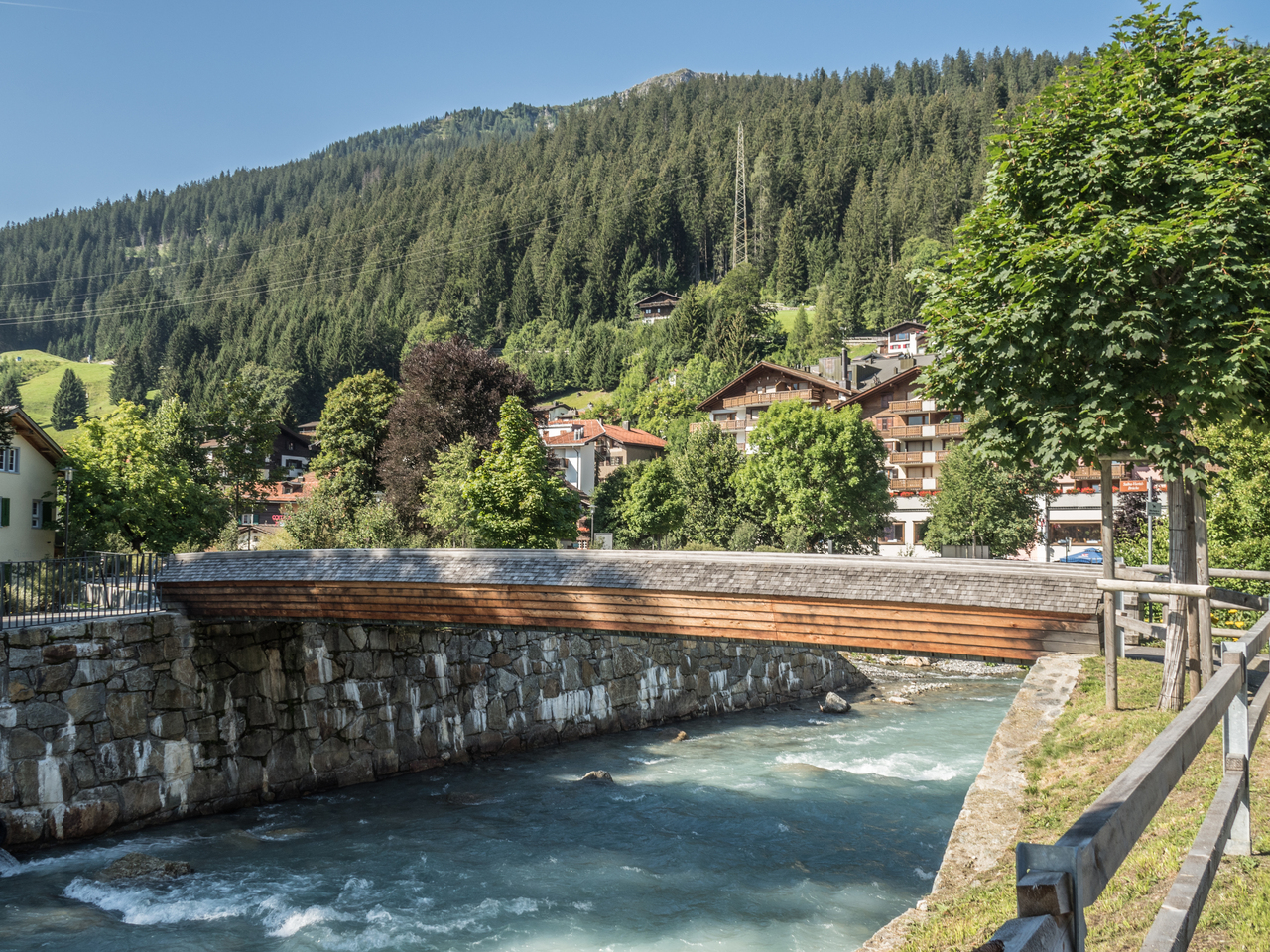
Fig. 6: The Salka-Viertel Bridge over the Landquart River in Klosters, Switzerland, 2019; Wikimedia Commons.
Shira Brisman, “Salka Viertel 1889–1978”, in: The Shalvi/Hyman Encyclopedia of Jewish Women; https://jwa.org/encyclopedia/article/viertel-salka
„Salka Viertel“, in: Wien Geschichte Wiki; https://www.geschichtewiki.wien.gv.at/Salka_Viertel
Remembering The Exiles: Salka Viertel. A reading and discussion with Salka Viertel’s biographer Donna Rifkind, Exile Studies Librarian Michaela Ullmann, and Friedel Schmoranzer, Head of Fellowship Programs at Villa Aurora, 2021: https://www.youtube.com/watch?v=07md9fFVSuo
This work is licensed under a Creative Commons Attribution - Non commercial - No Derivatives 4.0 International License. As long as the material is unedited and you give appropriate credit according to the Recommended Citation, you may reuse and redistribute it in any medium or format for non-commercial purposes.
Anna Marion Weber is a PhD candidate in German literature at King’s College London and jointly at the University of Stuttgart. Her research focuses on German-Jewish women’s life writing in exile in the English-speaking world, with a special interest in the work of Salka Viertel, Vicki Baum, Gabriele Tergit and Gina Kaus. She has taught seminars on German-Jewish literature, exile literature, and women’s writing in the twentieth century. She has contributed articles on Gabriele Tergit to the volume Chronistin und Kritikerin der Moderne (Exil-Kulturen 8, J.B. Metzler, 2024) and to the Friends of Germanic Studies Newsletter (ICLS London, 2025); publications on Salka Viertel are forthcoming. In 2025, she gave the annual Sylvia Naish Lecture at the University of London. Anna is an alumna of the German Academic Scholarship Foundation’s Leo Baeck Fellowship programme.
Anna Marion Weber, Salka Viertel (1889–1978), in: (Hi)stories of the German-Jewish Diaspora, February 23, 2026. <https://diaspora.jewish-history-online.net/article/gjd:article-53> [October 10, 2026].
 This work is licensed under a Creative Commons Attribution - Non commercial - No Derivatives 4.0 International License. As long as the material is unedited and you give appropriate credit according to the Recommended Citation, you may reuse and redistribute it in any medium or format for non-commercial purposes.

