
Born on January 7, 1902 in Czarnikau, Germany (today Czarnków, Poland)
Died on August 25, 1971 in Wellington,
New Zealand
Occupation: Doctor
Migration: New Zealand,
1935
“He quickly seemed to find his way, partly because he was eternally grateful that this small community had made a place for him.” Susanna Williams, Jewish Doctors in New Zealand 1933–1945, unpublished manuscript, 2008. This is how one of Georg Lemchen’s three daughters remembered her father in hindsight. In 1935, he had fled Nazi persecution together with his family, ending up in New Zealand, all the way on the other end of the world, where he started a new life. After strenuous efforts, he and his family managed to begin again in rural Trentham. Life in New Zealand was very different from that in Germany, as the landscape, climate, culture, and language initially appeared strange to the family. Like many Jewish refugees, the Lemchens were moreover faced with anti-German prejudice, which impeded their integration into New Zealand society.
The case of Dr. Lemchen, a physician from Berlin, exemplifies the challenges initially faced in New Zealand by doctors who had fled from Nazi Germany. Despite years of professional experience, Lemchen had to obtain ‘requalification’ in exile, but finally managed to reestablish himself as a doctor. Overcoming these initial difficulties, he opened his own practice and later worked pro bono in various fields, thereby making a considerable name for himself.
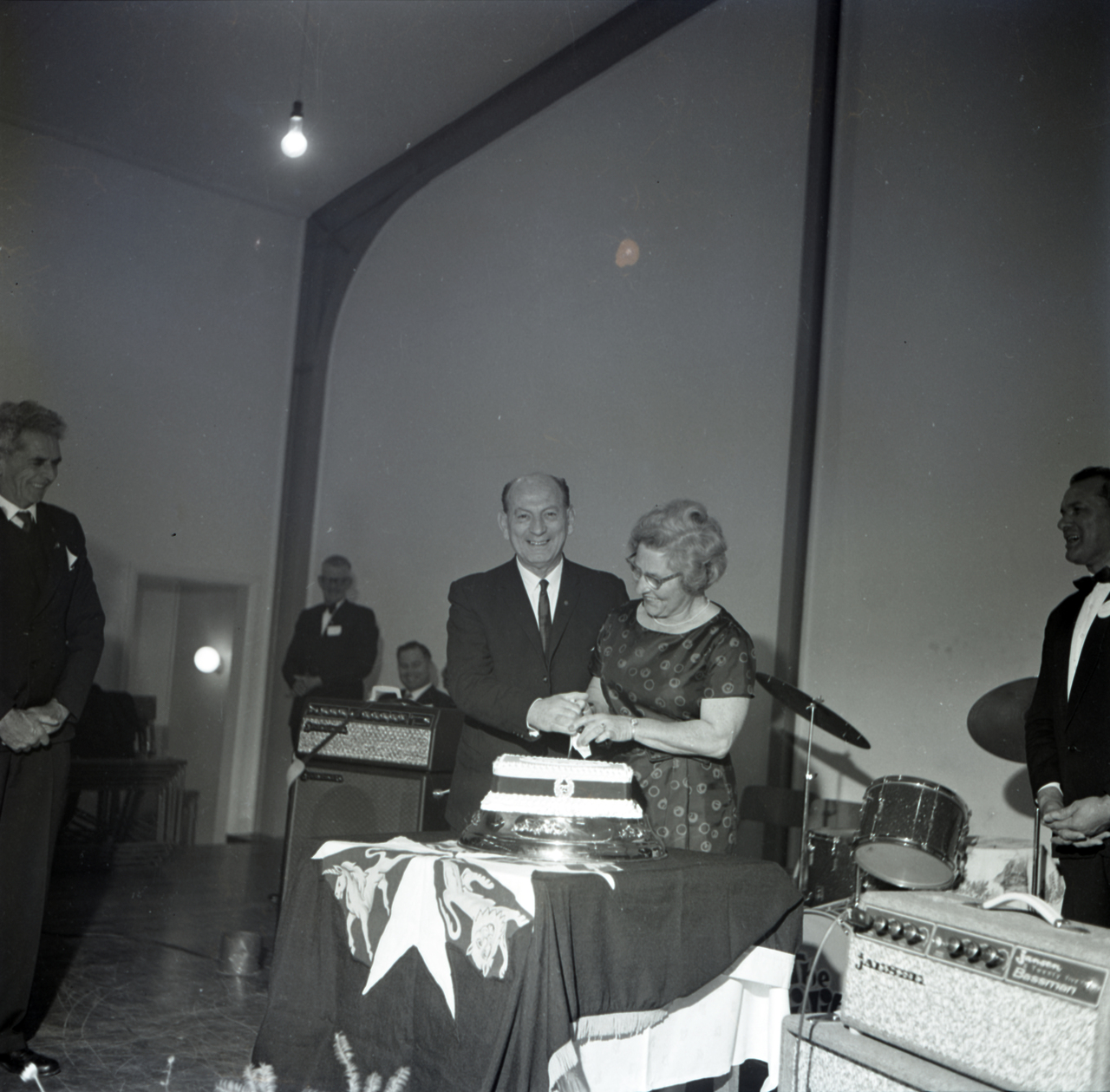
Fig. 1: Georg and Ruth Lemchen at a festive evening organized by the St. John Ambulance Brigade in the vestry of St. John’s Church in Upper Hutt, 1966. Photo: Revelle Jackson; Mahara Upper Hutt Community Archive.
Georg Lemchen was born in Czarnikau, today called Czarnków and located in Greater Poland Voivodeship, in 1902, which was home to around 600 Jews at the time. In 1878, a monumental synagogue was constructed in the village, which had become part of Posen Province following the First Partition of Poland in 1772. As in other Prussian provinces, the Jewish community of Czarnikau was faced with a form of antisemitism that had become mixed with biological and racist theories. These exacerbated the anti-Jewish prejudices of previous centuries by purportedly legitimizing them with modern science. Despite this increasing discrimination, the merchant Julius Lemchen (1869–1955) and his wife Adele Lemchen, née Victor (1879–1958), were able to live an orthodox Jewish life in Czarnikau together with their sons Georg and Ludwig (1905–?).
Georg Lemchen wished to study medicine. Like many young Jewish men from Posen, who for primarily economic reasons left this province and headed west, he moved to the metropolis of Berlin. At numerous universities, Jewish students were especially strongly represented in the field of medical studies. For example, they made up a third of the medical students in Berlin and Breslau (Wrocław) at the turn of the twentieth century; women were also admitted to university in Prussia from 1908 onward. Aside from social mobility, the medical profession promised them independence, status, and relative freedom from professional discrimination.
Georg Lemchen enrolled in the Faculty of Medicine at the Friedrich Wilhelm University in Berlin in 1921. He passed his preliminary medical examination in 1923 and the state examination in 1926. He completed his one-year internship at the Municipal Women’s Hospital on Gitschiner Strasse in Berlin’s Kreuzberg district. After receiving his medical license, Lemchen continued working there for a while as an auxiliary physician, then as an assistant physician. In 1929, he received his doctorate with a thesis on the treatment of miscarriages associated with infection-induced fevers.
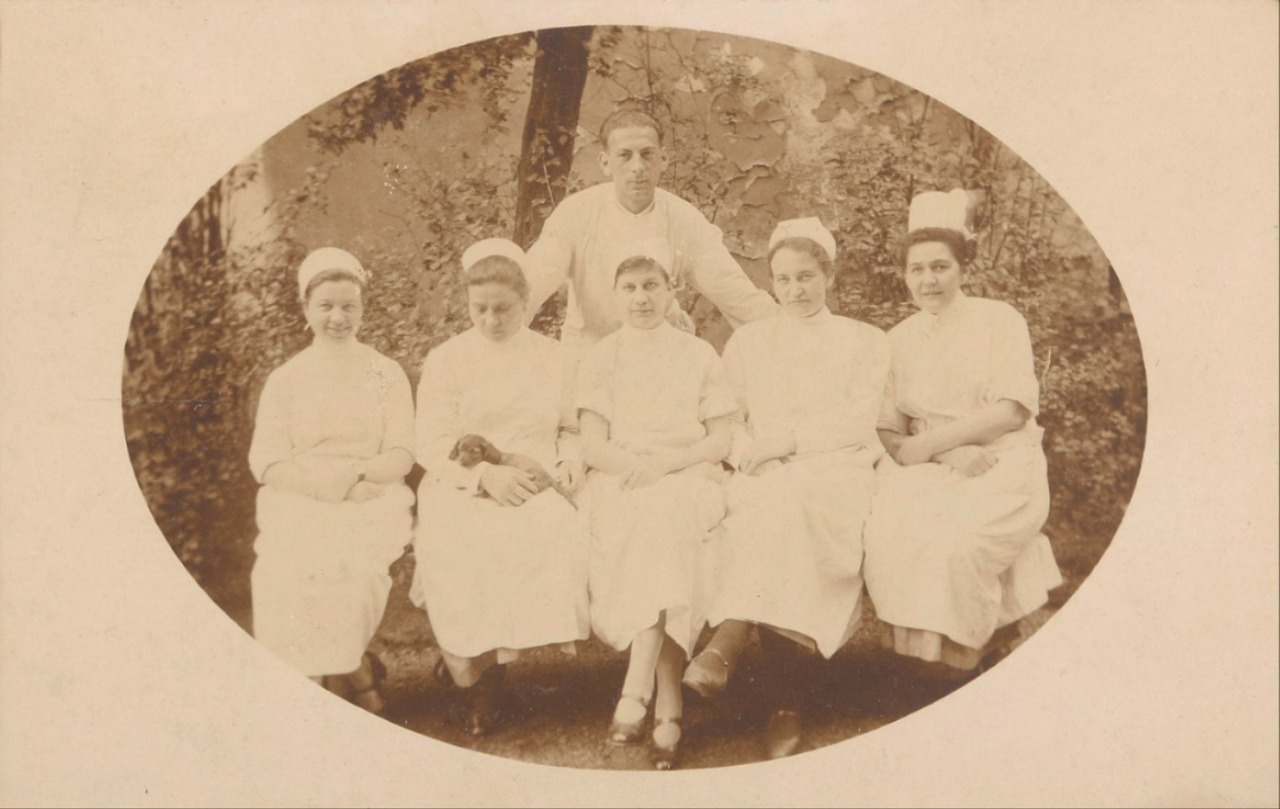
Fig. 2: Georg Lemchen in his white coat with five nurses, Berlin, around 1930; Jewish Museum Berlin, Inv. No.: 2015/14/262. Donated by Hannah Templeton, Susi Williams, and Barbara Cole. Digitization funded by the Adler-Salomon family estate, Siemens AG, the Berthold Leibinger Foundation, and Bertelsmann SE & Co. KGaA.
It was at the Municipal Women’s Hospital, where he was appreciated for his caring and humane treatment of his patients, that Lemchen met his later wife, Dr. Ruth Mai (1906–1973). Mai, who received her medical license in 1931, lived in Berlin with her parents and brother. Her father had taken over a renowned antiquarian bookstore, which he developed into a lucrative business in the heart of the prosperous metropolis. There, the Mai family lived a secular, modern life.
Ruth Mai and Georg Lemchen got married in the orthodox synagogue at Kottbusser Ufer (today Fraenkelufer) in Berlin in 1930. Their first daughter, Hannah Beate, was born in 1932, followed two years later by Susanna Renate, known as Susi. Although Ruth Lemchen was a secular Jew for whom religion did not play an important role in everyday life, she and her husband kept a kosher home so that his orthodox Jewish parents could visit.
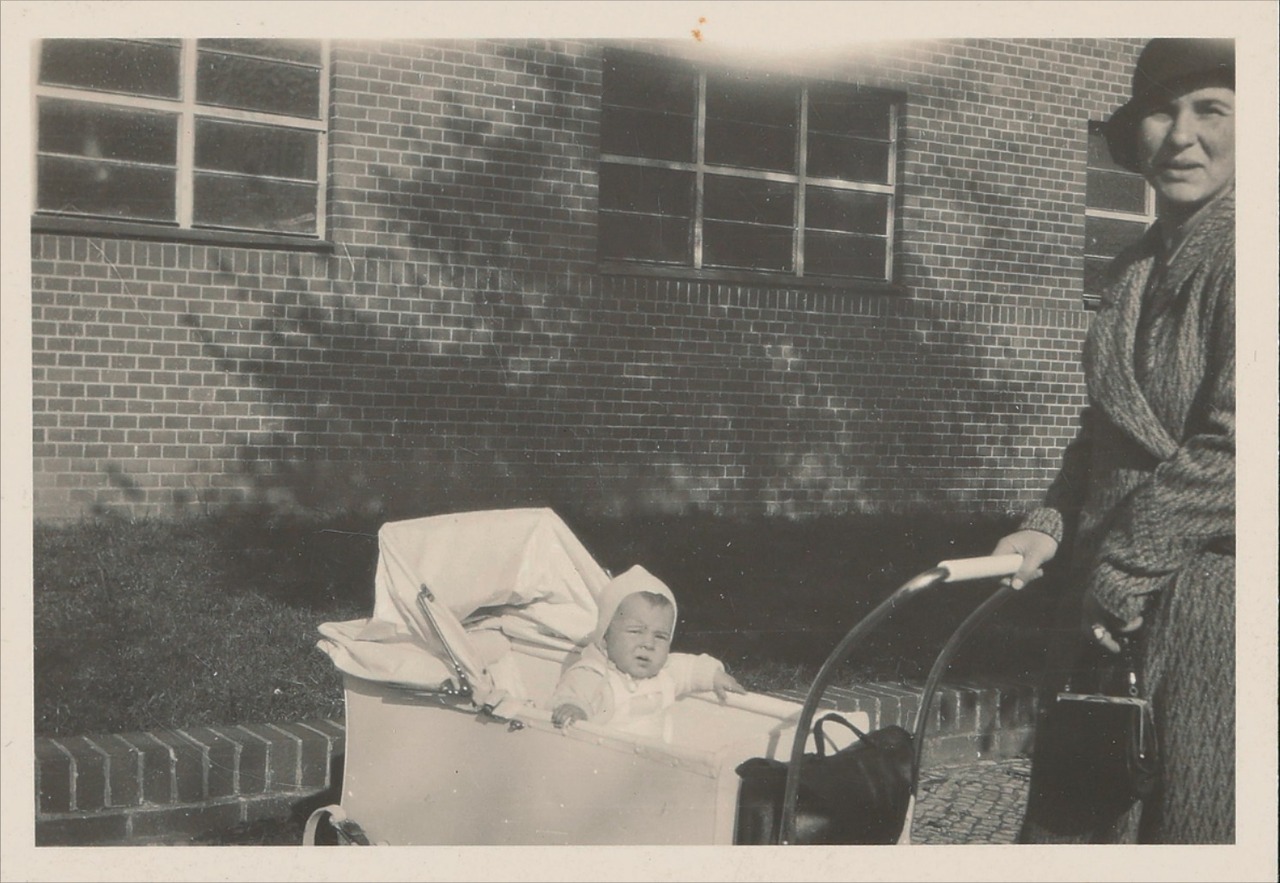
Fig. 3: Ruth Lemchen with her daughter Hannah Beate in a baby stroller, Berlin, around 1932; Jewish Museum Berlin, Inv. No.: 2015/14/169. Donated by Hannah Templeton, Susi Williams, and Barbara Cole. Digitization funded by the Adler-Salomon family estate, Siemens AG, the Berthold Leibinger Foundation, and Bertelsmann SE & Co. KGaA.
In 1931, Lemchen opened a public practice as a general practitioner in Berlin, where his wife also worked briefly as a doctor. There were around 3,600 public doctors licensed in the city in 1933, of whom about 60 percent were considered Jewish. Since the introduction of compulsory medical insurance in 1883, increasing numbers of Jews had chosen this profession, as increasing discrimination meant they were excluded from public office in universities, hospitals, and government agencies. The Nazis summarily characterized this widespread participation of Jews in public healthcare as a ‘Judaized medicine’ that ought to be dismantled. As early as April 1933, the first of altogether seven Decrees on the Accreditation of Doctors for Public Healthcare Practice was passed, on the basis of which all Jewish doctors were stripped of their accreditation by 1937.
Public healthcare in Germany could not have been maintained if all Jewish doctors had been dismissed immediately. Thus, they were ostracized in stages, being subjected to legal discrimination, boycott measures, arrests, and abuse. It is not known whether Georg and Ruth Lemchen were also stripped of their accreditation for public healthcare practice as early as 1933.
Increasing numbers of Jewish doctors consequently left Germany. Among the first was Dr. Alfred Bruno Sternberg (1900–1976), whom the Lemchens knew from the hospital on Gitschiner Strasse. Sternberg had already emigrated in 1933, first moving to Edinburgh, where he had to acquire a British certificate as his German exams were not recognized there. This enabled him to emigrate from Scotland to New Zealand, where he set up a practice in Trentham, near the town of Upper Hutt, 20 miles north of Wellington. Sternberg subsequently encouraged Lemchen to do the same.
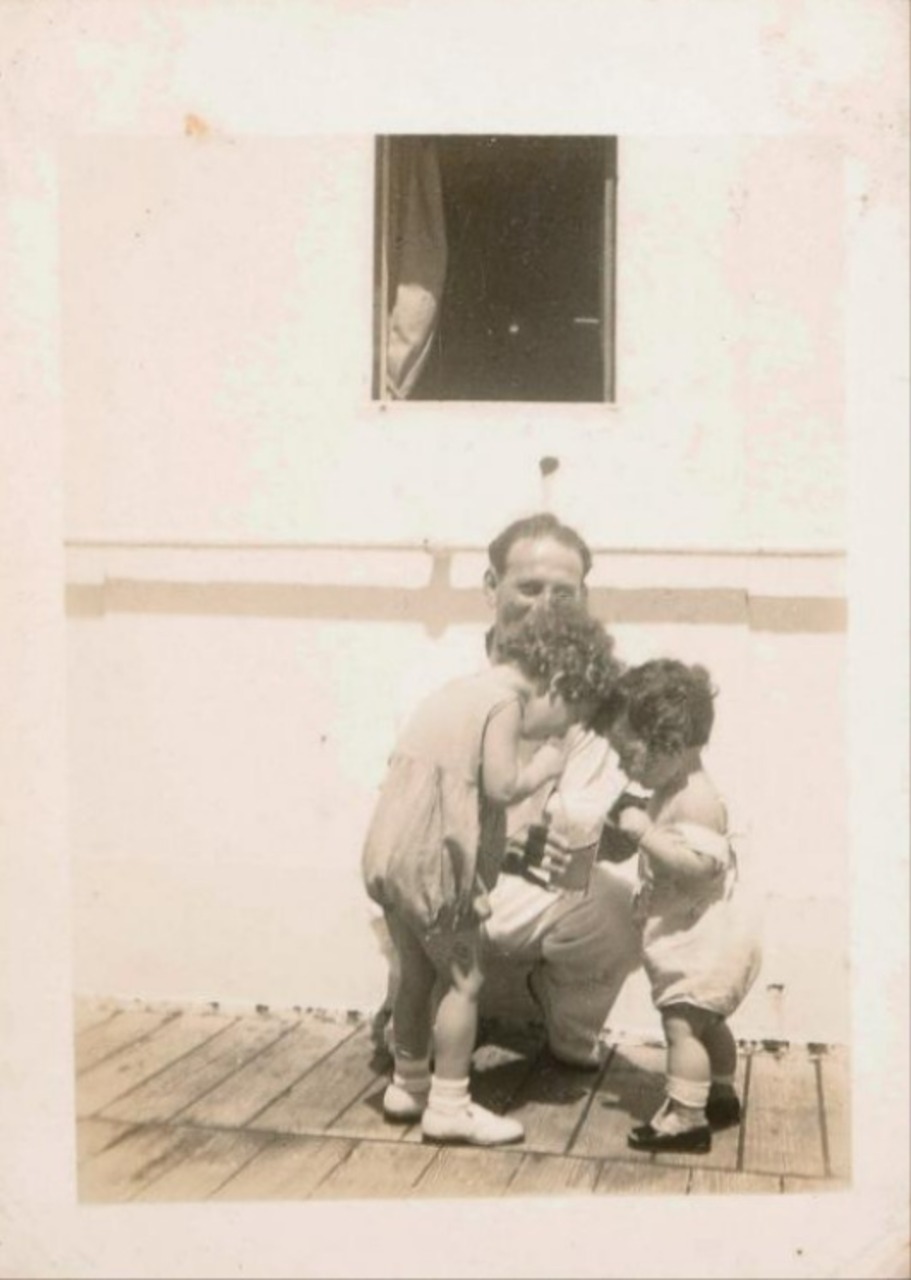
Fig. 4: Georg Lemchen with his daughters Hannah Beate and Susanna Renate on the ship to New Zealand, May 1935; Jewish Museum Berlin, Inv. No.: 2015/14/263. Donated by Hannah Templeton, Susi Williams, and Barbara Cole. Digitization funded by the Adler-Salomon family estate, Siemens AG, the Berthold Leibinger Foundation, and Bertelsmann SE & Co. KGaA.
In early 1935, the family of four said farewell to their relatives, friends, and acquaintances in Czarnków and Berlin. Together with their two little daughters, Georg and Ruth Lemchen departed their homeland forever on the passenger ship S.S. Remuera. Their destination on the other side of the world was entirely unknown to them – as it was for most Jews who sought refuge in New Zealand at the time. The Lemchens arrived in Wellington, the capital of New Zealand, on 13 May 1935, where they began a new life with little command of English and even less money. Support from private individuals like Sternberg, as well as from the local Jewish community and the Australian Jewish Welfare Society, which had a branch office in New Zealand, proved extremely important in securing a residence permit.
However, neither Lemchen’s many years of training and further education nor his professional experience were recognized in New Zealand. He therefore had to study for a year at Otago Medical School in Dunedin, a city located hundreds of kilometers away, as this was the only medical university in New Zealand. His deficient language skills and the enormous pressure meant that Lemchen only passed his exams the second time around. On the plus side, he was part of a small group of so-called refugee doctors who were allowed to take a special exam after just one clinical year. Later, foreign doctors had to study for three years in New Zealand in order to receive accreditation.
Lemchen finally received his medical license in June 1937, though it was initially just provisional. His first job was in a joint practice with Sternberg. At the latter’s request, Lemchen had brought medical instruments along from Berlin that were either expensive or altogether unavailable in New Zealand. These included an examination table, a microscope, an X-ray machine, a UV light, and a Liebreich ophthalmoscope.
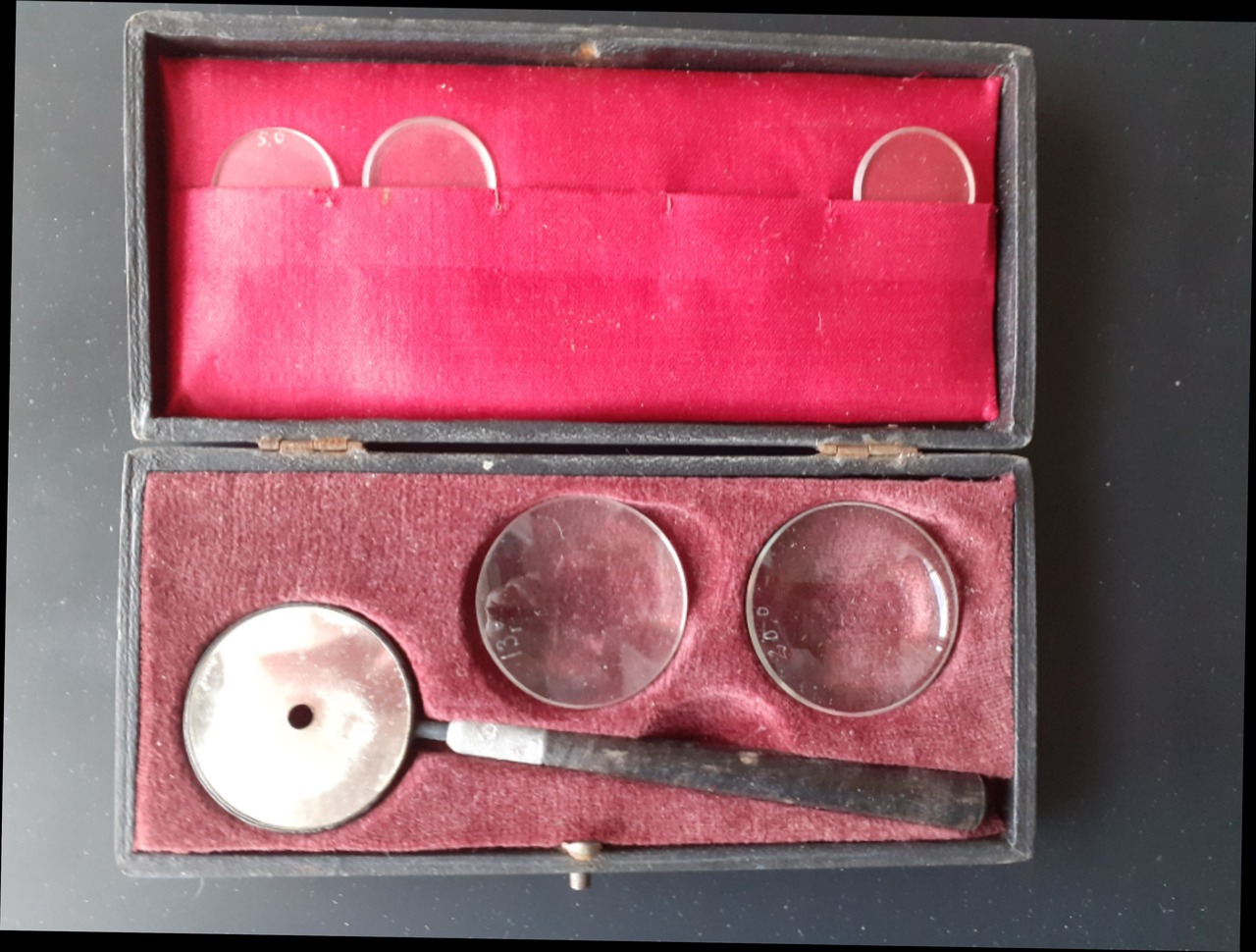
Fig. 5: The Liebreich ophthalmoscope brought from Berlin by Georg Lemchen. This device was designed in the nineteenth century by the German physiologist Richard Liebreich (1830–1917) in order to examine the interior of the human eye; Susi Williams’s private archive.
The rural environs with their long, often rough paths were just as unfamiliar to Lemchen as the patients, who had relatively little money. The nearest hospital was located in Wellington; in Upper and Lower Hutt, there were only small maternity wards. Susi Williams, Lemchen’s daughter, recalled that her father nevertheless acclimatized very quickly, not least of all because he was so eternally grateful that this small community in Trentham had offered him and his family a safe refuge.
However, their relief at having reached a safe haven was clouded by the fact that Georg and Ruth Lemchen’s parents remained in Czarnków and Berlin. In order to enable their escape from Europe, Georg Lemchen had to guarantee, among other things, that he would support all four parents and that they would not make any demands on the state for at least 20 years. Adele and Julius Lemchen subsequently arrived in New Zealand in 1938. They kept Jewish traditions alive within the family, which was not easy considering that the nearest synagogue was located in Wellington, an hour’s drive away. Lemchen’s parents-in-law, who at first did not want to leave Berlin since they were so attached to their home city, finally emigrated via New York to Wellington in 1939. Meanwhile, his younger brother Ludwig Lemchen was able to flee to Brazil.
The Mai and Lemchen families henceforth lived permanently in Trentham, where Georg Lemchen also had his practice. His parents and in-laws lived in a small house on their property, and all of them were dependent on his income, which exerted enormous pressure on the family father. His youngest daughter, Barbara Esther, was born one year earlier, in 1938.
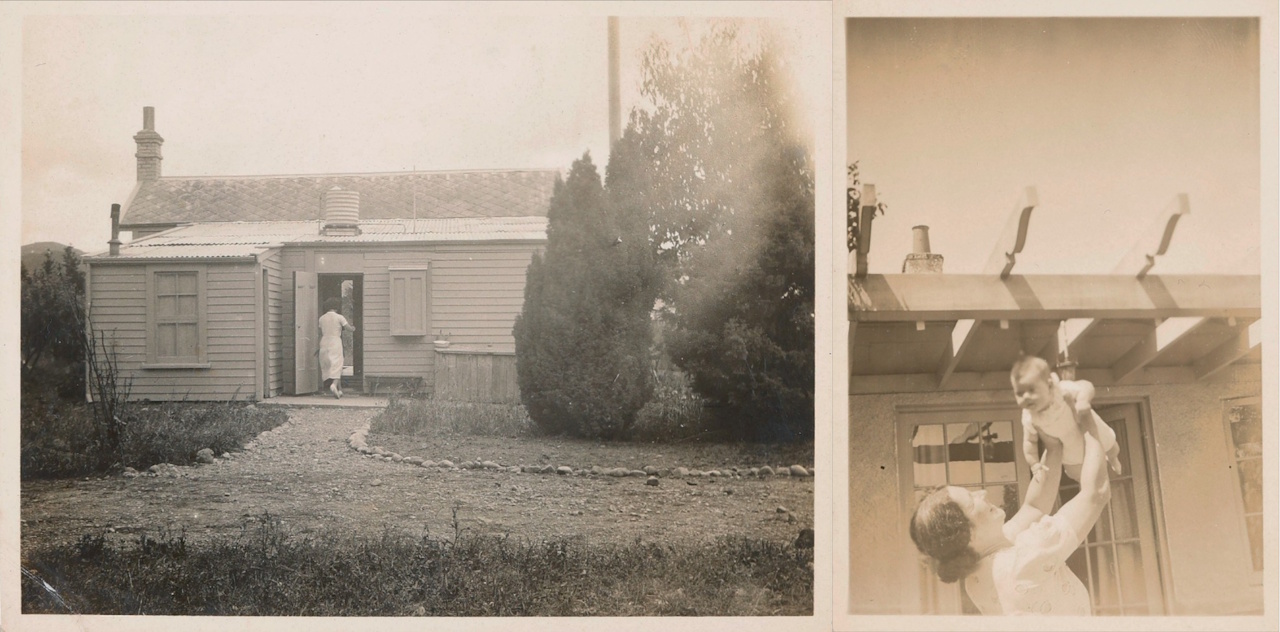
Figs. 6 and 7: Ruth Lemchen entering her house in Trentham, New Zealand, January 1936; Jewish Museum Berlin, Inv. No.: 2015/14/172, and Ruth Lemchen with her youngest daughter Barbara Esther in her arms, New Zealand, 1938; Jewish Museum Berlin, Inv. No.: 2015/14/175. Digitization funded by the Adler-Salomon family estate, Siemens AG, the Berthold Leibinger Foundation, and Bertelsmann SE & Co. KGaA.
At the beginning of the war, every individual in New Zealand who had not been naturalized was declared an ‘enemy alien.’ This categorization was not only applied in New Zealand – which was a self-governing British colony at the time – but across the British Empire. The so-called Alien Control Emergency Regulations, which were passed out of fear of espionage, placed limitations on owning items such as cameras and radios, as well as on freedom of movement. As a result, Lemchen even had to report to the police in Upper Hutt when he left the town center for a house call.
New Zealand entered World War Two as early as September 1939. The Lemchen and Mai families – like many German-Jewish refugees – subsequently found that New Zealanders could not readily comprehend that these refugees may have come from Germany, but they were also victims of the Nazi regime. In this tense atmosphere, the New Zealand government agreed with the London-based British Medical Association (BMA) and the University of Otago Council to extend the mandatory period for foreign doctors to be ‘requalified’ from one to three years. All three of these bodies had from the outset taken a hostile and dismissive stance toward this medical competition from abroad, although there was a shortage of qualified doctors in New Zealand hospitals and ultimately only a small number of refugee doctors – altogether 49, according to the historian of medicine Paul Weindling – gained entry into New Zealand.
The New Zealand branch of the BMA held even stronger prejudices. On 27 September 1939, it passed a motion to exclude refugee doctors from medical practice for the duration of the war plus another twelve months thereafter. This was intended to allow native doctors who were serving in the military to return to active medical duty.
As an ‘enemy alien,’ Lemchen was denied membership in the New Zealand BMA, without which he was not able to insure his practice. He decided to continue practicing without insurance, nonetheless, although he found this rejection a “great dishonor.” David Schellenberg, “Georg Lemchen,” in: James N. Bade (ed.), Im Schatten zweier Kriege. Deutsche und Österreicher in Neuseeland im zwanzigsten Jahrhundert, Bremen: Edition Temmen, 2005, 281–287, here 284. After the war, he avoided all BMA events and even declined the presidency that the New Zealand organization offered to him in 1960.
After the war, attitudes toward the refugee doctors changed for the better. Georg Lemchen applied for citizenship for himself, his wife, and his three daughters. The certificate was finally signed in November 1946, and the Lemchens, now as British subjects, swore an oath of loyalty to King George VI (1895–1952).
It was very important to Georg Lemchen to express his gratitude for his acceptance in New Zealand, which he did through a profound commitment on several levels. One of his main endeavors was the establishment in 1950 of a free community ambulance service in Upper Hutt in order to provide emergency medical services. He was moreover known for his pro bono activities in the local Music Society, of which he became First Chairperson in 1967, as well as in the Historical Society and the Rotary Club, of which he became President from 1962 onward. James N. Bade (born 1950), a New Zealand German studies scholar, recalled about Lemchen that he was “a most competent general practitioner who was at the same time […] known for his activities in Upper Hutt Valley, where he lived and practiced.” James N. Bade, “Teil IV: Geschäfts- und Berufswelt. Einleitung,” in: idem (ed.), Im Schatten zweier Kriege, 249–254, here 253. Aside from the Bade family, Lemchen was also the family physician for several other German-speaking families, who presumably sought him out, among other things, due to his language skills.
Since the Lemchens’ family life was based on traditional gender roles, Ruth Lemchen did not resume her medical work in New Zealand. She took care of her three daughters as well as her parents and in-laws and kept a kosher household. At the same time, she was active in the Women´s International Zionist Organisation (WIZO), a charity conducting many projects in Israel, and in Deckston Home in Naenae near Lower Hutt. As the only Jewish retirement home in New Zealand, the latter showed consideration for the religious needs of its residents.
Ruth and Georg Lemchen’s two eldest daughters were still very young when the family was forced to leave Berlin, meaning that they hardly retained any memories of persecution, privation, and danger later in life. According to Susi Williams, the parents generally protected the children from problems and did not discuss the question of whether they should remain in New Zealand in the children’s presence. Hannah Templeton later recalled that she and her two younger sisters enjoyed a very sheltered childhood in New Zealand.
The Lemchens’ life in the diaspora was shaped by a successful new beginning. They made a contribution to enriching the social and cultural life of New Zealand and also created an “island of European-Jewish culture” in smaller, familiar circles. David Schellenberg, “Georg Lemchen,” in: James N. Bade (ed.), Im Schatten zweier Kriege, 281–287, here 284. German-Jewish refugees would come to the Lemchens’ home on many Sunday afternoons, where Ruth Lemchen would often bake them her beloved rolls, rye bread, baumkuchen (a popular German cake), and meringue. These were very popular with her guests, as many refugees missed, among other things, the diverse German bread culture in New Zealand. Some also used these opportunities for free medical consultations. The result was a familiar atmosphere where the refugees formed a group unto themselves. Like many other German Jews, the Lemchens initially had more contact with other refugees than they did with locals.
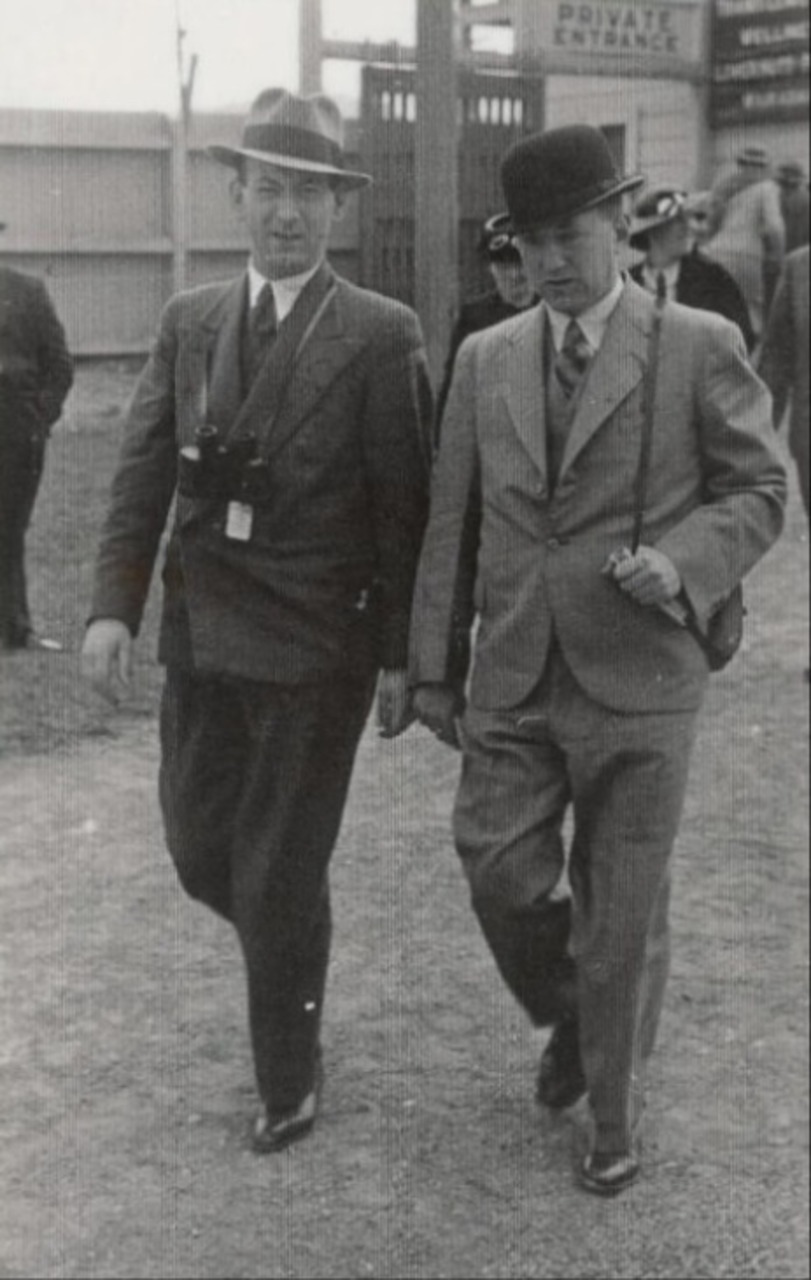
Fig. 8: Georg Lemchen (left) with his friend and colleague Dr. Alfred Sternberg at the horse races, Wellington, around 1940; Jewish Museum Berlin, Inv. No.: 2015/14/264. Donated by Hannah Templeton, Susi Williams, and Barbara Cole. Digitization funded by the Adler-Salomon family estate, Siemens AG, the Berthold Leibinger Foundation, and Bertelsmann SE & Co. KGaA.
During the war, the worrying situation in Europe dominated conversations in the Lemchen household. The painful uncertainty and concern for relatives and friends who remained in Germany overshadowed the family’s joy about their own successful escape to New Zealand. Although English was the local language, the German-Jewish refugees continued speaking German in the private sphere. In this protected space, the Lemchens could speak their mother tongue without fearing they would thereby offend local New Zealanders.
Friday evenings belonged to the entire family. The traditional celebration of the Sabbath in the Lemchen household was held by altogether nine people, including the grandparents. On the Jewish High Holidays, additional guests with a similar refugee background were invited. Julius Lemchen would conduct the religious service, while Adele Lemchen supervised the kosher kitchen. The ping pong table was repurposed as a dining table since around eight to ten additional guests were in attendance. Although most of them were not religious, the Jewish dietary laws were observed. These connections to the German language and culture, as well as to the Jewish religion, were formative for the growing children.
Georg Lemchen died in Wellington in 1971 at age 69. Like most German Jews who had survived the war in New Zealand, he never returned to Germany. Like many other refugees, he had to rebuild his once self-evident sense of home and security in exile, with the painful experiences this entailed being passed on – mostly unspoken – to the next generation(s). As his daughter Susi Williams recalled, who would later also work as a doctor: “Now when I meet doctors and families from overseas, I have some feeling for their sense of unfamiliarity.” Susanna Williams, Medical Registration in New Zealand and the Admission of Foreign Doctors, 1849–1949, unpublished manuscript, 2003, 1.
„A Scroll’s Odyssey: Carried to New Zealand by the Lemchen Family, A Czarnikau Legacy of Survival: Handover to the Holocaust Centre for Education”, in: Holocaust Centre of New Zealand, Archive, 2024: www.holocaustcentre.org.nz/archive.html
Susanna Williams, Jewish Doctors in New Zealand 1933–1945, unpublished manuscript, 2008: https://holocaustcentre.org.nz/uploads/1/2/2/4/122437058/jewish_doctors_in_new_zealand_1933_-1945_2.pdf
This work is licensed under a Creative Commons Attribution - Non commercial - No Derivatives 4.0 International License. As long as the material is unedited and you give appropriate credit according to the Recommended Citation, you may reuse and redistribute it in any medium or format for non-commercial purposes.
PD Dr. Rebecca Schwoch (https://www.uke.de/allgemein/arztprofile-und-wissenschaftlerprofile/wissenschaftlerprofilseite_rebecca_schwoch.html) is the Deputy Director of the Institute for the History and Ethics of Medicine at the University Medical Center Hamburg-Eppendorf, where she teaches the history and ethics of (dental) medicine. Her research focuses on the history of medicine and psychiatry in the late nineteenth and twentieth centuries, as well as the history of ‘euthanasia’ and the Shoah. Her most recent publications include the edited volume Umgang mit der Geschichte der NS-„Euthanasie“ und Zwangssterilisation. Forschen – Lernen – Gedenken (Köln, 2023), and “Between Reality and Fiction: The Berlin Jewish Doctor Felix Opfer, His Family and National Socialism,” in: KOROT. The Israel Journal of the History of Medicine and Science, Vol. 26 (2022), 87–113.
Rebecca Schwoch, Georg Lemchen (1902–1971) (translated by Tim Corbett), in: (Hi)stories of the German-Jewish Diaspora, November 07, 2025. <https://diaspora.jewish-history-online.net/article/gjd:article-46> [September 18, 2026].
 This work is licensed under a Creative Commons Attribution - Non commercial - No Derivatives 4.0 International License. As long as the material is unedited and you give appropriate credit according to the Recommended Citation, you may reuse and redistribute it in any medium or format for non-commercial purposes.