
Situated off the southern tip of the Indian subcontinent, the island nation of Sri Lanka lay far from the main routes of twentieth-century German-Jewish migration. The total number of German-speaking Jews who found refuge there is difficult to determine. One source from 1941, during the period of Nazi persecution, refers only to “a small number of Jews” of German origin. “Fünftes Merkblatt über die Lage der Deutschen in Britisch-Indien und auf Ceylon” [Fifth memorandum on the situation of Germans in British India and Ceylon]; Archive of the Leibniz Institute for Contemporary History, Munich, ED 353-2-27, fol. Overall, it is likely that no more than a few dozen individuals remained on the island for any extended period.
Even so, the presence of this group on the island, which today has a population of around 22 million, deserves closer attention both for the unusual motivations that drew them there and for the prominence of several of its members. Many of these migrants were motivated by an engagement with Buddhism that had developed in early twentieth-century German-speaking Europe, making this destination a clear outlier within the broader German-Jewish diaspora. Despite their small overall numbers, a few of these German-speaking Jews went on to become influential figures in Asia, leaving a legacy that continues to shape Sri Lanka today.
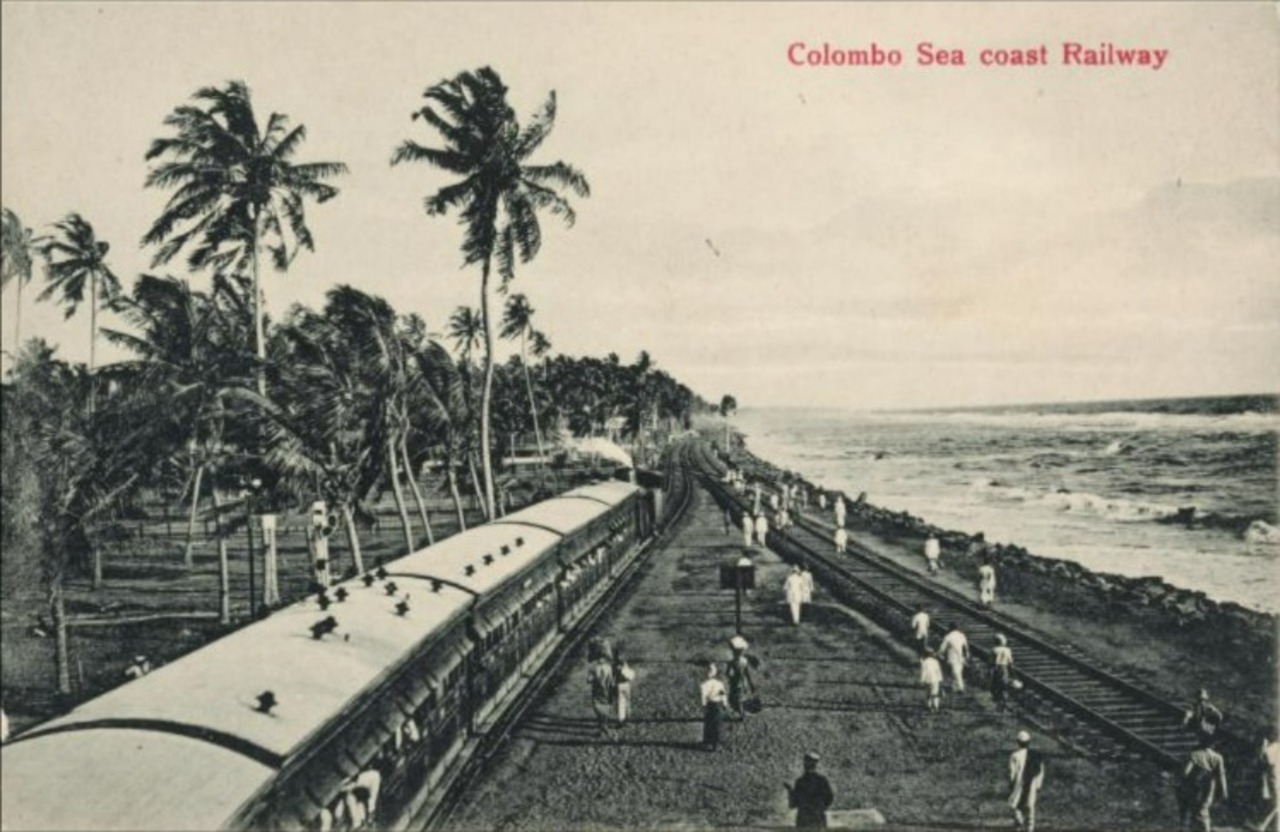
Fig. 1: Picture postcard of Sri Lanka showing the coastal railroad to Colombo, around 1910. Photograph Jens Ziehe; Jewish Museum Berlin, Inv. no. 2006/111/6.
German Jews were first attested in the territory of the British colony of Ceylon, now independent Sri Lanka, in the 1920s. Since its sixteenth-century colonization by Portugal, the island had subsequently been ruled by the Netherlands before coming under British imperial control in the late eighteenth century, which lasted until independence in 1948.
From the 1890s onward, the island began to acquire a certain prominence within German-speaking Europe in the context of a growing European enthusiasm for Buddhism. This interest was particularly strong among the region’s middle classes, whose enthusiasm for India can be traced back to the Romantic movement and was further fostered by the prominent position of Indology (now South Asian studies) as an academic discipline. This, in turn, led to the founding of Buddhist associations and German-language journals and publications in which Jews also participated.
Against the backdrop of the First World War, pacifist interpretations of Buddhism gained ground, as did the notion that Sri Lanka was the ‘holy land’ of Theravāda Buddhism, one of the two main schools of Buddhism. These ideas – strongly shaped by exoticizing representations and orientalist thought – helped to motivate the earliest migrations from German-speaking Europe during this period.
In 1911, Anton Gueth (1878–1957), born in Wiesbaden to a Catholic family, founded the Island Hermitage within a small lagoon near the southern coast of Sri Lanka and changed his name to Nyanatiloka upon his ordination as a Buddhist monk. In the ensuing decades, the monastery drew many visitors who adhered to or were inspired by Buddhism, including some from the German-speaking world. The monastery had to be closed during the First World War when Nyanatiloka was deported as an ‘enemy alien’ from British-ruled Ceylon to Germany. However, it was later reopened and remains in operation today.
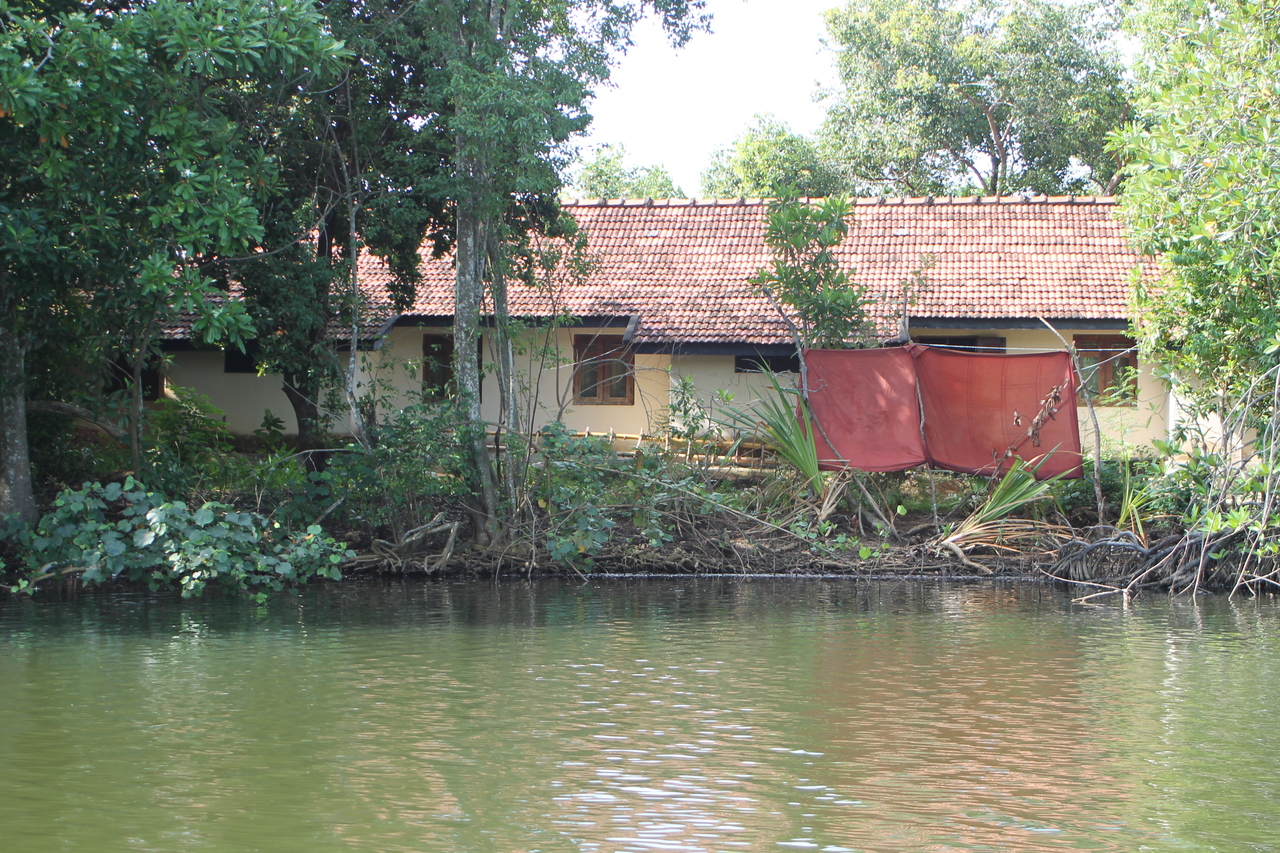
Fig. 2: The Island Hermitage, a Buddhist monastery on Dodanduwa Island, 2012. Photograph by Jan Benda; Wikimedia Commons.
With the temporary travel ban lifted, increasing numbers of German-speaking émigrés came to Sri Lanka in the late 1920s. After 1933, several Jews were also among them, having left their homeland to escape Nazi persecution. Only a small number of these German-Jewish life stories are known. In 1936, for example, the Berlin bookseller Siegmund Feniger (1901–1994) and the brothers Peter (1907–1984) and Malte Schönfeldt (dates unknown) arrived in Sri Lanka, where they joined the Island Hermitage. The three men, all of Jewish ancestry, were ordained as Buddhist monks in 1937. Under his new name, Nyanaponika, Feniger went on to become one of the most influential thinkers of Theravāda Buddhism, while Peter Schönfeldt soon converted to Hinduism, which also has many adherents on the island. Schönfeldt spent the rest of his life in northern Sri Lanka, where he became known as the ‘German swami’ (a title akin to a guru) and achieved local notoriety through his flamboyant lifestyle – including a proclivity for alcohol and gambling. His brother Malte also renounced his monastic vows but remained on the island, working as a documentary filmmaker.
When the Second World War began in September 1939, the British authorities denied entry to emigrants and refugees from Germany, who were henceforth classified as “enemy aliens” – even if they had been persecuted as Jews by the Nazi regime. In addition, all German nationals on the island – including Jewish refugees – were interned at the Diyatalawa Garrison, located in the forested, mountainous interior. In the spring of 1940, the British authorities reversed this decision and released all German Jews, only to change course again three weeks later and intern them once more.
After Japanese forces defeated the Allies in the Battle of Singapore in February 1942, Ceylon became the most important British foothold in the Indian Ocean. In March 1942, it was placed under Allied military control. This, in turn, led to the deportation of roughly one hundred ‘enemy aliens’ from the Diyatalawa camp to the Dehra Dun prisoner-of-war (POW) camp in the Himalayan foothills of northern India, which likewise remained under British colonial administration until 1947. The POWs were interned there until the end of the war, and only a few returned to the island after 1945.
In the late 1930s, Sri Lanka became a frequent port of call for ships belonging to two Jewish relief organizations, the Hebrew Immigrant Aid Society (HIAS) and the American Jewish Joint Distribution Committee (known as the ‘Joint’), en route to ports in eastern and southern Asia or Australia. With Jewish lives in Germany and Austria in ever greater peril, especially after the pogroms of November 1938, large numbers of Jewish refugees transited through the port of Colombo, the colony’s capital, on ships flying German or Italian flags, according to a report by the Intergovernmental Committee on Refugees (ICR) from February 1939. Most of them were bound for Shanghai, where around 18,000 German-speaking Jews found refuge between 1938 and 1941.
Estimates by the ICR – which had been established in 1938 at the initiative of the United States as an intergovernmental organization to coordinate the emigration of Jewish refugees from Germany and Austria – suggested around 200 people were involved. Almost half of them had “called at the [U.S.] consulate in a vain and tragic attempt to obtain visas for the Philippine Islands”, which had been a commonwealth under U.S. colonial administration since 1935. “[To the Director, Intergovernmental Committee on Political Refugees, February 8, 1939], Other Countries. n.d. MS Intergovernmental Committee on Refugees: Records of the Intergovernmental Committee on Refugees, 1938–1947”; National Archives (United States).
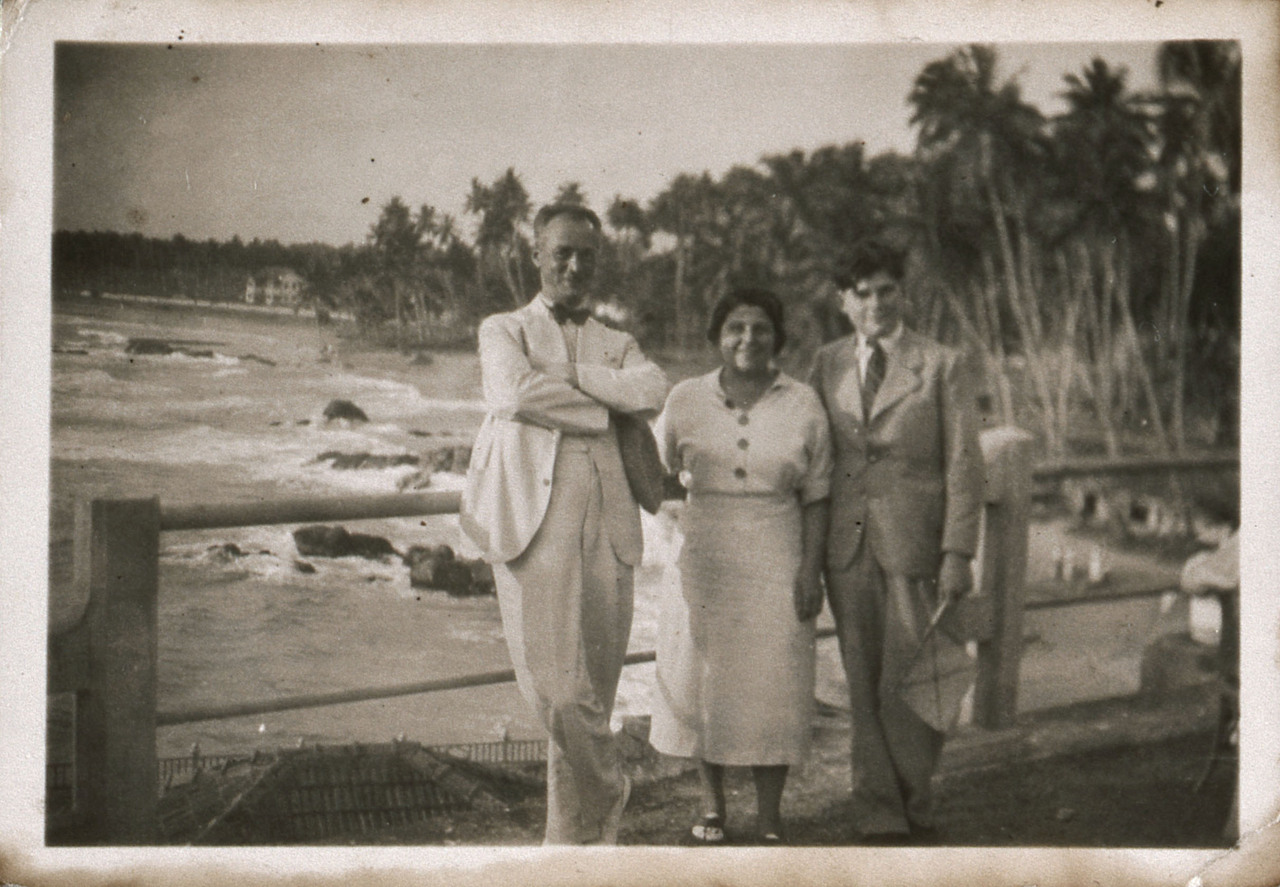
Fig. 3: Arthur and Valerie Lederer with their son Walter on the beach in Colombo, Sri Lanka. In 1938–39, the Lederer family fled from Vienna to Australia via Prague, London, and Colombo; Australian National Maritime Museum; Wikimedia Commons.
The island’s location in the Indian Ocean meant that several ships carrying Jewish refugees stopped in Colombo on their way to Shanghai, Australia, New Zealand, or the Philippines. The British authorities in what was then Ceylon were concerned that the island might become a destination for Jewish refugees. In 1938, even before the first ships of refugees arrived, a law had therefore been passed barring foreigners from the medical professions, a measure probably intended to thwart a “feared influx of German and Austrian doctors and dentists.” Ibid. Even though exact figures cannot be determined, no such “mass immigration” ever took place. Nevertheless, several ships did arrive in Sri Lanka, such as the Danish steamer Christiaan Huygens, which arrived in Colombo with 141 refugees aboard in September 1939. Because shipping lanes were initially suspended at the outbreak of the war, the passengers were unable to continue their journey to their original destination in Australia.
The “Joint” chartered another steamship on which the refugees were able to continue their voyage to Australia. Sri Lanka, therefore, remained only a transit point, and most German-speaking Jews traveled onward after a short stopover. One of these visitors was the writer Karl Wolfskehl (1869–1948), whose six-week voyage from Marseille to Auckland in 1938 included a stop in Colombo. Refugees seeking asylum were denied permission to go ashore, as their countries of origin were at war with Britain. No Jewish refugees are known to have remained on the island.
Although Sri Lanka’s German-Jewish diaspora had very few members, it included some remarkable figures. Among them was undoubtedly the aforementioned Siegmund Feniger, who settled on the island in 1936. Under his adopted name Nyanaponika, he described himself as “a Buddhist monk of Jewish origin.” Asaf Federman, “His Excellency and the Monk: A Correspondence Between Nyanaponika Thera and David Ben-Gurion,” in: Contemporary Buddhism 10 (2009), p. 201.
His parents came from Galicia, then a region of the Austro-Hungarian Empire, and later settled in Germany, where Feniger was born in 1901 in the town of Hanau near Frankfurt am Main. At age six, he moved with his family to Königshütte (now Chorzów, Poland) in Upper Silesia, where his father ran a shoe shop. His Jewish upbringing included Hebrew lessons and the study of religious texts under the guidance of a rabbi. At the age of sixteen, Feniger began an apprenticeship in the book trade and discovered Buddhism through books and translations of Buddhist texts. He later moved to Berlin to work for Jüdischer Verlag, one of the leading Jewish publishing houses of the time, founded in 1902 by a group of German-speaking Zionists. Feniger joined HaPoel HaTsair (‘The Young Worker’), the socialist-Zionist party, but soon felt that he “should devote himself wholly to one of the great causes: Zionism or Buddhism.”
Under the pressure of antisemitic persecution, Feniger left Germany for Sri Lanka. His mother followed him there in 1938. She became a Buddhist nun and lived in Colombo, where she died in 1956 at the age of eighty-nine. Feniger was ordained as a Buddhist monk, took the name Nyanaponika, and in the following decades rose to become one of the leading thinkers of Theravāda Buddhism. He was the author of several foundational works, particularly on meditation practices. In 1958, he co-founded the Buddhist Publication Society (BPS), one of the most important publishers of books on Theravāda Buddhism in English. In some respects, this work continued his earlier activities in publishing during the Weimar Republic. The steady flow of BPS publications, many of them written by Nyanaponika himself, has shaped the landscape of Theravāda Buddhism in both Sri Lanka and the West to this day.
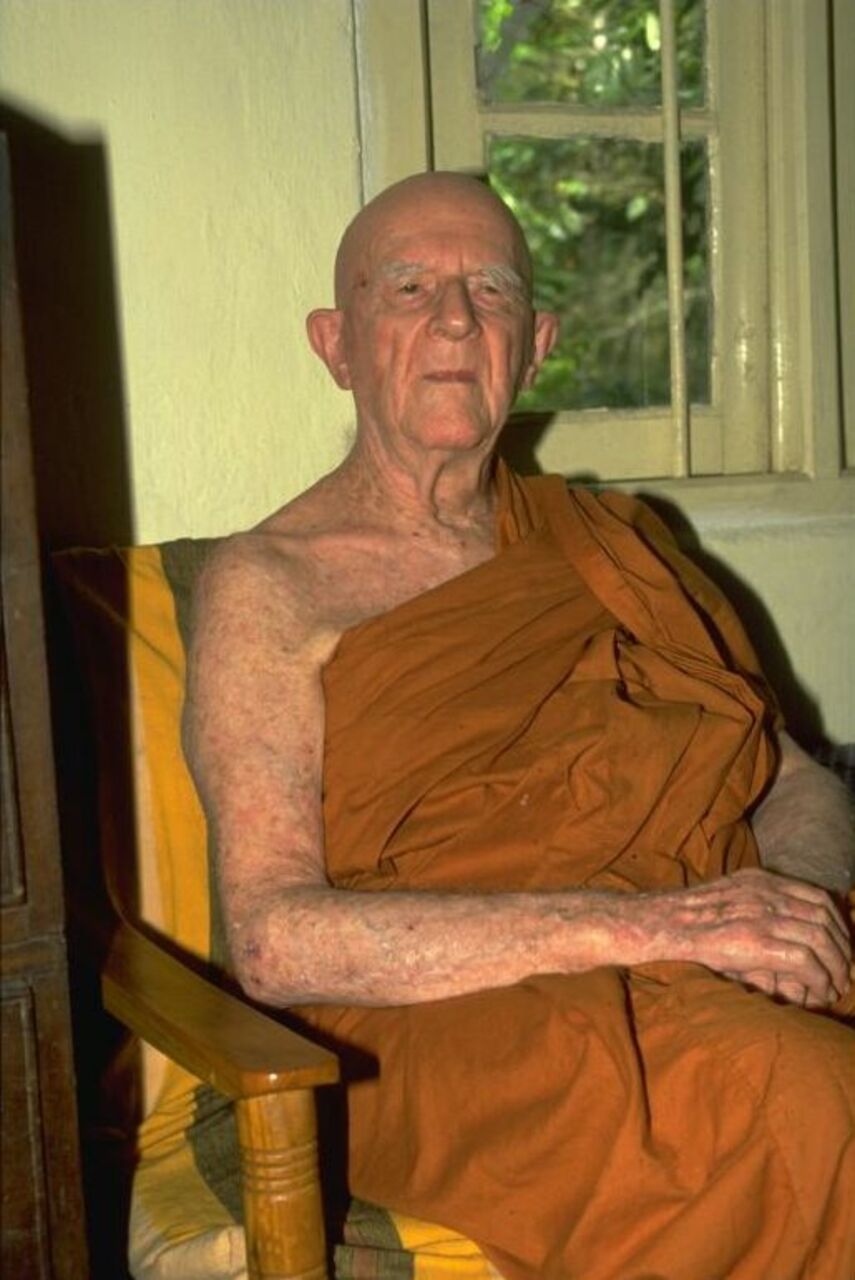
Fig. 4: Nyanaponika Maha Thera, Island Hermitage in Kandy, Sri Lanka, 1991. Photograph by nyana_ponika; Wikimedia Commons.
Despite his commitment to Buddhism, Judaism remained an important point of reference for Nyanaponika, as he emphasized in correspondence with prominent Jewish figures, including Israel’s founding prime minister, David Ben-Gurion (1886–1973). The story of Nyanaponika is just one example of the enduring global ripple effects of the enthusiasm for Buddhism in German-speaking regions of Europe, which long outlasted the Nazi regime and significantly shaped the development of Buddhism not only in Germany and Switzerland but also in South Asia.
Parallels can be seen in the lives and careers of several prominent women in Sri Lanka’s German-Jewish diaspora. Notably, the Indologist Betty Heimann (1888–1961) played a formative role in the establishment of university-level teaching and research in Indology and Sanskrit on the island. Heimann was born to a Jewish family near Hamburg and studied classical philology and Sanskrit in Kiel under Paul Deussen, then the most prominent Indologist in Germany (1845–1919). After completing her doctorate, she spent some time at the University of Halle-Wittenberg, where she completed her habilitation thesis in 1923 and was granted the title of Privatdozentin, or unsalaried lecturer. Heimann later became an associate professor at the University of Hamburg until April 1933, when she was banned from teaching as a Jew under the antisemitic ‘Law for the Restoration of the Professional Civil Service.’ She soon emigrated to the United Kingdom, where she lectured at universities in London, Oxford, and elsewhere.
From 1945 to 1949, Heimann lived in what became independent Sri Lanka, where she became a professor of philosophy at the country’s only university at the time, the University of Ceylon, now the University of Colombo. In establishing the Department of Indian Philosophy and Sanskrit, she significantly shaped the development of these fields in higher education. Back in Germany, which she only returned to for brief visits, the University of Halle retroactively granted her the title of full professor in 1957. She spent her retirement in the United Kingdom.
The Buddhist nun Ayya Khema (1923–1997) was born Ilse Kussel Kessel and fled Nazi persecution as a child in the 1930s, setting her on a circuitous journey that eventually led her to Sri Lanka in the postwar period. Originally from Berlin, she fled in 1939 to Shanghai, one of the last safe havens for Jewish refugees, where she lived with her family until 1949. Along with many other German-speaking Jews, she later migrated to the United States, where she built a new life in southern California. After marrying her second husband Gerd Ledermann (?–?), a fellow Jew who had likewise escaped Berlin and arrived in the UK on a Kindertransport, the couple traveled through South America and Asia with her son. In Australia, where Kussel founded a farm called Shalom, she engaged intensively with both Buddhist meditation and Jewish mysticism, as seen in her correspondence with Gershom Scholem (1897–1982), a scholar of Kabbalah who had emigrated from Berlin to Jerusalem.
Finally, in the 1970s, Kussel decided to become a Buddhist nun. She took the name Ayya Khema and went to Sri Lanka in order to establish a Buddhist convent on an island in the same lagoon as the Island Hermitage founded by Nyanatiloka. As the increasingly violent confrontations between the Sinhalese majority and the Tamil minority escalated into a civil war in 1983, she relocated to West Germany in the 1980s. The Civil War would last more than twenty-five years. Ayya Khema also wrote countless works of Buddhist thought, which enjoy enduring popularity, especially in Europe.
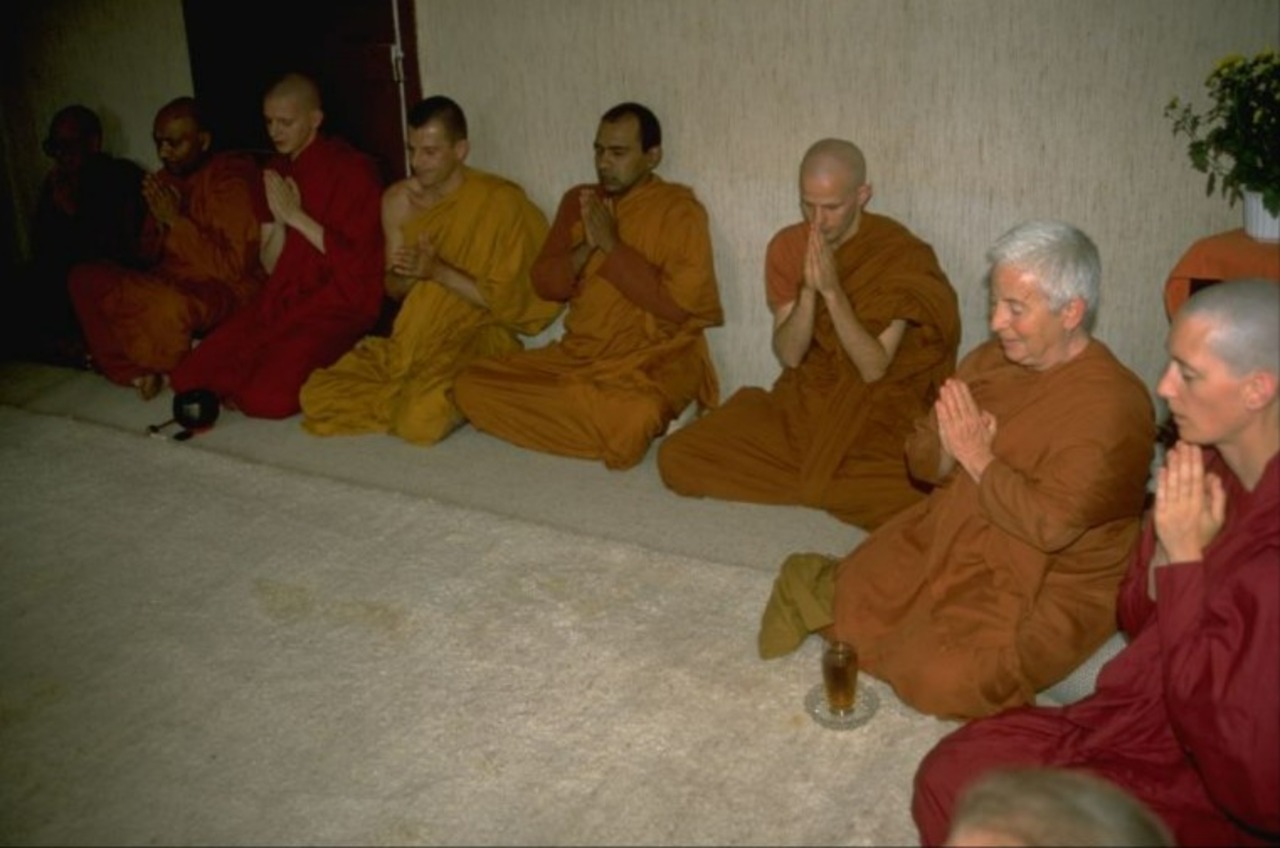
Fig. 5: Ayya Khema (second from right) meditating in Waldbachhof, Germany, 1993. Photograph by nyana_ponika; Wikimedia Commons.
The story of Anne Ranasinghe (1925–2016) was distinct from those of most other German-born Jews in Sri Lanka, whose engagement with Buddhism or various schools of South Asian philosophy played a central part in their migrations. She was born Anneliese Katz in Essen. In 1939, at age thirteen, she escaped Germany as part of a Kindertransport to England, where an aunt was already living. Her parents, unable to escape the country in time, were murdered at Kulmhof (Chełmno) death camp.
Ranasinghe remained in England, married a Sinhalese physician, and moved with him to Sri Lanka in 1951, where she resided for the rest of her life. Over the following decades, she established herself there as a poet writing in English. Her literary work centered on Sri Lanka and her experiences and observations on the island, but also often addressed her German-Jewish background and the Shoah. In her poems “From Auschwitz to Colombo” (1976) and “July 1983” (1991), Ranasinghe drew parallels between Nazi persecution and the ethnic conflicts in Sri Lanka that erupted in the 1970s and 1980s between the Buddhist Sinhalese majority and the Hindu Tamil minority. Her work increasingly achieved recognition in Germany. She was awarded the Federal Cross of Merit of the Federal Republic of Germany in 2015, shortly before her death in Colombo.
Like most Jewish refugees, Ranasinghe never lived in Germany again. Her first short visit to her birthplace of Essen took place in 1983, when she presented the local Old Synagogue with a volume of her poetry in English and German translation. She dedicated the book to her parents and to all other Jewish inhabitants of Essen who had been murdered in the Shoah.
This honor can be seen as an ending to the history of German-speaking Jews in Sri Lanka, a history in which individual charismatic figures such as Nyanaponika, Betty Heimann, Ayya Khema, and Anne Ranasinghe left a remarkable spiritual and intellectual legacy. Although their lives are now largely forgotten in Germany, their impact continues to be felt in Sri Lanka.
Sebastian Musch, “German Migrants and the Circulation of Buddhist Knowledge between Germany and British Ceylon”, in: Migrant Knowledge, 18.04.2020: https://doi.org/10.58079/14kkl
This work is licensed under a Creative Commons Attribution - Non commercial - No Derivatives 4.0 International License. As long as the material is unedited and you give appropriate credit according to the Recommended Citation, you may reuse and redistribute it in any medium or format for non-commercial purposes.
Dr. Sebastian Musch is a historian specializing in German-Jewish history and migration studies. He currently serves as the Alfred Landecker Lecturer at the Department of History and the Institute for Migration Research and Intercultural Studies (IMIS) at the University of Osnabrück. Dr. Musch earned his Ph.D. in 2018 from the Heidelberg College of Jewish Studies. His academic career has included positions in Milan, Haifa, Berkeley, Oxford, and Harvard. His major publications include: Jewish Encounters with Buddhism in German Culture – Between Moses and Buddha (1890–1940) (Palgrave, 2019); (co-edited with Cornelia Wilhelm) The Holocaust and Varieties of Migration: Beyond Flight and Displacement (De Gruyter, 2026); and Rabbiner gegen das Vergessen. Das bewegte Leben des Zvi Asaria (1913–2002) (Campus, 2026, forthcoming).
Sebastian Musch, In the Holy Land of Buddhism: German-Jewish Migrants in Sri Lanka (translated by Jake Schneider), in: (Hi)stories of the German-Jewish Diaspora, February 12, 2026. <https://diaspora.jewish-history-online.net/article/gjd:article-51> [October 12, 2026].
 This work is licensed under a Creative Commons Attribution - Non commercial - No Derivatives 4.0 International License. As long as the material is unedited and you give appropriate credit according to the Recommended Citation, you may reuse and redistribute it in any medium or format for non-commercial purposes.
_Dodanduwa_Island,_Galle_District,_Sri_Lanka.jpg)
.jpg)

