
India has historically been home to three Jewish communities – Baghdadi Jews, Cochin Jews, and the Bene Israel – none of which trace their origins to Europe or the German-speaking lands. As a colony under the British crown from 1857 to 1947, German speakers had only a limited presence in the subcontinent. Nonetheless, an estimated two to six thousand German-speaking Jews found refuge from Nazi persecution in then-British India between 1933 and 1945, forming a transitory diaspora with enduring impacts on music, architecture, and medicine in modern India.
German-speaking Jews seeking refuge in Britain’s India confronted a tumultuous political and social landscape. Already by 1933, when refugee Jews first arrived in the colony, anticolonial nationalism had gained mass momentum, and immigration controls were tightening. When India entered the Second World War on September 3, 1939, German speakers and nationals, Jewish and non-Jewish, were interned as ‘enemy aliens.’ Jewish refugees, thus, were caught between countervailing pressures of their multiple identities as Jews, refugees, German speakers, and Europeans in colonial lands.
Until August 1947, India was part of the British Raj, an imperial structure that at different points included the present-day states of India, Pakistan, Bangladesh, Myanmar, and Aden. ‘Britain’s Indian Empire,’ as it was unofficially known, was a conglomeration of territories with different administrative structures. British India included provinces and presidency towns directly administered by the British Crown after 1858, following the Indian rebellion against the English East India Company’s rule the previous year. Princely States like Hyderabad State, Jammu and Kashmir, and Kolhapur remained under their native rulers but maintained British paramountcy. This was the ‘India’ that most German-speaking Jews encountered when migrating to the subcontinent.
Prior to 1933, India was not a major destination for German speakers, Jewish and non-Jewish. Nevertheless, it was a significant site for German fascination and imagination of an orientalized ‘East.’ Between the sixteenth and eighteenth centuries, migration from Central Europe’s German-speaking lands to India included merchants, mercenaries, and soldiers, and most significantly, missionaries. Their travel records, together with the writings and scholarship of early British imperialists and explorers, spurred German intellectual and literary fascination with India in the eighteenth and nineteenth centuries. It was in this period that academic fields like Indology grew, anchored in the first German translations of ancient Sanskrit texts (often from the English translation of the original), for example, Georg Forster’s (1754–1794) 1791 translation of Kalidasa’s (4th–5th century CE) drama Sakuntala, and Friedrich Majer’s (1772–1818) rendering of the Bhagavad Gita (1823). The knowledge produced by Orientalists about India buoyed German cosmopolitanism. At the same time, it furthered British rule in the subcontinent, providing British officials with the technical knowledge they needed to govern. Philologist Friedrich Max Müller (1823–1900), who in 1868 became chair of Oxford University’s Comparative Philology department, together with his contemporary and mentee Johann Georg Bühler (1837–1898), who worked briefly in Bombay, are perhaps the most notable examples of German intellectuals’ entanglement with British imperialism in the region.
Under British domination, German business interests in India also grew, leading to the migration of a class of German-speaking professionals to India, including scholars, scientists, businessmen, and others. Prominent firms like Thyssen and Siemens, alongside smaller companies, had representatives in the colony. Around the same time, German-speaking foreigners in India benefited from the opening of ‘German’ consulates in India, first by German states like that of Hesse and Hamburg in Calcutta (1844), and later by the post-unification Imperial German state. As per the 1911 census, 1,860 German nationals resided in the Raj, accounting for less than two percent of the total European population of the colony.
Following the start of the First World War in 1914, Britain and its empire interned German and Austrian nationals as ’enemy aliens’ in a network of camps. Jews from Germany and Austria were no exception to this policy of widespread internment in India. The largest internment camp for male ‘enemy aliens’ in British India was in Ahmednagar, approximately 200 kilometers east of Bombay. Internees’ wives and minor children were housed in a ‘family camp’ in Belgaum. Some internees at Ahmednagar were transported by sea to India from other parts of the empire and the world, like British East Africa (Kenya, Uganda, and Tanzania) and Siam (Thailand). This internment process would later be repeated during the Second World War. The Government of India also took legal measures to curtail German businesses and missionary activity. By the War’s end in 1918, the Government of India repatriated most German speakers in India. Wartime bans on travel for German and Austrian nationals to British India remained in place until 1925. Due to the bitter wartime experience, German-speaking migration to India remained limited in the interwar period.
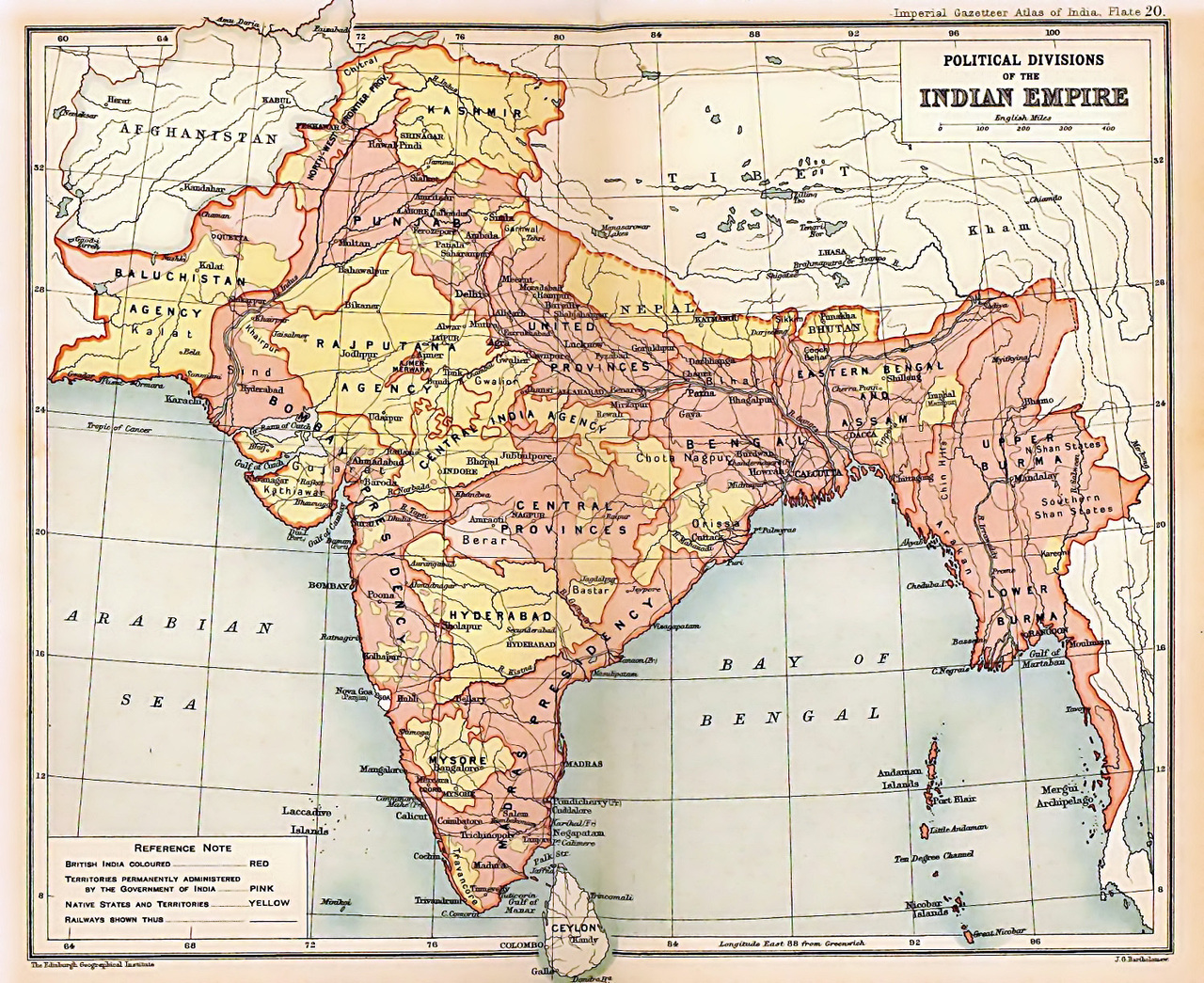
Fig. 1: Imperial Gazetteer map of the Indian Empire in 1909, showing British India in two shades of pink and Princely States in yellow. Edinburgh Geographical Institute; J. G. Bartholomew and Sons.; Public domain, via Wikimedia Commons.
The Nazi’s rise to power in 1933 prompted the departure of German Jews to British India, slowly at first. One notable early migrant to India was the composer Walter Kaufmann (1907–1984). Kaufmann was born in 1907 to a German-speaking Jewish family in Karlsbad (Karlovy Vary), then part of Austria-Hungary. A composer and conductor, Kaufmann trained at the Hochschule für Musik in Berlin and then studied musicology at the German University in Prague. He abandoned his doctoral work in Prague in 1933 when he learned his supervisor, Gustav Becking (1894–1945), held Nazi sympathies. India had already piqued his fascination through university lectures. A friend in Bombay had also promised him support with lodging. Most importantly, Kaufmann could “easily get a visa” Quoted in Agata Schindler, “Walter Kaufmann: A Forgotten Genius,” in: Anil Bhatti/Johannes H. Voigt (eds.), Jewish Exile in India, 1933-1945, New Delhi: Manohar, 1999, 87–112, 94. to travel to British India. Kaufmann left Prague and travelled to Italy, where he boarded the SS Conte Verde, part of the Italian line Lloyd Triestino’s fleet connecting Europe to the Far East, arriving in India in 1934. In 1936, in the role of Director of European Music for the All India Radio, the Raj’s largest radio broadcaster, Kaufmann composed the station’s signature tune, which still greets listeners to this day. As one of the co-founders of the Bombay Chamber Music Society, he performed weekly concerts, including at the Willingdon Club. Over the twelve years Kaufmann remained in India, he composed prolifically for movies, radio, and theater, collaborating with fellow Europeans and elite Indians.
For German-speaking Jews like Kaufmann who sought entry into British India during the early years of the ‘Third Reich’, acquiring a visa to enter British India had minimal requirements compared to those faced by refugees after 1938. The Government of India initially imposed relatively few restrictions to gain entry visas: a valid passport and “evidence of definite prospects of employment in the Colony or other means of subsistence.” ‘Note for Evian Conference, P&J 3108 1938’, India Office Records Microfilm Negatives, IOR/L/PJ/7/2014, The British Library, as seen in Selected Records of the India Office, United States Holocaust Memorial Museum, RG 59.024M, 2005.309, Reel 2. It was therefore easy for Jewish refugees to enter India, albeit only those who could meet these requirements through their personal networks or efforts. Most took the same route mapped by Kaufmann’s experience, proceeding first to Italian port cities like Venice, Genoa, or Trieste, where they boarded Italian line ships to Bombay, the central port of entry to British India. These same routes also carried prescient early German-speaking Jewish refugees to other known refuges in the East, like Colombo, Singapore, Hong Kong, and Shanghai.
Early German-Jewish emigrants to British India established the Jewish Relief Association, Bombay (JRA) in 1934 to provide newer migrants with a local social and economic network. The JRA eventually opened branches in Calcutta and Madras and coordinated with the London-based Council for German Jewry (CFGJ) to provide financial guarantees for other Jewish refugees. They also operated two boarding houses for new emigrants in Bombay’s Byculla neighbourhood. The JRA received considerable financial support from established local Jewish businessmen and entrepreneurs, including Sir Alwyn Ezra (ca. 1900–?) and Sir Victor Sassoon (1881–1961). Originally from regions under Ottoman rule like Basra, Baghdad, and Aleppo, Judeo-Arabic-speaking ‘Baghdadi’ Jews, as they came to be known, began arriving in India in the late eighteenth century following trading routes to the port city of Surat. Under British rule, the centers of Baghdadi Jews’ presence in India shifted to the ports of Calcutta (Kolkata) and Bombay (Mumbai), and their numbers grew as Jews fleeing antisemitism under Dawud Pasha’s (1767–1851) rule of Baghdad (1816–1831) settled in Calcutta. By the time of the JRA’s establishment, India’s Baghdadi Jewish communities saw themselves as aligned with imperial rule and with European society in India, regardless of their Ottoman origins. As middlemen in the trade of opium, cotton, textiles, and other goods between China, India, and Britain, families like the Sassoons and Ezras prospered, allowing them to extend not only monetary support to the JRA but also to actively place incoming refugees in jobs in their factories and mills.
Following the Anschluss – Nazi Germany’s annexation of Austria in March 1938 – Jewish refugees could no longer enter Britain’s colonies with only minimal conditions to satisfy. As Europe drew closer to war, India’s policies towards accepting refugees began to tighten, constantly evolving to respond to growing tensions in Europe. By December of 1938, in addition to having a passport, employment contract, or maintenance, German-speaking refugees looking to enter India had to provide the name of “a person of standing” in India who would sponsor their application, and “take responsibility for their maintenance in India if the need arises.” P&J 5959/38, Response to the Hon. Administrative Secretary of the Catholic Committee for Refugees from Germany, 23rd December, 1938, IOR/L/PJ/7/2346, The British Library, as seen in Selected Records of the India Office, United States Holocaust Memorial Museum, RG 59.024M, 2005.309, Reel 3. Around the same time, the Government of India and the India Office, which oversaw the administration of the British Raj from London, corresponded with the CFGJ in London to negotiate conditions under which the Council would guarantee German-speaking Jewish refugees coming to India. On the international stage, ‘India’ (both British India and the Princely States) had independent international representation since 1919 as a founding member of the League of Nations in 1919. At the Évian Conference of 1938, however, when governments from thirty-two countries gathered to address the crisis of Jewish refugees, India declined its seat at the table. In doing so, it signaled the colonial government’s reservations regarding the rising immigration of German-speaking Jews.
By the end of March 1939, after successful negotiations with the Council, India’s policy dictated that only those German-speaking Jewish refugees who were politically desirable and guaranteed by the CFGJ, including repatriation after five years, would be admitted to India. In selected cases, the JRA in Bombay could provide guarantees. Additionally, any application had to be referred directly to the Government of India or through the Passport Control Office of the Foreign Office, to ensure that no unsatisfactory applicant gained entry. This latter requirement lengthened an already difficult visa process, creating even greater barriers for Jews. By July 1939, the JRA provided all guarantees for certain refugees, removing the CFGJ from the process altogether.
Despite the increasing restrictions on entry, many professional families were successful in securing visas for India in 1938 and 1939. Among them were the doctors Heinrich Ziegler (1898–1971) and Margot Ziegler, née Lewin (1909–1973), who arrived in India in 1938 with their son Peter (1932–2002) and set up a medical laboratory in Manali at the foothills of the Himalayas. In 1942, Margot gave birth to the couple’s daughter Ruth Ziegler (1942–2017) in India.
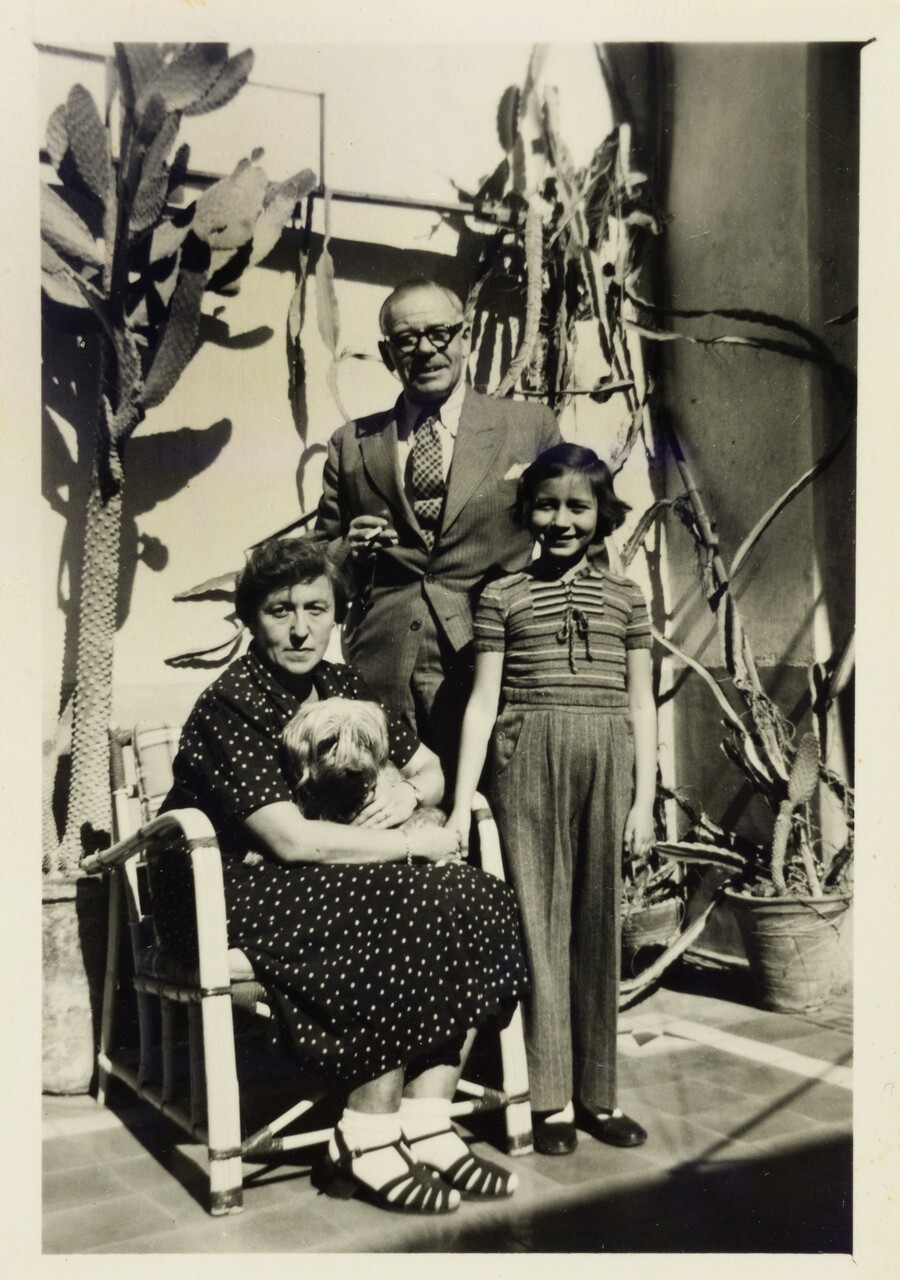
Fig. 2: Heinrich, Margot, and their daughter Ruth Ziegler on the terrace, Karachi, British India, around 1950; Jewish Museum Berlin, Inv. No.: 2011/297/287, Gift of Ruth Ziegler.
Soon after Britain’s declaration of war on Nazi Germany on September 3, 1939, the Viceroy of India, Lord Linlithgow (1887–1952), declared India to be at war as well, officially entering the colony into the Second World War. Linlithgow made the declaration without consulting Indians’ representative politicians in the central and provincial government, creating widespread discontent at a time already simmering with anti-colonial nationalist agitation. In this unsettled domestic and international atmosphere, all foreign nationals came under increased scrutiny. This was especially true for ‘enemy aliens,’ nationals of Allied powers: Germany, Italy, and Japan. On September 3, 1939, an Enemy Foreigners’ Ordinance restricted the “presence and movement” ”Germans in India Rounded Up.” The Times of India (1861-Current), September 5, 1939, 8. http://myaccess.library.utoronto.ca/login?url=http://search.proquest.com/docview/741204052?accountid=14771. Harold Lensen, in his oral testimony, indicates that only those Germans who had not been naturalized by that point had been interned. of citizens of enemy nationality, both Jews and non-Jews. Similar actions occurred across the Empire, including in the United Kingdom. Over the next few days, local administrators, together with police, subjected German-speaking Jewish men to internment.
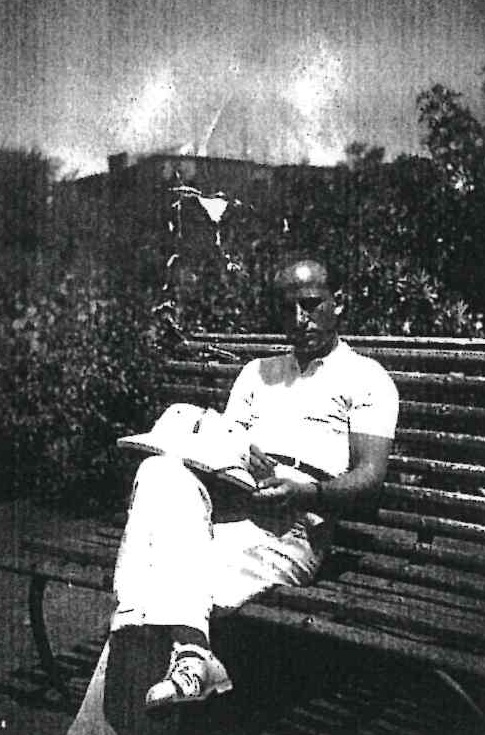
Fig. 3: Hermann Marcus Selzer, soon after his arrival in India, 1937; AR 25045 / MF 799, Hermann Marcus Selzer Collection, Leo Baeck Institute, New York.
It did not matter to local authorities that many Jews were officially registered as refugees. In some cases, it did not even matter that Jewish refugees held identity papers from Poland, an allied nation. In the case of Hermann Marcus Selzer (1909–2007), local authorities determined him to be “entirely German in culture and orientation,” even though he held Polish identity papers. “Personal File of SELZER, Dr. H.M. (and wife)” Home Department, File No. 72:9:14:40-Poll(E): Selzer, National Archives of India, New Delhi. Selzer was born to an Orthodox Jewish family in Stryi, a city now in Ukraine that was part of the Republic of Poland between 1919 and 1939. As a child, his father moved their family to Oberhausen in the Ruhr valley, where he grew up. Selzer initially fled Nazi Germany to Italy in 1933, where he completed his education as a doctor and met his wife, Käte Selzer née Neumann (1910–1991), a German Jew born in Pyritz (Pyrzyce). Dismayed by the growing political and military alliance between Benito Mussolini (1883–1945) and Adolf Hitler (1889–1945), Selzer fled further on to India in 1937. He established a successful medical practice in Lahore (today’s Pakistan) with a second in Srinagar, where he preferred to spend the hot summers.
The Selzers led an active social life with a circle of friends that included fellow German-speaking Jewish refugees, elite Indians, and other Europeans in Lahore and Srinagar. Selzer avoided internment in the first months of the war, most likely as a Polish national. In December of 1940, however, local police interned Selzer and his wife, along with their two young children, at the Purandhar Fort in present-day Maharashtra. They remained interned for the duration of the war, only being released in 1946.
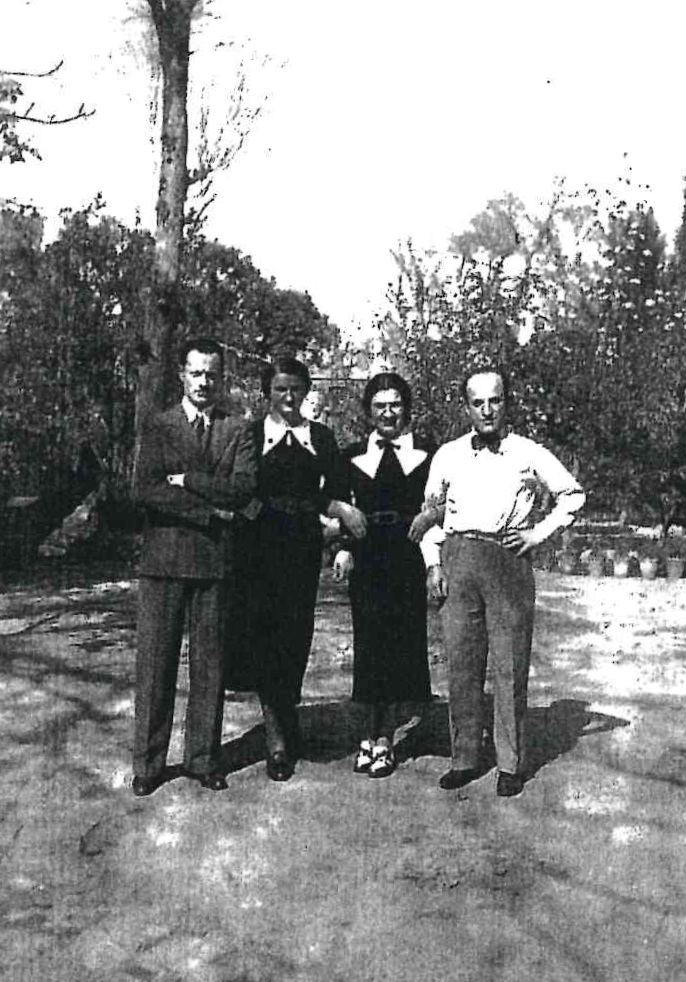
Fig. 4: Hermann and Käte Selzer posing with two fellow Jewish refugees, around 1937–1941; AR 25045 / MF 799, Hermann Marcus Selzer Collection, Leo Baeck Institute, New York.
While camps like Purandhar were intended for families and thus officially designated as ‘parole centers,’ internment camps like those at Ahmednagar and Dehradun were predominantly for men. Germans, both Jews and non-Jews, were initially interned alongside one another. This, however, caused problems, including the outbreak of fights within the camp between Nazi-sympathizing Germans and Jewish refugees. As a result, Jewish and non-Jewish Germans were eventually separated. Starting in 1940, the Government of India created an Aliens Advisory Committee to determine whether internees were bona fide refugees eligible for release from detention. After interviewing and investigating internees’ claims, the Committee assigned them to one of three categories: “Category (a) – Cases in which release is recommended; Category (b) – Cases in which, while no definite recommendation for release is made, there is no reason to oppose release; Category (c) – Cases in which release is opposed.” “Recommendation of the Aliens Advisory Committee Madras Case No-3 Miss Trescow, Ilse Von.” Home Political EW-1940-NA-F-72-4-3, National Archives of India, New Delhi. https://nvli.in/archives/recommendation-aliens-advisory-committee-madras-case-no-3-miss-trescowilse-von For those released, life outside the camps still had new restrictions, including mandated police check-ins and limits on movement beyond their registered addresses.
German-speaking Jews entered a demographically diverse India. As per the 1931 census, which included Burma (present-day Myanmar), Europeans accounted for only 0.5 percent or 168,134 persons of the subcontinent’s total population of nearly 353 million. This included European British subjects, Armenians, and European foreigners. Anglo-Indians, defined for that census as “a person whose father, grandfather or other progenitor in the male line was an European [sic],” J. H. Hutton, Census of India 1931, vol. 1, part 1 (1933), 429 https://archive.org/details/CensusOfIndia1931/mode/2up but colloquially understood as those of mixed European-Indian descent, numbered nearly 139,000. Official tabulations further delineated the remaining broad category of ‘Indians’ by self-reported race, caste, tribe, or religion. The population was also increasingly urban, though still a minor fraction of less than 15 percent was counted as residing in towns or cities. German-speaking Jews in India had to build networks among many of these groups. All the while, they contended with landscapes, languages, and cultures largely unfamiliar to them.
German-speaking Jews predominantly resided in the presidency towns of Madras, Bombay, and Calcutta. Upon arrival, many received assistance from the Jewish Relief Association, Bombay, through which they met other German Jewish refugees like themselves. Harold G. Jensen (born 1920 as Hans Jensen), a native of Unruhstadt (Kargowa), was only eighteen when he fled Nazi Germany with his parents and sister. Jensen came to India at a peculiar age, too young still to have established a career, but old enough to live independently in India. His father (a doctor) secured a job in the city of Nagpur, a half-day’s train ride away from the main port of Bombay, where Jensen remained as an apprentice at a weaving mill owned and operated by the trading company E.D. Sassoon & Co., eventually rising to the position of overseer. On the factory floor, he worked alongside members of local Jewish communities.
In addition to the Baghdadi community, India was home to two additional Jewish communities: Cochin Jews, who settled along India’s southern Malabar coast in the twelfth century; and the Bene Israel, who settled around Bombay (Mumbai) and who claim descent from the Lost Tribes of Israel.
German-speaking Jewish refugees’ interactions with these latter Indian Jews remained constrained by the social structures in place in colonial India, whereby Europeans could access different spaces, professional positions, and treatment. Jensen, thus, remembered not being able to talk with his ‘darker’ Indian colleagues about his leisure activities because he was able to visit places like the Europeans-only beach and club at Breach Candy, which became a vibrant center for German speakers to convene in South Mumbai.
For many European refugees in India, appealing to or buying into the British colonial class and its
associated behaviour, jobs, and expectations was a process of necessary adaptation to
being Europeans in the colony, which German-speaking Jews saw themselves as being.
Hermann Selzer recounted an instance where he was
advised by a fellow Jewish refugee in Lahore to “buy a motorcar because travelling by tonga – the horse-drawn
carriage – was in the long run unbecoming of my status.” Hermann Marcus Selzer, Maturing Years, Papers of
Hermann Marcus Selzer; AR 25045; Box no. 7, Folder no 1, Leo Baeck Institute, New York, pp. 61:
https://www.archive.org/stream/hermannselzer12reel12#page/n83/mode/1up.
Although he resisted the pressure to travel in first class as befitted a European, due to
the expense it involved, soon after arriving in Bangalore, the second stop on his
Indian odyssey, he invested in khaki attire customary of the colonial class. While an
ordinary factory floor worker, Harold Jensen was resigned to staying in a bungalow near
the mills, living off bananas for most of his meals. As soon as he was promoted and
received sufficient pay, he moved to the European area of town. Where German-speaking Jews
recall experiencing antisemitism, they attributed it largely to British officers and
settlers.
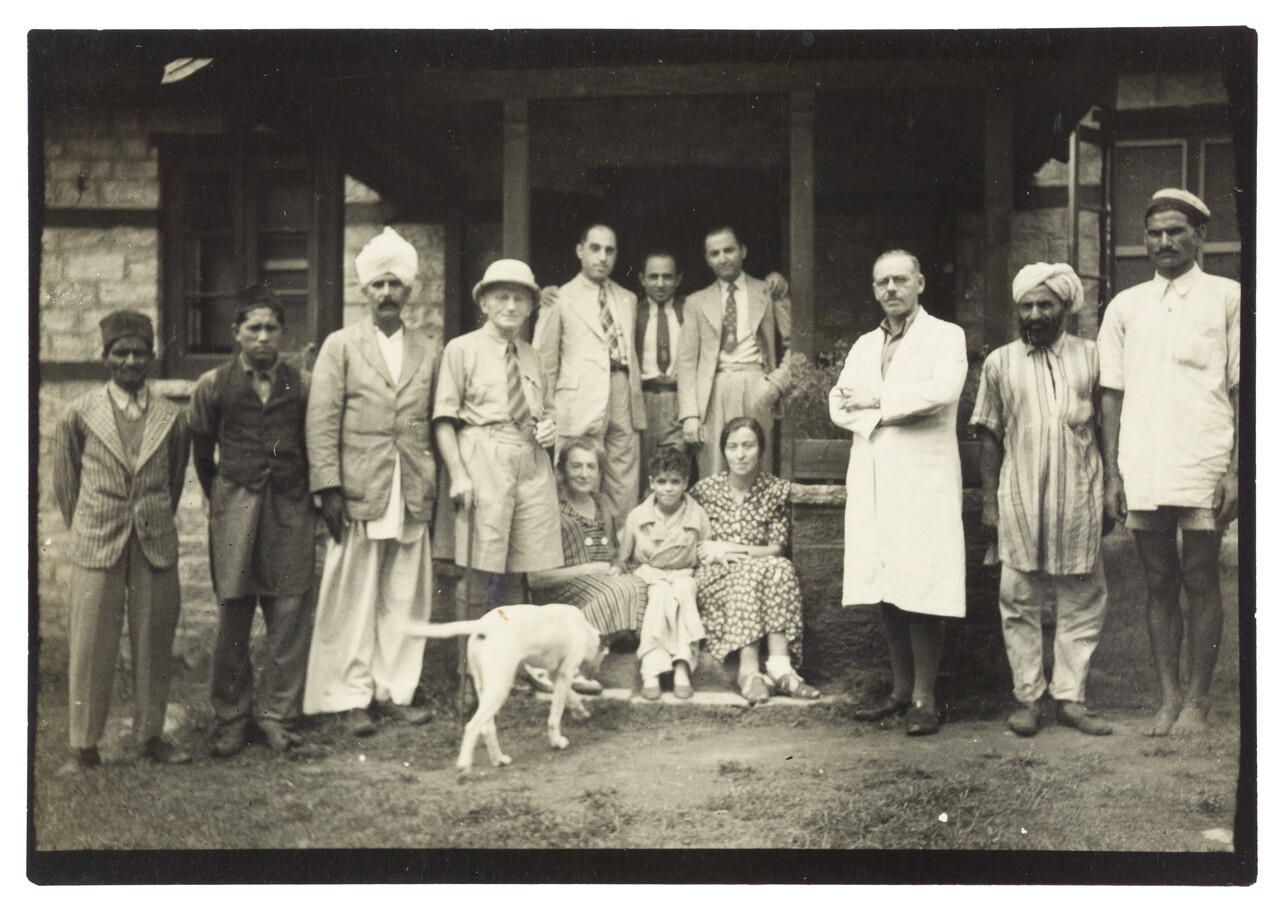
Fig. 5: Margot and Heinrich Ziegler pictured with their son Peter (center right). Alongside other German-Jewish refugees, the photo features eight male domestic servants, Manali, British India, 1939–1942; Jewish Museum Berlin, Inv. No.: 2011/297/278, Gift of Ruth Ziegler.
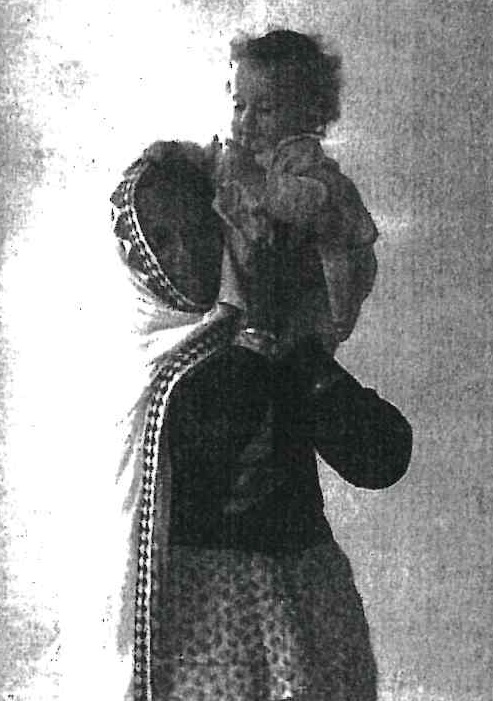
Fig. 6: Hazel ‘Pipsi’ Selzer, born in 1939 in Lahore to Hermann and Käte Selzer, with her ayah or nursemaid, around 1940/41; AR 25045 / MF 799, Hermann Marcus Selzer Collection, Leo Baeck Institute, New York.
German-speaking refugees nonetheless depended on Indians to meet their daily needs and services. When it comes to their interactions with Indians, in most oral, written, and photographic accounts of German-speaking Jews’ stay in India, their interactions with elite Indians are recalled more often. Lower-class Indians, the servants and low-wage labourers, remain largely nameless, even though it was these Indians that the refugees depended upon to live the European lifestyle. The only named Indian family in Jensen’s account is the Naseer family, who were among his parents’ few friends. Selzer highlights his interaction with the Indian poet Sarojini Naidu (1879–1949) and her husband Dr. Muthyala Govindarajulu Naidu (1868–?), prominent anti-colonial nationalists.
Few refugees engaged seriously with the anti-colonial national movement that raged around them. Muhammad Asad (1900–1992) was notable among the few politically engaged. Born Leopold Weiss in Lemberg (Lviv), Asad left Europe for Mandatory Palestine in 1922, where he worked as a freelance writer for the liberal Frankfurter Zeitung. In 1926, he travelled further to Saudi Arabia, where he converted to Islam, adopting the name Muhammad Asad. In 1932, he entered British India, where he met Muhammad Iqbal (1877–1938), a notable poet, philosopher, and politician who was working towards an independent state for Muslims in British India. On Iqbal’s request, Asad became involved with the Pakistan movement and remained in Kashmir. In 1939, along with other German-speaking migrants in the colony, he was interned. As someone actively involved in separatism, Asad remained in internment for the duration of the war.
Another notable, politically but more importantly, socially engaged German-speaking Jewish migrant was Gerda Philipsborn (1895–1943). Born in 1895 in Kiel, Philipsborn moved with her family to Berlin in 1903 as a child, where she grew up to become an opera singer. In the mid-1920s, motivated by a commitment to early-childhood education, she opened a kindergarten in Berlin’s Wilmersdorf district. At the same time, she dedicated herself to helping Jewish refugee children and orphans from Lithuania and fundraising for the Ben Shemen Youth Village, which was opened in Mandatory Palestine in 1927.
Part of Philipsborn’s many social causes was an interest in Mahatma Gandhi’s (1869–1948) non-violent struggle against British colonial rule in India. Through this interest, she became friends with Indian students in Berlin, including Zakir Hussain (1897–1969) who received his doctorate in Economics from the Friedrich Wilhelm University of Berlin (now Humboldt-Universität zu Berlin) and became the first Muslim President of independent India in 1967; Syed Abid Husain (1896– 1978), a leading educator, author, and translator of German and English texts to Urdu; and Muhammad Mujeeb (1902–1985), a writer and historian who trained in printing in German. The three men had been integral parts of the founding and shaping of Jamia Millia Islamia in Aligarh, then a fledgling university founded as part of Gandhi’s non-cooperation movement, whose mission was to offer a progressive education to Muslim children with an emphasis on Indian nationalism and self-sustenance free of colonial influence. They shared this mission with Philipsborn, already a committed educationist, inspiring her to move to India. It was only after the rise of the National Socialist Party in the July 1932 Reichstag elections that she undertook the journey, arriving in Delhi in December that year. Working at Jamia Millia Islamia from then on, Philipsborn played an important role in shaping the institution’s nursery and primary education. At Gandhi’s ashram in Sevagram, she introduced knitting and embroidery.
After the start of the war in 1939, Philipsborn was interned with many other Jewish refugees at Purandhar camp in Southern India for more than a year, where she developed a gastric ulcer. The internment camp was established as a ‘family camp’ for Jews and other anti-Nazis. At the same time, German Nazis and Italian Fascists were mainly interned (together with Jewish refugees) in the Satara camp. Philipsborn’s health continued to decline even after returning to the university to continue her work, and she died in India in 1943. A fellow former inmate of the Purandhar camp recalled how she had rehearsed the Jewish songs she had known from her former life in Germany. Buried in a Muslim graveyard in Delhi near other founders of the university, her gravestone carries the epithet she was known by those around her, Aapa Jaan, or elder sister.
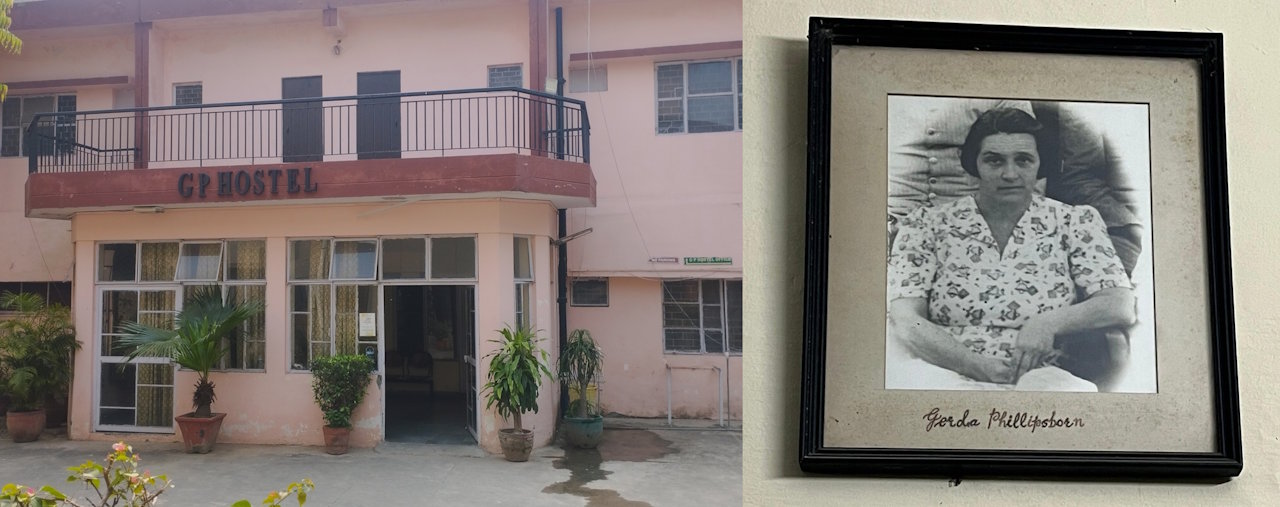
Fig. 7 and 8: The girl’s hostel at Jamia Millia Islamia, named after Gerda Philipsborn, features a portrait of her on its wall, 2025, Delhi; Axshazxaf, CC BY-SA 4.0 <https://creativecommons.org/licenses/by-sa/4.0>, via Wikimedia Commons
After the end of the Second World War in May 1945, India’s position as a British colony was short-lived. The Empire had suffered significant losses to its prestige after the defeat of its imperial armies in Malaya and Singapore in 1942. The post-war trial of officers of the Indian National Army, an anti-colonial fighting force formed from among Indian prisoners of war under the leadership of prominent Indian nationalist Subhas Chandra Bose (1897–1945) in collaboration with Japan, led to riots across the colony. With widespread political and civil unrest in the colony, on February 20, 1947, British Prime Minister Clement Attlee (1883–1967) announced plans for a complete transfer to self-government of British India by July 1948 to be overseen by the Viceroy of India, Lord Mountbatten (1900–1979). On June 3, 1947, Mountbatten announced his own plan, which outlined the division of British India into two independent dominions of Pakistan and India by mid-August 1947. On 14th and 15th August, respectively, Pakistan and India emerged as independent nation-states.
In the tumultuous years after the end of the war, German-speaking migrants had three options: to return to Europe, to continue their journeys as migrants to other parts of the globe, or to remain in the new independent states. Few chose to return to war-torn Europe where their homes had been destroyed or occupied by non-Jews, and their families murdered in the Shoah. Many, among them Harold Jensen, chose to naturalize as British subjects and journeyed on to other parts of the British Empire like Australia, New Zealand, or Canada. Others remained in their new homes and took on Indian or Pakistani citizenship, but eventually migrated further to the United States, Israel, or Canada later in life. Hermann and Käte Selzer stayed in Lahore, where they re-established their medical practice, leaving Pakistan in 1971 for Israel. The Zieglers remained in India, leaving in 1960 to return to West Germany.
Regardless of the path they chose after the end of the war, German-speaking Jewish migrants left a tangible mark on the social, cultural, and political landscapes of their former refuges. When Indians tune in to All India Radio, now renamed Akashvani or the ‘voice from the sky,’ they hear the melody composed by Walter Kaufmann. At Jamia Millia Islamia, a daycare center and girls’ hostel carry Gerda Philipsborn’s name in her memory. And those who visit the Town Hall in Bangalore can appreciate the architecture of Otto Königsberger (1908–1999), a German-Indian architect who was forced to leave Berlin after the Nazis rose to power and later became an Indian citizen in 1950.
Meylekh Viswanath, “India, A Little-Known Wartime Refuge for German-Speaking Jews,” in: Forward, March 20, 2017: https://forward.com/yiddish-world/366517/india-a-little-known-wartime-refuge-for-german-speaking-jews/
Meylekh Viswanath, “From the Reich to the Raj. Uncovering the Story of German Refugees in India,” in: Jewish Standard, April 13, 2017: https://jewishstandard.timesofisrael.com/from-the-reich-to-the-raj/
Dusty Sklar, “The Jewish Passage to India,” in: Jewish Currents, June 30, 2017: https://jewishcurrents.org/the-jewish-passage-to-india
Sudha G Tilak, “When an Unsung Indian helped Austrian Jews Escape the Nazis,” in: BBC, July 13, 2025: https://www.gaebler.info/india/selzer.htm#selzer
Q&A with Atina Grossmann on Jewish Refugees in India and Iran, in: The Zekelman Holocaust Center, July 9, 2021: https://holocaustcenter.org/qa-with-atina-grossmann-on-jewish-refugees-in-india-and-iran/
Herbert Friedmann interviewed by Thalia Gigerenzer, in: Nine Lives Podcast, May 9, 2011: https://podcasts.apple.com/us/podcast/nine-lives/id436938796
“Bombay,” in: Relocating Modernism: Global Metropolises, Modern Art and Exile (METROMOD), https://archive.metromod.net/viewer.p/69/2951/types/all/geo/
This work is licensed under a Creative Commons Attribution - Non commercial - No Derivatives 4.0 International License. As long as the material is unedited and you give appropriate credit according to the Recommended Citation, you may reuse and redistribute it in any medium or format for non-commercial purposes.
Pragya Kaul Guido received her PhD in history from the University of Michigan in 2026. In her dissertation, she explored how imperial states managed refugees as they crossed the fluid borders of empires. By centering the experiences of Jewish refugees in British India, she examined how European, Indian, and British conceptions of race and class shaped refugee movements within societies marked by rigid, racialized hierarchies. For her work, Pragya Kaul has been awarded grants from the Studienstiftung des deutschen Volkes, the German Academic Exchange Service (DAAD), and the German Historical Institute. She is a Council Member (At Large) for the American Historical Association.
Pragya Kaul Guido, Welcoming Refuge? German-speaking Jews in India, in: (Hi)stories of the German-Jewish Diaspora, September 09, 2026. <https://diaspora.jewish-history-online.net/article/gjd:article-67> [October 25, 2026].
 This work is licensed under a Creative Commons Attribution - Non commercial - No Derivatives 4.0 International License. As long as the material is unedited and you give appropriate credit according to the Recommended Citation, you may reuse and redistribute it in any medium or format for non-commercial purposes.
