
Reinhold
Scholem (1891–1985)
Born on August 8, 1891 in Berlin,
Germany
Died on November 19, 1985 in Sydney, Australia
Occupation: Print shop owner, businessman
Migration: Australia,
1938
Erich
Scholem (1893–1965)
Born on December 3, 1893 in Berlin,
Germany
Died on February 24, 1965 in Sydney,
Australia
Occupation: Print shop owner, businessman
Migration: Australia,
1938
“But then Hitler came in 1933, and in 1938 we were in Australia and started a new life with a lot of work.” Reinhold Scholem in a letter to his brother Gershom Scholem, February 29, 1972, National Library of Israel, Archives Department, Arc. 4*1599, series 01, file 3031.
In 1972, the German-Jewish businessman Reinhold Scholem wrote those words in a letter to his brother Gershom Scholem, who was living in Jerusalem. Scholem spent the first 47 years of his life in Germany and the last 47 years in Australia, where he had to start from scratch economically and socially. In Australia, he was joined by his brother Erich Scholem, their families, and their mother, Betty Scholem.
Both men are chiefly known from their brother Gershom Scholem’s memoir, From Berlin to Jerusalem (1977), where he depicts Reinhold Scholem as a fervent German nationalist with little to no interest in Jewish matters and Erich Scholem as apolitical. Not only was this depiction inaccurate and disparaging, but also it failed to portray the complex nature of the men’s identities and experiences as Jews, Germans, and later Australians. Their lives before 1938 in Berlin were elucidative of German-Jewish middle-class experience, and their lives after 1938 in Sydney encompassed many of the challenges faced by German-Jewish immigrants in Australia in the 1930s and beyond.
Reinhold and Erich Scholem were the eldest sons of middle-class print shop owner Arthur Scholem (1863–1925) and his wife Betty Scholem née Hirsch (1866–1946). They were the brothers of the professor and philosopher Gershom Scholem (1897–1982) and the Communist parliamentarian and newspaper editor Werner Scholem (1895–1940). The Scholem brothers grew up in central Berlin and attended the Luisenstädtisches Realgymnasium.
Reinhold Scholem enrolled in the fall of 1897 and left before his secondary school completion examination (Abitur) to take a series of apprenticeships as a printer in London, Paris, and Turin. Erich Scholem matriculated in April 1901 and left nine years later to apprentice as a printer in Manchester and Paris.
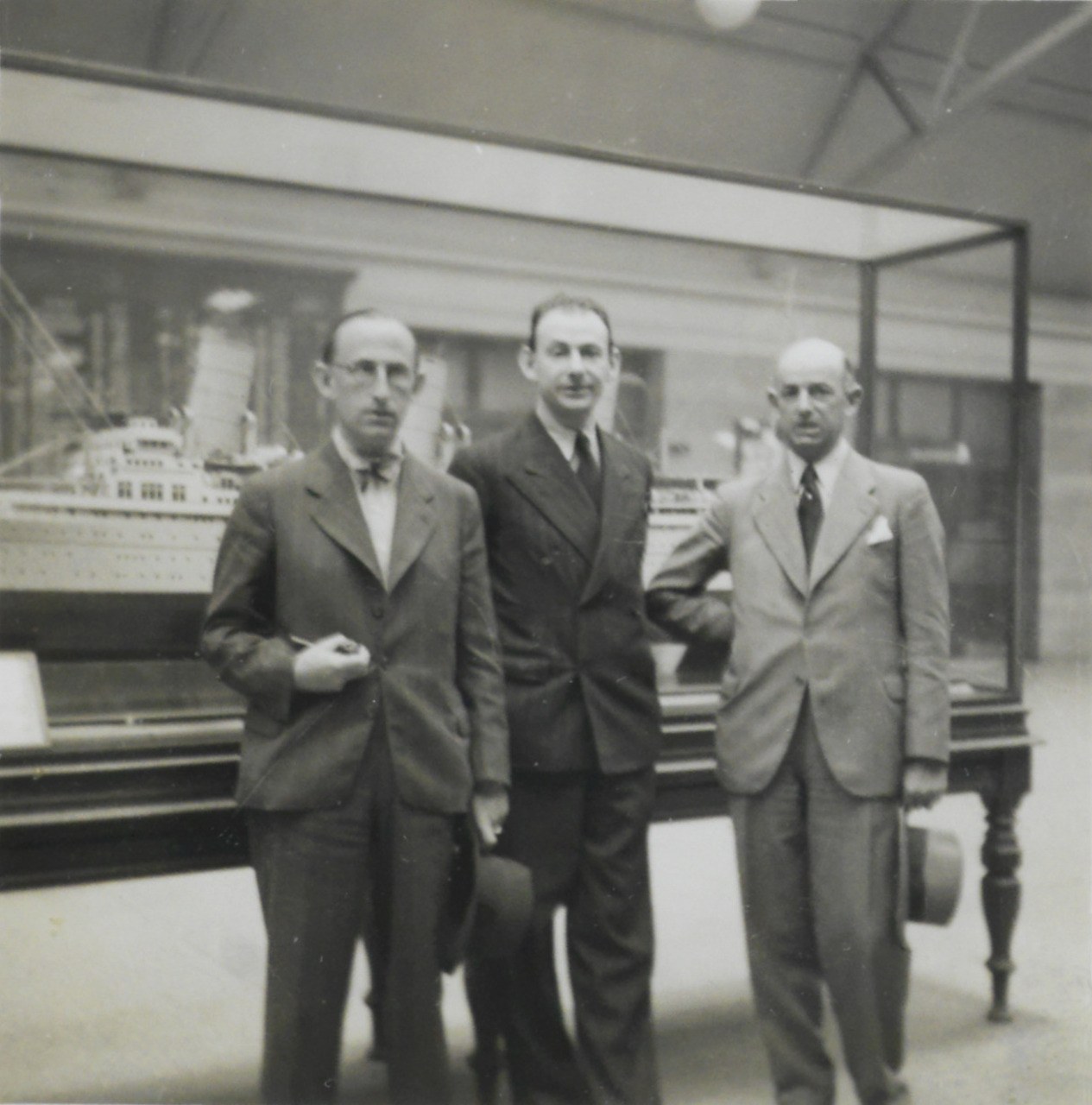
Fig. 1: Portrait of the four Scholem brothers. From left to right: Reinhold, Erich, Werner, and Gershom Scholem, Hugo Strube & Co., Berlin 1904; Gershom Scholem Archive, National Library of Israel, ARC. 4* 1599 10 04.
From October 1912 to October 1913, Reinhold Scholem fulfilled his one-year military service with Telegraph Battalion no. 1 of the Prussian army and subsequently entered his father’s printing business before rejoining the signal troops during the First World War. During the war, he was awarded the Iron Cross and promoted to the rank of lieutenant in the army reserve.
Erich Scholem had intended to commence his one-year military service with a Bavarian regiment in 1914, but the First World War precluded that plan. During the war, he served with a unit providing technical equipment to aviators. Both Reinhold and Erich Scholem rejoined their father’s firm after the war and took over ownership after Arthur Scholem’s death in 1925.
In April 1921, Reinhold Scholem married Käthe Wagner (1887–1970). They had one child, Günter Scholem (1922–1984). In September 1921, Erich Scholem married Edith Katz (1899–?). They had a daughter, Irene Scholem (1923–2021), and a son, Arthur Scholem (1927–2025).
During the years of the Weimar Republic, both Reinhold and Erich Scholem were active in political, civic, and cultural organizations, including those with a Jewish focus. Reinhold Scholem was a member of the national-liberal German People’s Party and the assimilationist, liberal, bourgeois Central Association of German Citizens of Jewish Faith. His younger brother supported the left-liberal German Democratic Party and joined Berlin’s Democratic Club. Reinhold Scholem was involved in the Incunabula Society, and both men belonged to the Soncino Society of Friends of the Jewish Book (Soncino-Gesellschaft der Freunde des jüdischen Buches e.V.), which combined their interest in print culture with Jewish associational life.
The combination of the Great Depression and Nazi oppression made it impossible for the Scholem printing firm to retain non-Jewish clients, and Jewish clients did not supply enough business to sustain the firm. Reinhold and Erich Scholem closed the print shop in 1934 and formally dissolved the enterprise in 1936. Meanwhile, their brother Werner Scholem had been arrested. He was sent to several prisons and concentration camps before his transfer to Buchenwald concentration camp in September 1938, where he was murdered by the Nazis in July 1940. Life in Nazi Germany had become impossible for the Scholem family.
By early 1938, they were prepared to emigrate. However, laying the groundwork for emigration involved a degree of chicanery. At that time, the Australian government required immigrants to bring 200 pounds with them. While Reinhold Scholem had the funds, his younger brother did not. Therefore, their brother Gershom Scholem, living in Jerusalem, sent Erich Scholem the needed funds from their mother’s bank account in Mandatory Palestine, and once Scholem arrived in Australia, he would send the money back to Palestine. Moreover, to coordinate the operation without arousing the suspicions of the Nazi authorities, Erich Scholem took a one-day trip across the border to Czechoslovakia, from where he sent Gershom Scholem detailed instructions.
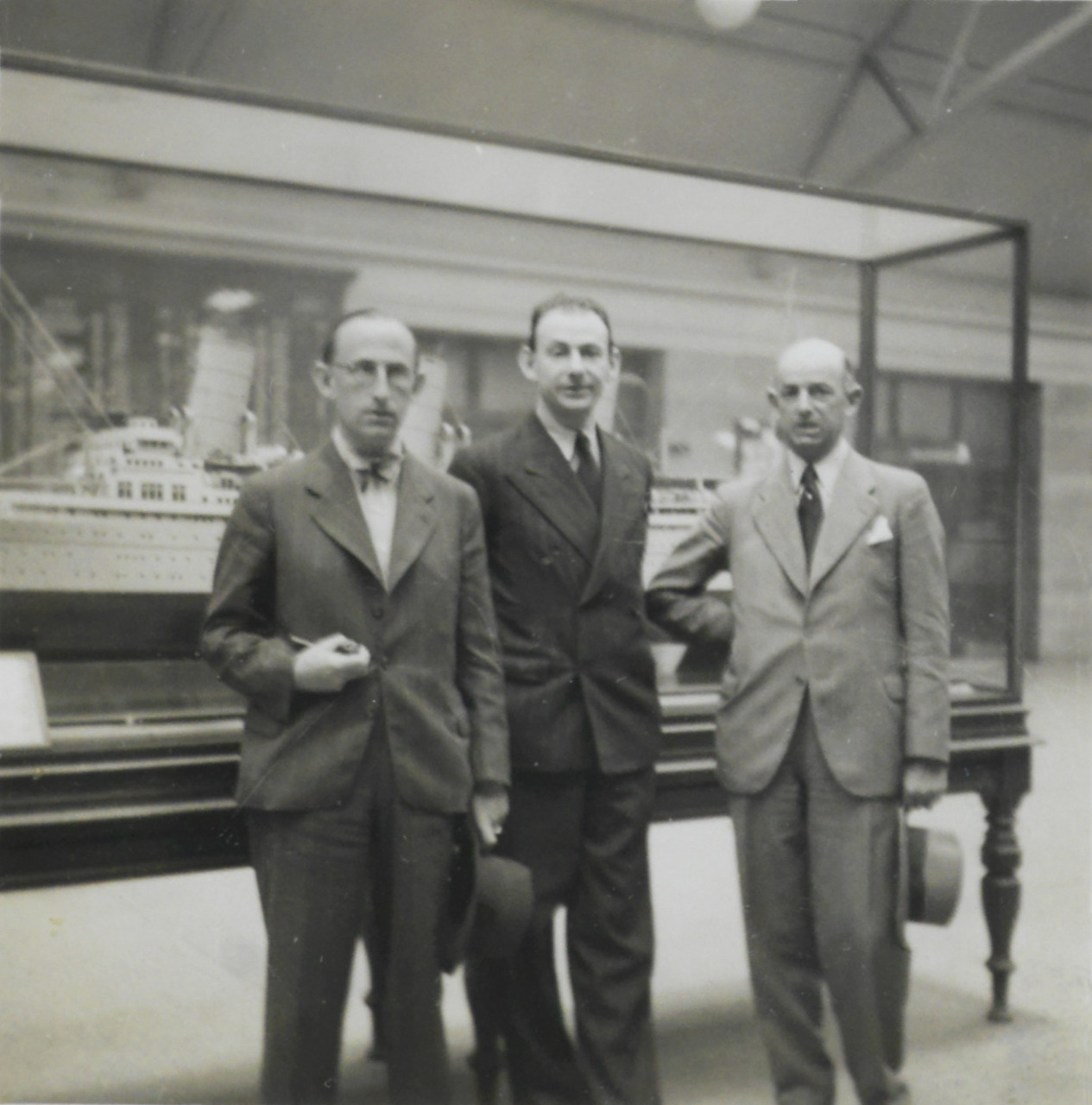
Fig. 2: Erich, Gershom, and Reinhold Scholem in Montreal, 1938 (from left to right). Erich and Reinhold Scholem were on their way to Australia via Canada. Gershom Scholem was in the United States as a visiting scholar; Gershom Scholem Archive, National Library of Israel, ARC. 4* 1599 10 47.
At last, in the summer of 1938, Erich Scholem, Reinhold Scholem, Reinhold’s wife, Käthe, and their son, Günter, traveled from Berlin to Australia, via Southampton, Montreal, and Vancouver. While in Montreal, they had a visit from Gershom Scholem, who was spending time in the United States doing research and giving lectures. The Scholems arrived in Sydney, their new home, on July 1, 1938. A few months later, Reinhold Scholem wrote to Gershom Scholem, “I can only say that since then, I have been glad every day to be out of Germany.” Reinhold Scholem to Gershom Scholem, October 18, 1938, National Library of Israel, Archives Department, Arc. 4*1599, series 01, file 3031.
In 1933, there were approximately 23,000 Jews in all of Australia, a country with a population of 6,600,000. By comparison, there were approximately 160,000 in Berlin alone, a city with a population of 4,250,000. However, as Nazi persecution of the Jews worsened, many German and Austrian Jews looked to Australia as a land of refuge. Between 1938 and 1940, 9,000 immigrant Jews arrived in Australia – the Scholem families among them.
While Reinhold Scholem immigrated to Australia with his wife and son, Erich Scholem was not accompanied by his family. He lacked the necessary money. Additionally, antisemitic and anti-immigration sentiment in Australia made it uncertain whether his family would be able to join him and, if so, under what circumstances. The Scholems contemplated having Edith Scholem immigrate as a domestic servant and her daughter Irene as a factory worker. To their relief, Erich Scholem succeeded in bringing his wife and his children as regular immigrants to Australia in 1939, joined by Reinhold and Erich Scholem’s mother.
Nonetheless, significant changes were underway for the Scholems. Not long after Edith Scholem arrived in Sydney, she and Erich Scholem divorced. Erich Scholem then married Hildegard (called ‘Hilde’) Samuel (1907–1982), a dressmaker nearly fourteen years his junior, who had accompanied him on the journey from Berlin, and Edith Scholem soon married an Australian widower.
In Berlin, Reinhold and Erich Scholem had been the prosperous owners of a print shop, but in Australia, they were poor immigrants. In reaction to Australian nativism, they decided that their best option was to work for themselves, and both men ran small general stores in the suburbs of Sydney. The long hours and unsteady business, which were dependent on vacationers availing themselves of good weather, took their toll on the brothers. Money remained tight, and they could not afford to pay for a separate apartment or a room in a boardinghouse for their mother.
The Scholems also had difficulty integrating into the existing Jewish community. They were disappointed with the level of Judaic erudition among native Australian Jews, and the Scholem children found youth groups to be unwelcoming to the immigrants. “The Australians take care to withdraw as soon as the refugees increase,” Betty Scholem wrote in a letter to her youngest son, Gershom Scholem. Betty Scholem to Gershom Scholem, April 26, 1941, in: Betty Scholem/Gershom Scholem, Mutter und Sohn im Briefwechsel 1917–1946, ed. Itta Shedletzky, Munich: C. H. Beck, 1989, 499. Though nearly all Australian synagogues before 1933 had been officially Orthodox, the Scholems – like many German-Jewish immigrants – supported a new Reform temple, which had been founded in 1938.
The outbreak of the Second World War changed the Scholems’ status. Like many German Jews in Australia, they were classified as ‘enemy aliens,’ which entailed restrictions on their movements and further limited their economic opportunities. Speaking German in public was also an issue. For example, when Erich Scholem became ill and was hospitalized, he did not want his mother to visit him lest she speak German in public. Erich Scholem was naturalized as an Australian citizen in 1944, the first in the family to gain citizenship, and he enlisted in the Australian army, though he was never sent overseas.
When the war ended, new opportunities opened for the Scholems. Reinhold Scholem bought a plastics molding company, which led to renewed affluence by the 1960s. By contrast, Erich Scholem struggled to find economic security. At times, he operated a bakery and a cane furniture factory, but no enterprise provided the prosperity he had known before the Great Depression and Nazi years.
As had been the case in Weimar-era Germany, Reinhold Scholem became politically committed in Australia. And, once again, he supported the center right or conservative liberals, namely the Liberal Party of Australia, and strongly opposed the Australian Labor Party. There is no evidence that Erich Scholem was politically active in Australia.
The brothers also had disparate perspectives on postwar Germany and their own German identities. In 1960, Erich Scholem returned to West Germany and Berlin for a visit. After the trip, he was angry that the Germans denied responsibility for what had happened during the years 1933–1945 and emphasized their own wartime suffering. He wrote to Gershom Scholem, “I have to say that I feel much more comfortable outside the German borders. The longer I was there, the more they got on my nerves. [It bothered me] how everyone kept assuring you, without being asked, that they knew nothing. […] Yes, they are very angry that Hitler lost the war, and he is their scapegoat, though of course they have long since forgotten that half of them voted for him in 1933. It was always the others.” Erich Scholem about a recent visit back to Germany in a letter to his brother Gershom Scholem, July 10, 1960, National Library of Israel, Archives Department, Arc. 4*1599, series 01, file 3024. In fact, the trip to Germany strengthened Erich Scholem’s Anglophilia. At the same time, this former Berliner found Sydney insufficiently cosmopolitan: “Despite its two million inhabitants, Sydney is the largest village in the Southern Hemisphere and correspondingly provincial.” Erich Scholem to Gershom Scholem, December 24, 1961, National Library of Israel, Archives Department, Arc. 4*1599, series 01, file 3024.
Reinhold Scholem developed a hybrid identity as a German and an Australian. He still thought of himself as a German, to the surprise of his Eastern European Jewish sister-in-law, Fania Scholem (1909–1999). Reinhold Scholem claimed that he would not let Adolf Hitler (1889–1945) define for him what it meant to be German. Throughout the 1970s and into the 1980s, he and Gershom Scholem carried out a fierce debate about German-Jewish identity and assimilation. In the early 1970s, Reinhold Scholem took a long-desired trip to Europe, enjoyably visiting Zurich, Düsseldorf, and Munich. After his wife, Käthe Scholem, died in 1970, he commenced a romantic relationship with a widow originally from Breslau (Wrocław). However, over time, Reinhold Scholem’s German became riddled with ever more anglicisms. His son, Günter Scholem, no longer felt able to read or write German proficiently when he was in his fifties, and Reinhold Scholem’s grandchildren spoke no German at all.
Though Erich Scholem had not been especially religious when the family lived in Berlin, at some point, he began attending religious services at Sydney’s Orthodox North Shore Synagogue, rather than the liberal North Shore Temple Emanuel, which was popular with many German-Jewish immigrants. Curiously, neither Erich Scholem’s brothers nor his children knew about his new affiliation.
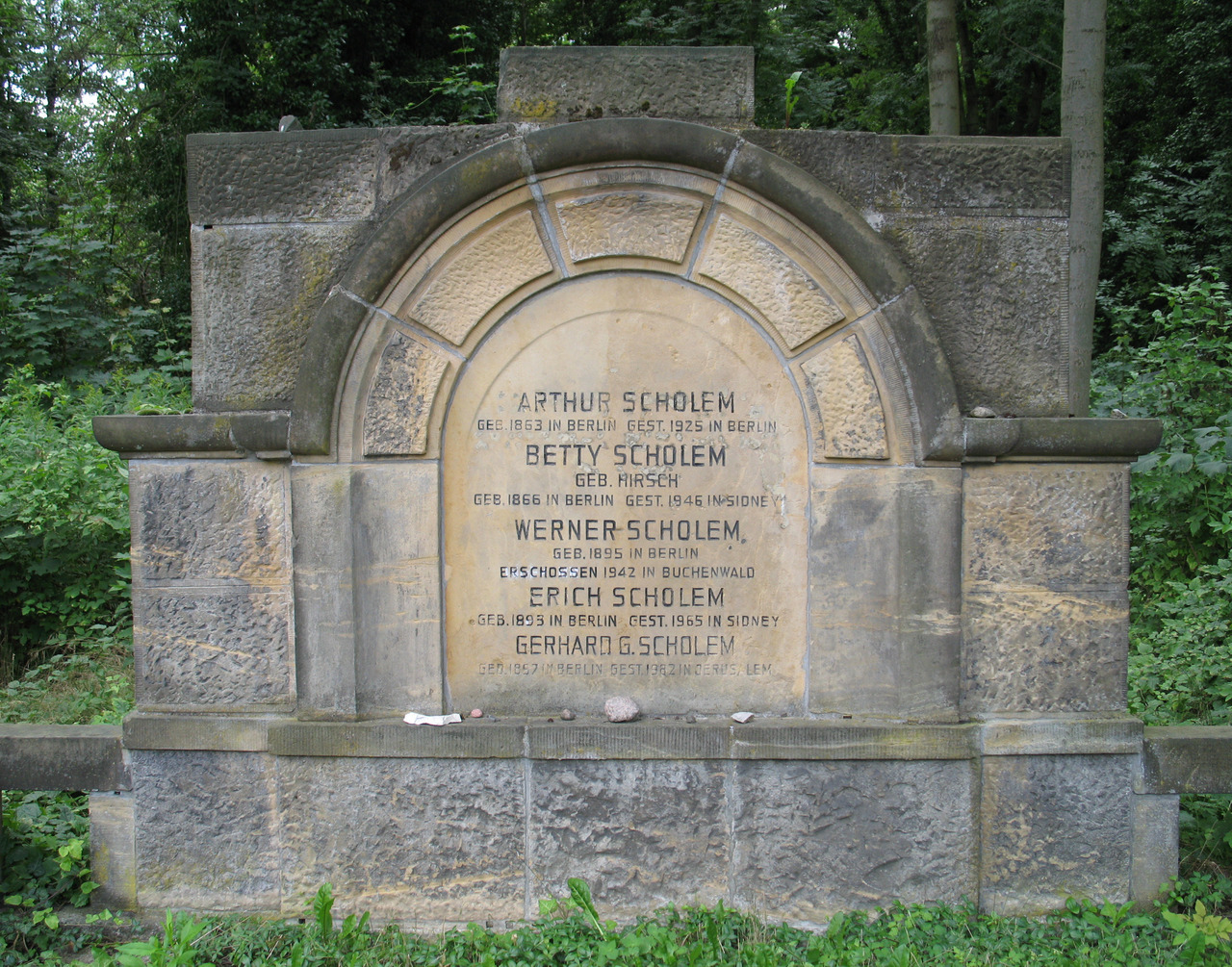
Fig. 3: The Scholem family grave at the Jewish Cemetery in Berlin-Weissensee, which implies movement within the German-Jewish diaspora that continues beyond death: between Berlin, Jerusalem, and Sydney. Reinhold, Erich, and Betty Scholem were buried in Australia, while Gershom Scholem’s grave is located in Israel. Werner Scholem perished in the Shoah, and only their father, Arthur Scholem, is known to be buried in Berlin. Photo by Jay Howard Geller, 2009.
In the 1950s, Erich Scholem survived lung cancer and intestinal cancer, but his health failed unexpectedly, and he died in February 1965. Reinhold Scholem died in November 1985 at the age of 94.
Like most German Jews in the 1930s and 1940s, the story of Reinhold and Erich Scholem is one of expulsion or flight and building new lives. They, too, were forced to leave their homeland and migrated to a country that was both reluctant to offer them sanctuary and offered limited opportunities for integration. Although the Scholem brothers grew up in the same middle-class Berlin Jewish family, they all charted their own path through the contours of German-Jewish history and its diaspora.
Jay Howard Geller, „Die Scholems“ – Jüdisches Leben in Deutschland und sein Ende, Deutschlandfunk, Büchermarkt, 07.02.2021: https://www.deutschlandfunk.de/jay-howard-geller-die-scholems-juedisches-leben-in-100.html
This work is licensed under a Creative Commons Attribution - Non commercial - No Derivatives 4.0 International License. As long as the material is unedited and you give appropriate credit according to the Recommended Citation, you may reuse and redistribute it in any medium or format for non-commercial purposes.
Prof. Dr. Jay Howard Geller is the Samuel Rosenthal Professor of Judaic Studies in the Department of History at Case Western Reserve University. His research explores the history of Jews in modern Germany, with particular focus on Jewish politics, identity, and urban life. He has written extensively on German-Jewish history, including Jews in Post-Holocaust Germany, 1945–1953 (Cambridge University Press, 2005) and The Scholems: A Story of the German-Jewish Bourgeoisie from Emancipation to Destruction (Cornell University Press, 2019; German edition: Die Scholems, Suhrkamp, 2020). Geller has co-edited several volumes, including Three-Way Street: Jews, Germans, and the Transnational (University of Michigan Press, 2016, with Leslie Morris) and Rebuilding Jewish Life in Germany (Rutgers University Press, 2020, with Michael Meng).
Jay Howard Geller, Reinhold and Erich Scholem, in: (Hi)stories of the German-Jewish Diaspora, May 08, 2025. <https://diaspora.jewish-history-online.net/article/gjd:article-25> [October 25, 2026].
 This work is licensed under a Creative Commons Attribution - Non commercial - No Derivatives 4.0 International License. As long as the material is unedited and you give appropriate credit according to the Recommended Citation, you may reuse and redistribute it in any medium or format for non-commercial purposes.