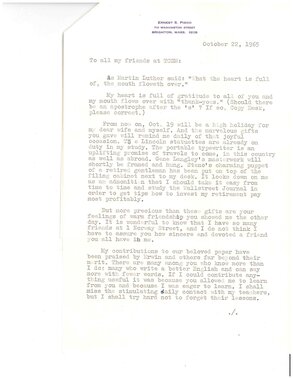
Austrian-born writer and editor Ernest Sigmund Pisko immigrated to the United States with his wife and daughter in 1940. He worked as a journalist for the American newspaper The Christian Science Monitor for twenty-five years (1940–1965), where he applied his prior experience as a newspaper editor in interwar Vienna and his knowledge of European affairs to bridge cultures, societies, and historical periods. His American journalism shows his resilience, adaptability, and the capacity to recognize the horrors of one of the worst chapters in human history while also maintaining faith in progressive ideals in the aftermath of the Second World War. Following his retirement, Pisko wrote a thank you letter to his former Monitor colleagues. Although a non-observant Jew, emotion expressed about his time at the newspaper inspired Judaic references: his farewell party would be remembered as a “high holiday,” and he recalled his coming to the United States in language from the Hebrew Bible: “I was a stranger in a strange land” (Exodus 2:22). Ultimately, this thank you signaled Pisko’s successful integration into a new country. This letter is part of the collections of The Mary Baker Eddy Library in Boston.
Ernest Sigmund Pisko was born in Vienna on 17 January 1896 to Adolf (1856–1922) and Ida Pisko (1869–1965). He was their second child, with a sister, Clara (1894–1980), and a brother, Alfred (1902–1990). The Pisko family belonged to Vienna’s Jewish community, although unlike most Viennese Jews, they lived in an upper-middle class neighborhood in the city’s 18th district. From a young age, Pisko developed a passion for writing, although his enthusiasm for music and acting was almost equal to his love of writing. His decision on which artistic path to follow was interrupted by the First World War. Drafted into the Austrian army in 1915, Pisko served on the Eastern and Italian fronts, first as a non-commissioned officer and then as a lieutenant.
Following the war, he joined Herz Buchhandlung, which was a bookstore and small publishing company in Vienna; as a co-owner, Pisko helped expand the business in the 1920s by adding a publishing department. This work brought him to the attention of the Steyrermühl corporation, which was one of the largest newspaper publishers and paper producers in Austria. Steyrermühl hired him to manage their book publications in 1930. His work continued to impress his employers who, in 1935, offered Pisko the position of editor-in-chief of three weekly newspapers in Vienna: Neues Wiener Tagblatt Wochenausgabe, Volkswoche, and Nach der Arbeit.
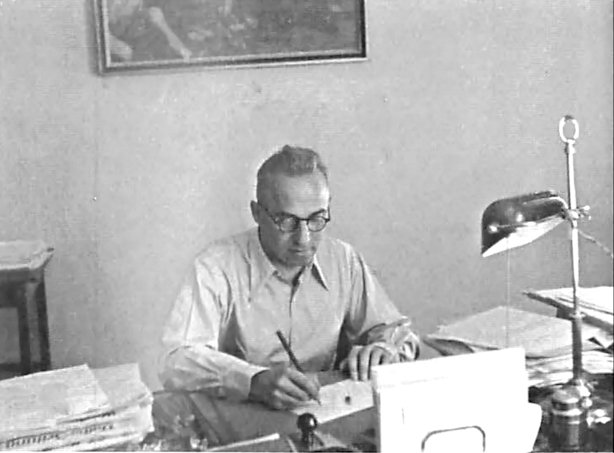
Fig. 1: Ernest Pisko in his office, Vienna, 1937; private collection © Eric Corty.
By this point, Pisko was also a family man. He had met his wife, a Hungarian Jew named Risa Fried (1902–1995). They were married in Vienna on 16 August 1922 in a civil ceremony, likely because he had officially left the Jewish religious community in 1920. The newlyweds moved into the Pisko family home in Vienna. Their only child, Susanne, was born on 19 April 1925. They lived a comfortable middle-class life as Pisko not only oversaw the three newspapers, but also wrote articles and edited book manuscripts.
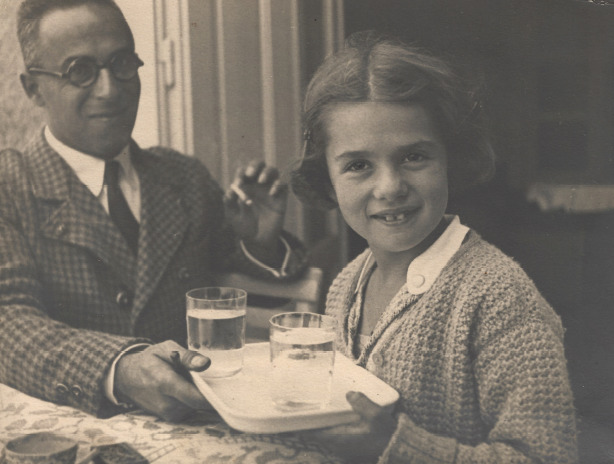
Fig. 2: Ernest Pisko with his daughter Susanne in 1932; private collection © Eric Corty.
Their stable life was shattered after Nazi Germany annexed Austria in March 1938. Less than two weeks later, Pisko was arrested at his home in Vienna because of his work as a newspaper editor. He was imprisoned for three months. To secure his release, he was required to promise to never write about his experience in prison and to leave the German Reich within four weeks. Pisko, along with his wife and their daughter, departed Vienna in July 1938.
They went to Komárom (Komárno), which was part of Czechoslovakia until Hungary annexed it in November 1938. Shortly thereafter, the local police arrested them, along with other Jews as well as Czechs and Slovaks, as unwanted foreigners. A month later, they were released because Pisko and his wife had managed to obtain domestic servant visas to work in England. The family immigrated to Britain in December. The Pisko family spoke more than one language, but English was not one of them. Thus, like most Austrian and German-Jewish refugees, they began to learn English during their stay in England, a time when Pisko was employed as a butler and his wife as a cook. Their employment as domestic servants did not last long. In March 1940, the trio immigrated to the United States.
Ernest Pisko and his family settled into their new home in Brookline, Massachusetts, a town nestled next to Boston that had become a center for middle-class Jews. The majority of the Jewish community in greater Boston came from Eastern Europe, and German-speaking Jews were the minority. Although the family was non-observant, Pisko would later receive invitations to speak on international affairs at Jewish institutions in the area. He also lectured around the country about his experiences under the Nazis as well as on foreign affairs. In addition, Pisko returned to his former profession in journalism, which contrasts with the experience of most Jewish refugees, who were unable to resume their careers or obtain the same professional status and financial security they formerly had. Pisko began to publish articles, mostly in The Christian Science Monitor, a Boston-based secular newspaper published by the Christian Science church. The Monitor also valued Pisko’s ability to listen to German shortwave radio during the Second World War, communicating relevant news items to the paper.
From his earliest publications, Pisko’s articles for the Monitor not only showcased his knowledge of European affairs, but also his swiftly advancing proficiency in English. In his first article in November 1940, he addressed Austria’s annexation and shared his experiences interacting with Austrians in the days thereafter. Pisko continued to write for the Monitor throughout the war. He frequently reflected on the situation in Germany and the actions of Nazi leaders. He also wrote about the French resistance, the contributions of Germany’s allies to the war effort, German radio programs broadcast in North America, the surrender of Italy, and the potential postwar fate of Eastern Europe, among other topics. His contributions drew primarily from his knowledge of European affairs, some of which expressed a sensitivity to the Jewish experience. For example, in “Will There Be Peace for Jews?” Pisko addressed antisemitism not only among the Axis Powers, but among the Allies too. He distinguished between the war to free Europe and attacks against Jews. The Monitor allowed a relatively new writer to comment on a risky subject, informed by his background as a non-observant Jew and his diasporic experience.
Ernest Pisko continued to work for The Christian Science Monitor after the war. He was highly respected for his articles and book reviews about Austrian and European affairs during the Second World War and the early years of the Cold War.
Pisko also returned to Europe to report on the continent’s recovery and development. By June 1946, he found himself in Vienna. His return home came with a certain irony as one of his first pieces for the Monitor bore the title “Never to Return,” in which he described his forced exodus from Austria wherein a Nazi official noted that he would never again see his homeland. “Never to Return,” Christian Science Monitor Weekly Magazine, 30 November 1940, 4.
Many Austrian and German Jews never did return. In contrast, during what was the first of many trips to Europe, Pisko reported on a multitude of topics, such as denazification efforts in Germany; the status and treatment of Displaced Persons and refugees in multiple countries; and the struggle of Eastern European nations under Soviet occupation. He also highlighted developments in Austria, including reporting on the presence of occupation armies, the development of the postwar republic, diplomatic relations with neighbors, and the lingering presence of Nazis. These quality contributions led to his elevation from correspondent to full staff member in the Overseas Department in 1949. Moreover, his work for the Monitor was reprinted in international newspapers as well as cited in Boston’s Jewish Advocate and other Jewish publications in North America.
For his articles about Europe in the late 1940s and early 1950s, Sigma Delta Chi, America’s society of professional journalists, recognized Pisko with its Distinguished Service Award for Foreign Correspondence in 1953. Then, in 1962, the Austrian government awarded him the Golden Medal of Honor. The Foreign Minister, Dr. Bruno Kreisky (1911–1990), who was born into a secular Jewish family, was at the ceremony in New York.
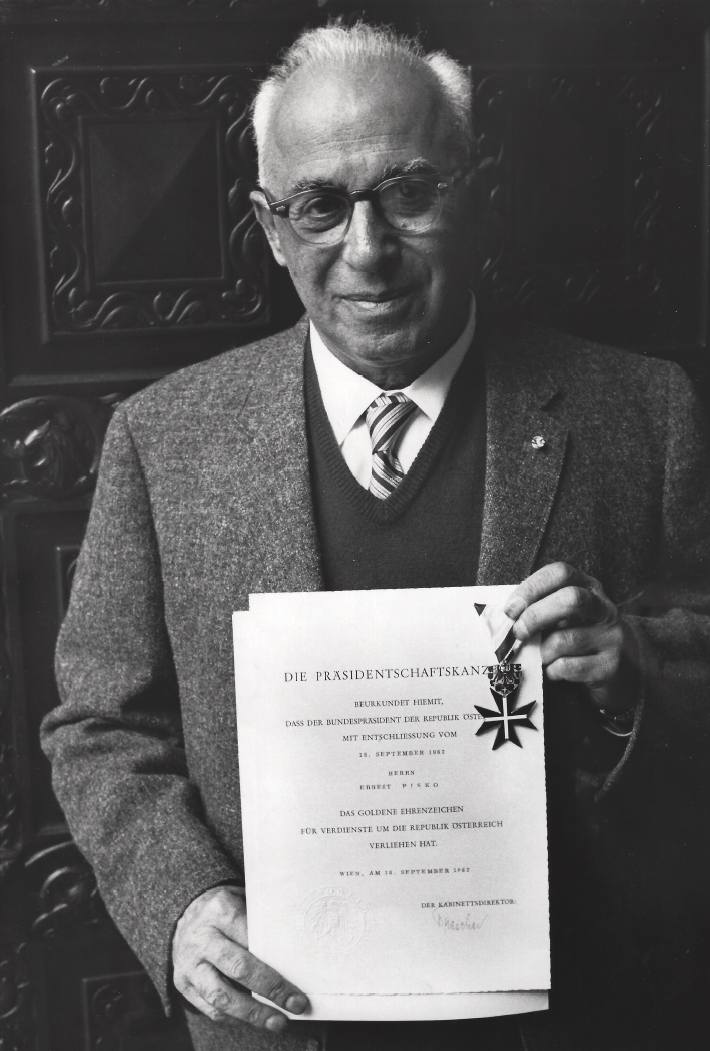
Fig. 3: Ernest Pisko with his award from the Austrian government, 1962; Photo: Norman Matheny © The First Church of Christ, Scientist, The Mary Baker Eddy Library.
In addition to his articles, Pisko was a prodigious book reviewer. Subjects covered a wide range, including analyses of the Nazi period. He reviewed publications that explored the Holocaust, including those offering apologetics for German behavior towards the Jews. Pisko was quick to discredit such perspectives. As with his articles, he demonstrated mastery of English in his book reviews. His capacity to read a robust number of English and German-language texts on a regular basis and to provide cogent analyses of them to an English-speaking readership testified to his determination not to allow his intellect to be compromised by writing in English. Pisko used this new language to reestablish his voice as a journalist. This language and this journalism were also part of his path to becoming an American (he became a citizen in August 1945).
After his retirement in 1965, Ernest Pisko wrote a letter of thanks to his former Monitor colleagues. While only a page and a half of typed text, the letter highlights several themes that give some insight into Pisko personally as well as his experiences working at the Monitor. First among these themes is language. When Pisko left Vienna in 1938 at the age of 42, he knew little or no English like many German-speaking refugees. To return to journalism in the United States required mastery of a newly-acquired language, and he spent most of his first year in the United States dedicated to learning English. Decades later in his letter, he reflected on this success with humility when he noted that many of his colleagues “write a better English.” This humility was also tinged with humor in another part of the letter where Pisko made an in-house editing joke when requesting a check with the Copy Desk to see if there should be an apostrophe in the term “thank yous.” His lighthearted solicitation asking for correction of his writing if needed hints at the genuine warmth and deeply-felt bonds that Pisko had with his former colleagues.
Another notable theme is spirituality. Pisko was a non-observant Jew, and yet, his articles often reflected the Monitor’s conviction to affirm spiritual confidence in addressing world crises while not promoting any specific denomination or sect. This form of faith infused many of his articles with hope for the future, even when he simultaneously reported on bleak or dire events with the utmost candor. An emphasis on spirituality within a secular context is also reflected in Pisko’s thank you letter. He began the letter attributing a quote to German theologian Martin Luther (1483–1546), “What the heart is full of,” and he ended with “Bless you all.” As in his articles, these two brief examples from his letter teem with positivity and may very well have reflected his experiences working for a quarter of a century with colleagues who likewise embraced the newspaper’s ideals, whether they were members of the Christian Science church or not. And yet, just as the Monitor is based in affirming spiritual values broadly, this breadth is also seen through Pisko’s evocation of his former faith in his letter. Pisko mentioned that he and his wife would hereafter look upon his retirement party as “a high holiday.”
Following this reference to Judaism, Pisko duly thanked his former colleagues for their parting gifts to him. While acknowledging gifts is a standard purpose of a thank you note, here, too, positive language permeates the paragraph; among the words Pisko used to describe the gifts he received were “marvelous,” “joyful,” “uplifting,” and “charming.” As meaningful as such gifts were, it was clearly the people who meant so much to him: “But more precious than these gifts are your feelings of warm friendship […]” It was a friendship that extended both ways: “I do not think I have to assure you how sincere and devoted a friend you all have in me.” In addition, Pisko saluted his colleagues not just for being excellent co-workers, but more importantly, for helping him find roots in a new country. Being a member of the Monitor family was a formative part of his experience of becoming an American.
This letter reflected Pisko’s love of his profession and the second chance that the Monitor offered him to fulfill his calling as a writer. Whether at his desk at 1 Norway Street, the Monitor’s home office in Boston, or from various locations in Europe, Pisko sought to share insights about European affairs with Monitor readers. Publishing this insight about Europe, and especially Austria, was not a coincidence. Most of his career paralleled Erwin Canham’s (1904–1982) tenure as editor of The Christian Science Monitor. Canham utilized area specialists to expand foreign news coverage. In his letter, Pisko referenced Canham and how the legendary editor had praised him for his contributions, perhaps, as Pisko noted with a touch of humility, “far beyond their merit.”
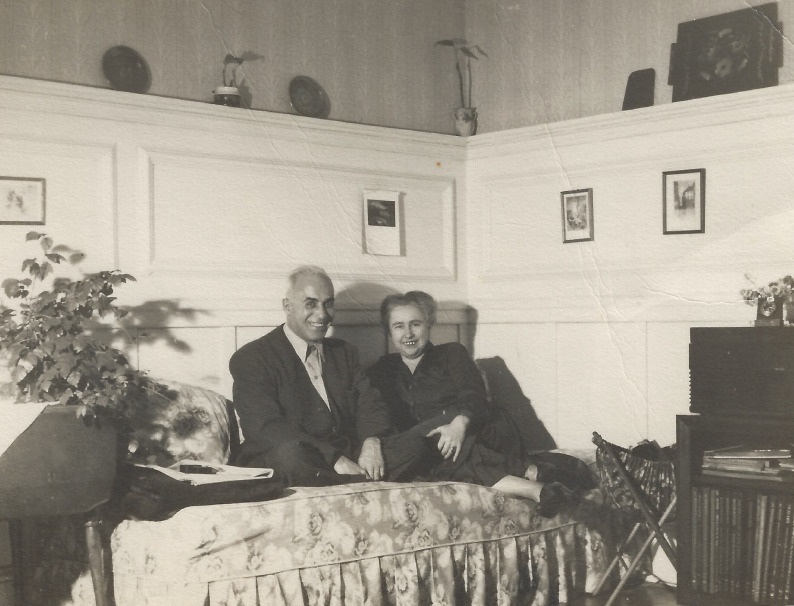
Fig. 4: Ernest Pisko with his wife in their home in Boston, 1949; private collection © Eric Corty.
Toward the end of the letter, Pisko invited his former colleagues to stay in touch: “I also hope that if any of you ever feels like asking ‘Ernie’ for his advice or opinion, you will not hesitate to dial my phone number […].” At least one current Monitor employee remembers Pisko, and several staff members whose parents worked for the Monitor decades ago recall stories about him and also about his wife Risa Pisko, who contributed recipes to the Monitor from 1966 to 1981. That people in 2026 remember the couple who had once fled from Vienna speaks to their legacy and to their impact as part of the global outreach of the United States and that of The Christian Science Monitor after the Second World War.
For Ernest Pisko, the Nazi takeover of his native Austria led him, and his family, to join the diaspora of German-speaking Jews from Central Europe. Through his return to journalism, he maintained strong connections with his European homeland. Those connections allowed him to contribute hundreds of articles to The Christian Science Monitor that kept the newspaper’s American and global readership informed about crucial events in Europe during and after the Second World War. As part of The Christian Science Monitor’s global outreach, Pisko developed a journalistic voice that drew from his diasporic experience and which he applied to American religious leader Mary Baker Eddy’s objective when she founded the paper “to injure no man, but to bless all mankind.” An important thread in his work was reviewing both English- and German-language books that dealt with the rise of Nazism and the injuries it inflicted on the cultures and people he had known before his expulsion from Austria in summer 1938. The sentiments expressed in the thank you letter suggest that his work for and association with the Monitor allowed him to refocus his uprooting in ways that were professionally and personally formative and progressive. As seen in his letter, Ernest Pisko welcomed establishing roots in a new country – which included learning about the great American pastime, baseball, from his American-born grandsons – while at the same time bringing to his English-speaking readership a profound and detailed understanding of the part of the world from which he had come and that still formed a core part of his identity.
Even after he retired in 1965, Pisko did not stop writing. As a freelance journalist for the Monitor, he traveled to Europe, where he unexpectedly died of a lung embolism on 5 October 1966 in Frankfurt. His wife and daughter brought his ashes home, and after a memorial service at a Unitarian Church, Risa Pisko gave Susanne his ashes to scatter over her yard.
“Global Boston: A Portal to the Region’s Immigrant Past and Present,” Boston College Department of History: https://globalboston.bc.edu/.
“Jewish Neighborhoods: Boston. Memories of Jewish Life in Boston from our Wexler Oral History Project Collection,” Yiddish Book Center: www.yiddishbookcenter.org/language-literature-culture/wexler-oral-history-project-films-features-news/features/jewish-neighborhoods/boston.
Mary Baker Eddy Library Podcast, Episode 85, “The Piskos – to Vienna with love from The Christian Science Monitor”, December 1, 2023: www.marybakereddylibrary.org/de/research/podcast/85-the-piskos-to-vienna-with-love-from-the-christian-science-monitor/.
“Ernst Pisko,” Wien Geschichte Wiki: https://www.geschichtewiki.wien.gv.at/Ernst_Pisko
This work is licensed under a Creative Commons Attribution - Non commercial - No Derivatives 4.0 International License. As long as the material is unedited and you give appropriate credit according to the Recommended Citation, you may reuse and redistribute it in any medium or format for non-commercial purposes.
Dr. Amy Carney is an Associate Professor of History at Pennsylvania State University, the Behrend College, where she teaches classes on modern European history. She is the author of Marriage and Fatherhood in the Nazis SS. Her current research is a microhistory of a German Jewish family and an Austrian Jewish (the Pisko) family, both of whom emigrated from Nazi Germany in 1938. She is also collaborating with Ernest and Risa Pisko’s grandson, Eric Corty, to co-author a cookbook based on Risa’s recipes.
Jonathon Eder devoted 24 years to working at The Mary Baker Eddy Library in Boston, Massachusetts. He retired in late 2025 as Manager of Programs and Scholarly Engagement where he created the Library’s Seekers and Scholars podcast. Eder has contributed articles related to Christian Science church history to various academic journals and book volumes and has presented papers at a range of professional conferences. This has included research into the history of The Christian Science Monitor news organization, founded by Mary Baker Eddy in 1908. For the Arts, Literature, and Religion Unit at the 2025 Annual Meeting of the American Academy of Religion, he spoke on Monitor art critic Dorothy Adlow and her relationship with the Boston Expressionists.
Amy Carney, Jonathon Eder, A Journalist Whose Diasporic Experience Contributed to Progressive Postwar Globalism: Ernest Pisko’s Thank You Letter of October 22, 1965, in: (Hi)stories of the German-Jewish Diaspora. <https://diaspora.jewish-history-online.net/article/gjd:article-66> [September 17, 2026].
 This work is licensed under a Creative Commons Attribution - Non commercial - No Derivatives 4.0 International License. As long as the material is unedited and you give appropriate credit according to the Recommended Citation, you may reuse and redistribute it in any medium or format for non-commercial purposes.