
The emergence of the German-speaking Jewish diaspora in Cuba was inextricably linked to the persecution of Jews by Nazi Germany from 1933 onward and the exodus it set in motion. By 1945, around 11,000 to 12,000 European exiles had reached the Caribbean island. They included refugees fleeing persecution in German-occupied Europe as political dissidents, Jews, or both. By far the largest group of European exiles, however, were the roughly 6,000 Jews from predominantly German-speaking regions.
Nearly all of them viewed Cuba primarily as a stopover on their journeys to safety and hoped to travel onward soon, ideally to the United States. By the end of the war, however, only slightly more than half had done so. Even for longer-term residents, Cuba usually remained provisional – a safe haven, not a permanent home. One reason may have been that, unlike other countries in the Western Hemisphere – such as the United States, Argentina, Chile, Uruguay, or Brazil – Cuba did not have an established German-Jewish community predating the Nazi regime.
The broad contours of Jewish migration to Cuba, both voluntary and forced, are well documented. Better-known figures, especially political exiles, have been the subject of individual biographies. Yet to date, there is no systematic account describing the everyday cultural life of German-speaking Jews in Cuba.
The first traces of a Jewish presence in Cuba date back to the fifteenth century. In all likelihood, some ‘conversos’ – Jews forced to convert to Christianity, or their descendants – had reached the island together with Christopher Columbus (1451–1506). Under the Spanish colonial rule that followed, however, Jewish life remained nearly invisible due to religious repression. This began to shift only as Cuba gradually broke free of the Spanish Empire during the nineteenth century. Various Jewish immigrants, some of them German speakers, took part in the successive wars of independence against the Spanish crown and the two subsequent US occupations of the 1890s and 1900s. Among them was Carlos Roloff (1842–1907), who was born in Warsaw, grew up in Königsberg (now Kaliningrad, Russia), first served as a general, and became Cuba’s first finance minister after the establishment of the republic in 1902.
The new constitution of 1902 enshrined freedom of religion in Cuba. In parallel, economic opportunities began to attract growing numbers of immigrants. By the early 1930s, Cuba’s Jewish population had grown from barely one hundred to over 10,000 people. It is difficult to pinpoint precise statistics because of transit migration to the United States.
The Jewish population that had emerged by the early 1930s was composed of three cultural groups. Around the turn of the century, Jewish businesspeople of European origin had migrated from the United States to Cuba. These were generally referred to as ‘Americanos,’ even though some had been born in German-speaking parts of Europe or had roots there. Many members of this group became socially and economically established in Cuba. One of these was Frank Maximilian Steinhart (1864–1938), born in Munich. As a sergeant in the US Army, Steinhart participated in the 1898 US invasion of Cuba. He went on to be appointed US Consul General to Havana upon independence in 1902, then built a business empire that eventually led him to the top of the Havana Electric and Urban Transport Company.
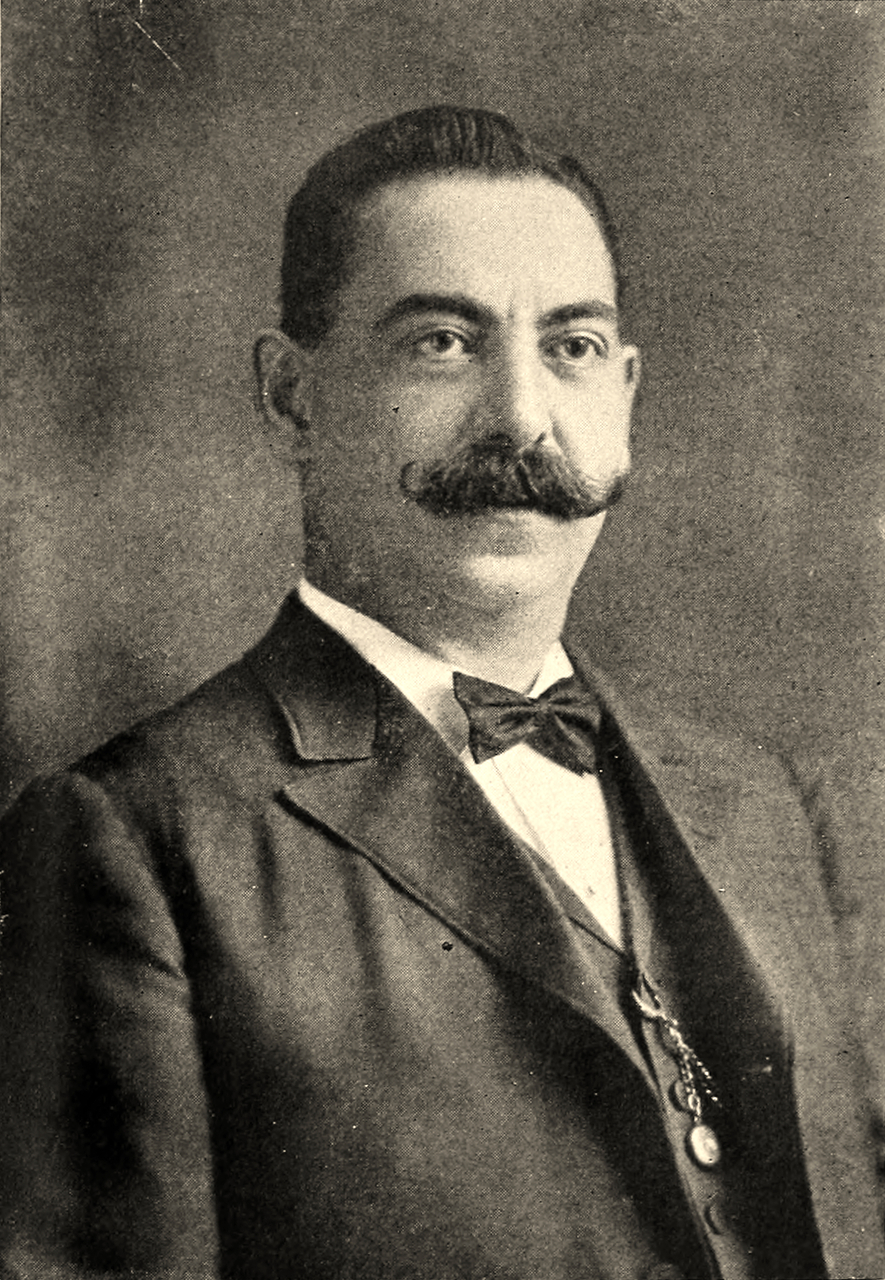
Fig. 1: The Bavarian-born entrepreneur and diplomat Frank Maximilian Steinhart, 1907, photographer unknown; Wikimedia Commons.
Like Steinhart, the Americanos lived mainly in bourgeois neighborhoods of Havana, especially Miramar, Santos Suárez, and Vedado. In 1906, a group of them founded the country’s first Jewish community, the United Hebrew Congregation (UHC), with its own synagogue. In the early twentieth century, 2,000 to 4,000 Sephardic Jews from North Africa and the disintegrating Ottoman Empire also settled on the Caribbean island. The First World War and the Russian Revolution of 1917 then brought larger-scale immigration by Yiddish-speaking Jews from Eastern Europe.
By the late 1920s, a Jewish neighborhood with schools, synagogues, and facilities for everyday needs had emerged in central Havana. The culturally distinct communities of German- and English-speaking Americanos, Ladino-speaking Sephardis, and Yiddish-speaking Ashkenazis each flourished in their own right. There was little overlap, and the Jewish population remained clearly divided by language and culture into these three groups.
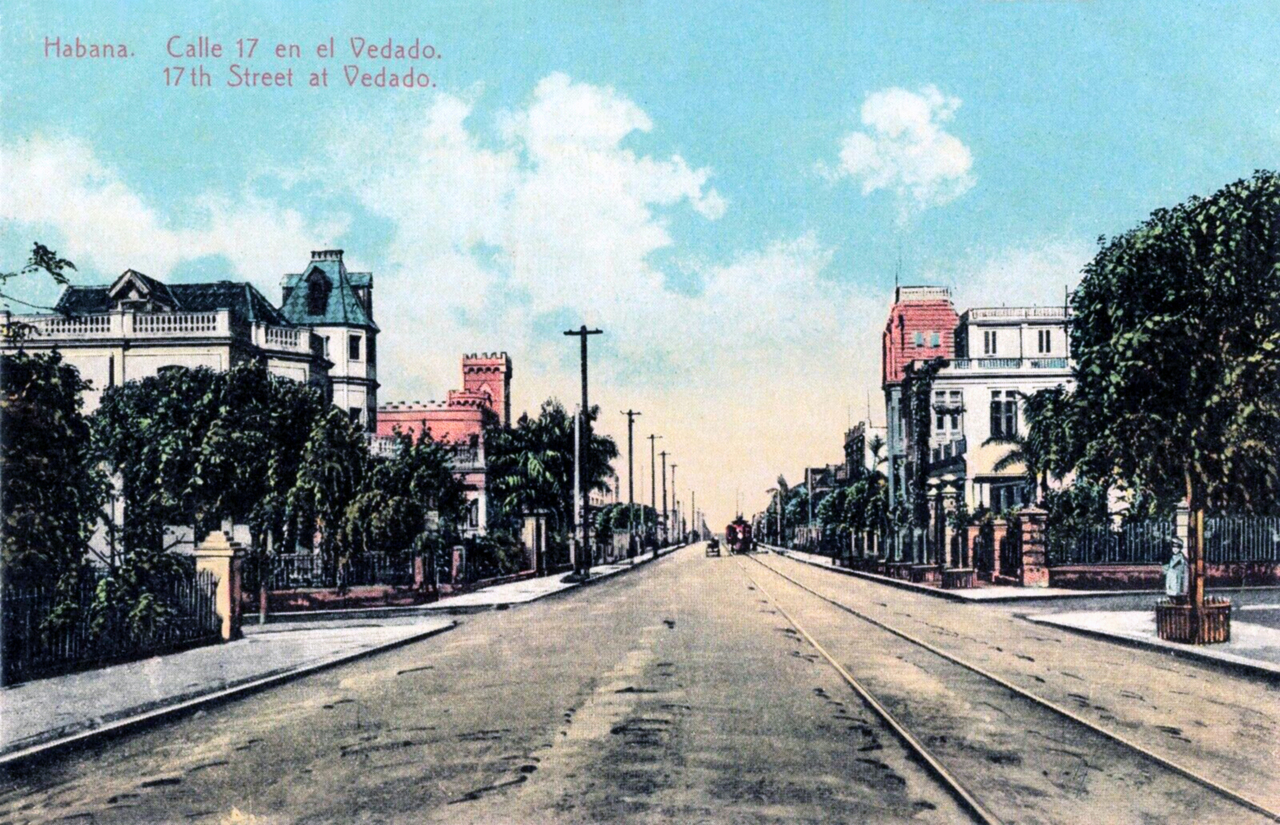
Fig. 2: Postcard of the Vedado district in central Havana, around 1908; Wikimedia Commons.
Even three decades after Cuba gained formal independence from the United States, its much-larger neighbor treated it as essentially a protectorate. Washington exerted considerable sway in the Havana government, motivated by the island’s geographic proximity and its strategic importance as a Caribbean hub. In September 1933, with US acquiescence, the Cuban military staged a coup that significantly expanded its political power. Civilian governments continued to lead the country on paper. In practice, however, the man now holding the reins was Fulgencio Batista (1901–1973), first as chief of staff of the armed forces from 1934 to 1940, and then as president from 1940 to 1944. The regime Batista established was simultaneously pragmatic and authoritarian. It maintained a semblance of democracy and the rule of law and promoted social reforms, yet was plagued by elaborate cronyism and corruption, and used both electoral fraud and the threat of military force to maintain power. Batista remained ideologically flexible, although his domestic policy was marked by a sometimes-strident nationalism. In foreign policy, by contrast, he aligned himself with the interests of the United States.
This was likely one reason why the Caribbean island became one of the most important destinations of refuge in Latin America for European and German-speaking Jews. The situation in Europe deteriorated dramatically following the German annexation (‘Anschluss’) of Austria in March 1938, the pogroms of that November, and the German invasion of Poland the following September. Meanwhile, international efforts such as the Évian Conference failed to bring lasting solutions. Against this backdrop, growing numbers of Jews tried to leave the continent and, with the doors of the United States largely closed to refugees, were forced to consider other destinations.
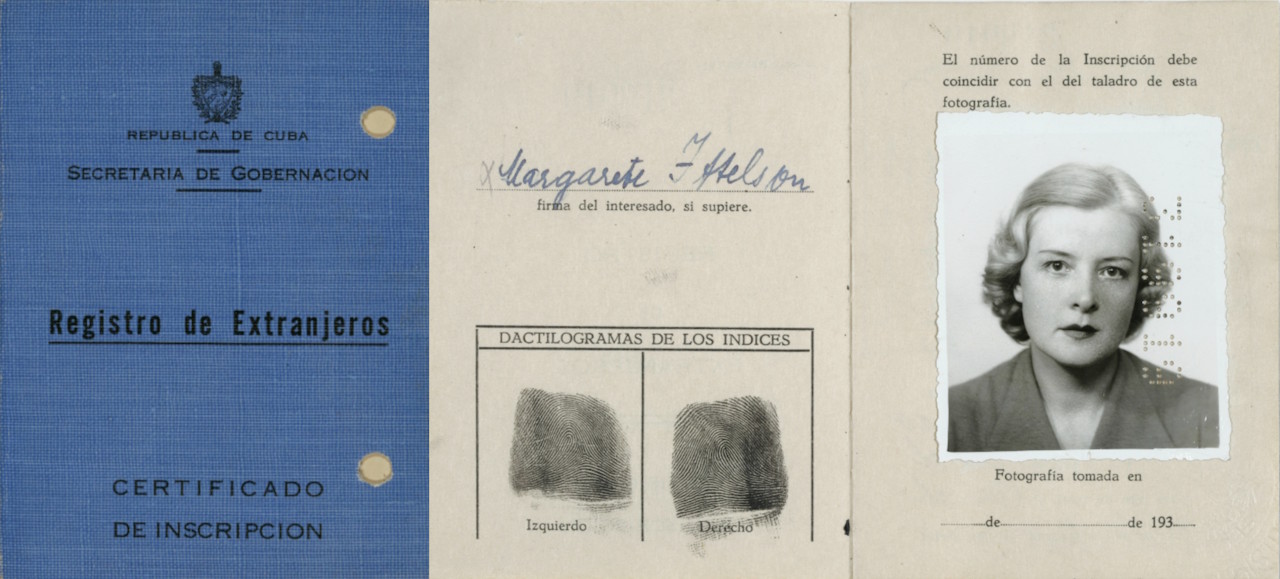
Fig. 3: Cuban alien registration card for the Berlin actress Margarete Ittelson (1898–1986), Havana, 24 February 1939; Jewish Museum Berlin, inv. no. DOK 87/18/50, gift of Werner Schmidt, photo: Jens Ziehe.
Given its location off the Florida coast and its pragmatic immigration policy, Cuba seemed to present an alternative. Batista declared himself willing to admit transit refugees in order to present himself as Washington’s political partner and to enhance Cuba’s image as a modern state. At the same time, he hoped to benefit economically from the refugees in two ways: first, by monetizing immigration through visa fees, bribes, and other charges; second, through the economic activities of the refugees themselves, who were expected to work in Cuba as businesspeople, skilled workers, or investors. Rafael Trujillo (1891–1961) had pursued a similar course in the nearby Dominican Republic, although his policy was also strongly motivated by ideological racism. By admitting Jewish refugees from Europe, whom he regarded as educated and cultured, Trujillo pursued an explicitly biopolitical agenda of ‘whitening’ the country’s majority-Black population. The Cuban government took a more strategic and opportunistic approach.
In autumn 1938, with Batista’s approval, Manuel Benítez González (?–1946), the director general of Cuba’s immigration authority, opened an office in central Havana that sold tourist or transit visas for 150 US dollars each. His initiative soon grew into a sprawling system of bribes and semi-legal payments through which refugees still in Europe could obtain the increasingly coveted entry permits for Cuba from Cuban consulates or shipping companies. A total of 5,000 to 6,000 Jewish refugees reached Cuba in each of two successive waves of emigration: first from 1933 to July 1939, and then again from mid-1941 to early 1942.
They had initially left Europe via the ports of Hamburg or Marseille. After the Second World War began in September 1939, departure from Europe was possible only via Belgium, the Netherlands, or Portugal. Most refugees who reached Cuba by 1939 were able to continue on to their intended destination – the United States – despite the paltry immigration quotas. Almost all of those who arrived from 1941 onward, however, remained in Havana until the end of the war.
The arrival of refugees posed significant challenges for the country, which had already faced difficult economic conditions for several years. At the same time, the Jewish population found itself in a position of double vulnerability. Internally, it remained strictly divided by language and cultural heritage into three largely disconnected communities: the Anglo-German Americanos, Sephardim, and Yiddish-speaking Ashkenazis. Within these groups, there were additional rifts between Zionists and Communists. Externally, the Jews faced an active and increasingly strident antisemitic campaign that had grown since 1935.
As in many parts of Latin America, a share of the roughly four hundred to eight hundred German nationals in Cuba had been won over by the Nazi ideology after 1933. Its nucleus in Havana was the German School in the Vedado district, which flew a swastika flag and gave schoolchildren paramilitary training. At first, however, supporters of the Falange from Cuba’s Spanish community played the leading role in the agitation against the island’s Jewish population. They had close ties to senior Catholic clergy and to wider currents of Catholic anti-Judaism.
In the early years, this hostility was directed both at Jewish entrepreneurs who were long-established in Cuba and at Jews who had immigrated more recently from Eastern Europe. As the number of refugees from Germany and Austria grew, the target of this hostility shifted toward the end of the 1930s. Probably taking its cue directly from Berlin, the rhetoric also became noticeably sharper. In 1938, the New York Herald Tribune estimated that around 5,000 people in Cuba were openly sympathetic to Nazi ideology.
Public warnings about an imagined Jewish threat had real consequences. In response to sustained domestic pressure, Cuba abandoned its previous stance toward Jewish refugees in May 1939 and adopted a more restrictive policy. President Laredo Brú (1875–1946) banned all foreigners from entering the country. The only exceptions were citizens of the United States and those who had explicit authorization from the Cuban authorities and a bond of 500 US dollars. All visas issued through Benítez’s office were revoked.
The drastic consequences of this reversal quickly became clear. On 13 May 1939, the St. Louis, a passenger steamship of the Hamburg-America Line, left its northern German home port bound for Cuba. On board were 937 refugees, mostly German Jews. A total of 734 passengers had visas that would have allowed them to continue on to the United States within three years of their arrival. Because of the decree issued only a few days before the ship’s departure, however, these visas were no longer valid. German authorities deliberately publicized the ship’s imminent arrival to inflame hostility. This brought the smoldering antisemitic agitation to a head. Major daily newspapers such as the Diario de la Marina stirred hostility toward the refugees’ arrival, while Cuban senator and former president Ramón Grau San Martín (1887–1969) helped mobilize a demonstration against Jewish immigration, in which more than 40,000 people took part.
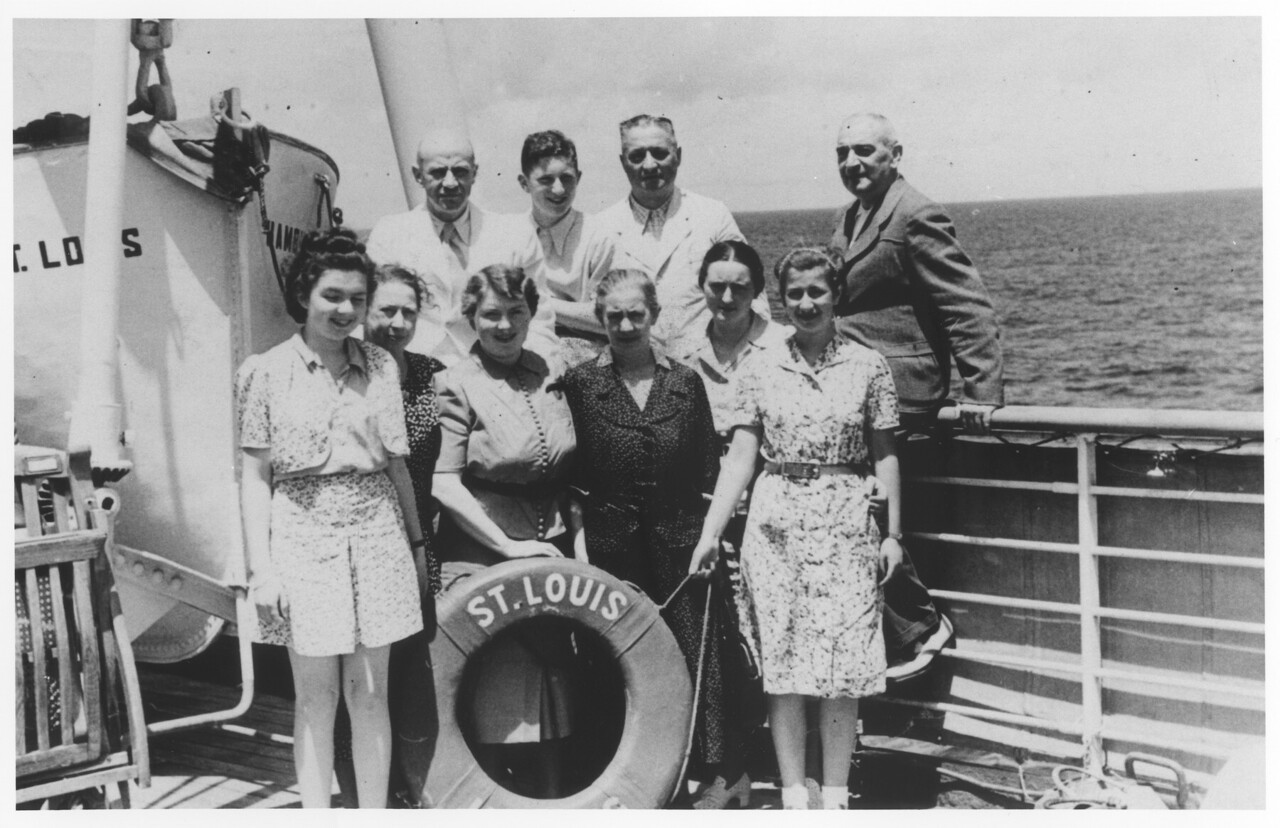
Fig. 4: Members of the Heilbrun family from Nordhausen, Thuringia, on board the St. Louis, 1939; United States Holocaust Memorial Museum, Ruth Heilbrun Windmuller.
When the St. Louis reached Cuban waters on 27 May, it was denied entry to the port of Havana. The German captain, Gustav Schröder (1885–1959), tried unsuccessfully to negotiate on the passengers’ behalf. In the end, only twenty-nine people were allowed to go ashore. On 2 June, Cuban navy boats towed the steamer out of Cuban territorial waters, and it set a course for southern Florida. Yet the United States likewise refused to admit the refugees, as did Canada. The St. Louis was ultimately forced to return to Europe with more than nine hundred people on board who had believed they were beyond Germany’s reach. Around one-third of the passengers found refuge in the UK. The rest were divided among Belgium, France, and the Netherlands, where they soon came under German occupation. A total of 254 of the passengers were murdered in the Shoah.
The odyssey of the St. Louis came to symbolize the failure of international refugee policy. After Germany invaded Poland, Cuba initially relaxed its entry regulations and, from October 1940 onward, admitted several thousand more German-speaking Jews – albeit at highly inflated fees. After Cuba entered the war in December 1941, however, Batista stopped admitting refugees from ‘enemy’ countries in April 1942 under pressure from the United States. Those already in the country were then granted temporary residence permits until the end of the war. One of the last ships, the Portuguese steamer São Tomé, reached Cuba in April 1942 with 250 passengers on board.
For Jewish emigrants, arriving in Cuba often brought conflicting emotions. It offered a safe haven from Nazi persecution, but it also confronted them with a new set of challenges and uncertainties. Instead of achieving the freedom they had craved, all new arrivals were initially interned in the Tiscornia reception camp. They had to remain there, in poor sanitary conditions, until the Cuban authorities finally allowed them to enter the country. Approval could take weeks or even months.
Leaving the camp, they entered a new country with an unfamiliar language and culture. Very few of the refugees spoke Spanish. They found Havana to be an architectural gem. Yet both the climate and the lifestyle were outside of their comfort zones. The weather was sultry and tropical, and the rhythm of daily life seemed chaotic to their Central European sensibilities. Many of them responded with bewilderment.
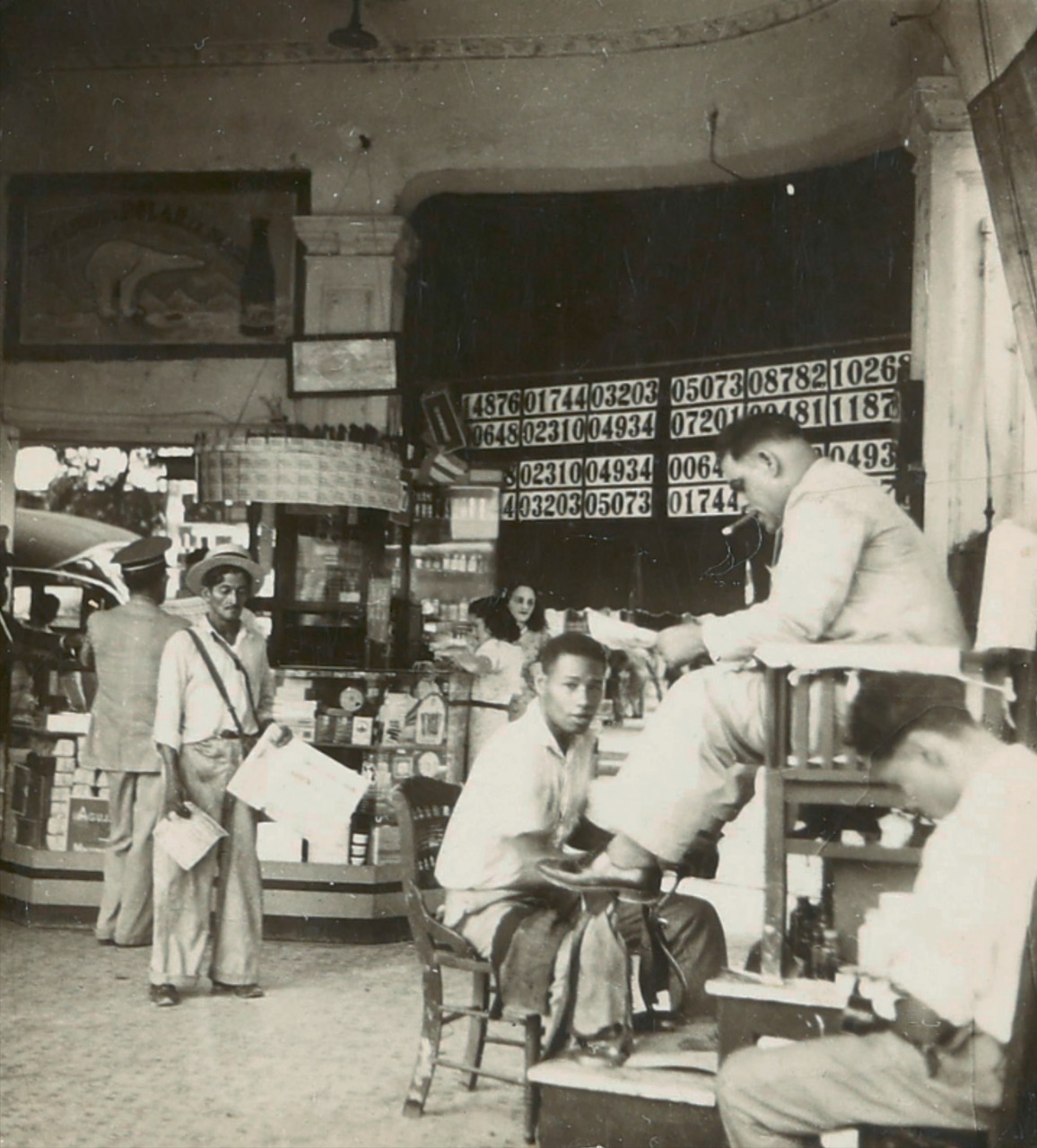
Fig. 5: Street scene in Havana, 1938. Gift of Eva Tinianow; inv. no. 2009/115/41, Jewish Museum Berlin. The photograph is from the papers of Kurt Eichwald (1891–1948), a Berlin physician.
Above all, however, emigration usually entailed economic and social decline. Once the refugees had finally left Tiscornia behind, most lived in one of Old Havana’s aging boarding houses. These older buildings, built in Spanish colonial style, were arranged around narrow courtyards, where residents did laundry, cooked, and went about daily life in close quarters. German Jews from middle- and upper-class backgrounds suddenly found themselves sharing apartments with strangers and living in partitioned rooms short on both privacy and natural light. A small number of German-speaking refugees who had reached Cuba before 1939 had enough money and contacts to find housing in wealthier districts such as Vedado or Miramar. This allowed them to preserve a certain measure of status, although they usually continued to rely on financial support from friends and relatives elsewhere in the German-Jewish Diaspora.
The vast majority, especially those who had only fled after the outbreak of war, were in more precarious circumstances. Apart from scarce housing, Cuban labor law posed particular difficulties. Immediately after the military coup of 1933, the new political leadership had passed a law on the nationalization of labor, invoking the slogan “Cuba para los cubanos”: Cuba for Cubans. It required at least half of all employees in any business to be Cuban citizens. Newly created positions, too, could be filled only by Cubans. This made it largely impossible for Jewish refugees to obtain regular work permits. Very few were able to secure legal employment; most of those who found any work at all worked informally or relied on bribes and connections. They made ends meet as music or language teachers, practiced medicine unofficially, or worked for Cuban companies – usually with ties to the American-Jewish community – without being formally employed there.
In April 1942, the categorical ban on work was finally relaxed. When Batista changed their residence status, Jewish refugees were officially allowed to engage in business activities – but only if these were deemed to be in Cuba’s interest. On the government side, there was hope that the mostly well-educated Jews would pass on their knowledge in specific sectors to Cuban workers. Rather than encouraging such a transfer of knowledge and skills, a largely failed aspiration, this legal shift briefly opened an independent economic niche.
As the Wehrmacht advanced through Western Europe, hundreds of Jews of Polish origin fled from Belgium to Cuba from 1940 onward. Many had previously worked in Antwerp’s diamond trade. As soon as the discriminatory restrictions were eased, they founded new factories in Havana. A flourishing industry in gem-quality diamonds soon developed. By 1943, around sixty diamond-cutting and polishing factories had opened, each employing between ten and forty workers. At its peak, the industry employed nearly 2,000 émigrés, most of them Jewish. Labor conditions in the small, improvised factories were miserable, and wages were meager. For many, however, they were the only way to earn a living.
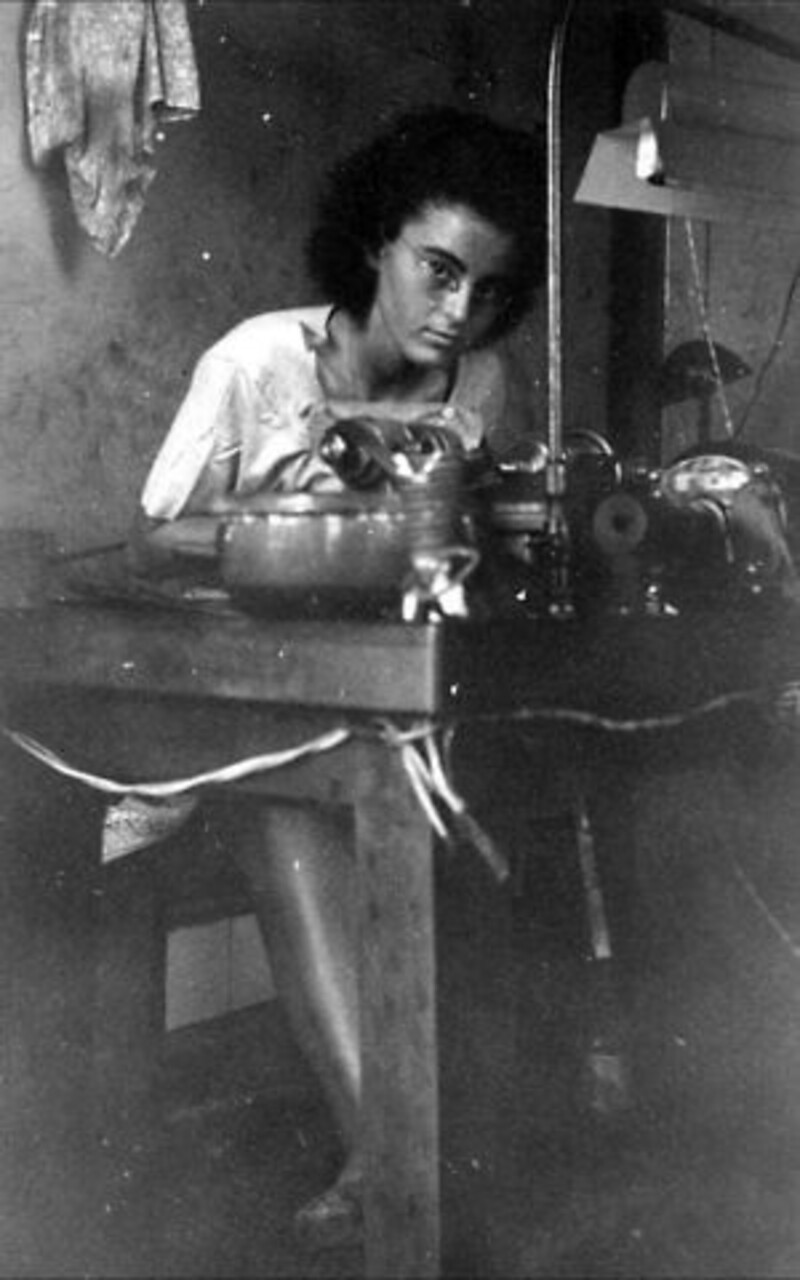
Fig. 6: Marion Finkels Kreith (1927–2025), who had fled Hamburg, at work in a diamond-polishing factory, around 1943; courtesy of Judy Kreith.
The brief growth of the diamond industry and informal employment may have helped some Jewish refugees make ends meet temporarily, but economic insecurity remained an urgent problem. Two Jewish aid organizations funded from the United States provided refugees with crucial support, including financial assistance. The Hebrew Immigrant Aid Society (HIAS) and the American Jewish Joint Distribution Committee (“the Joint”) had been operating in Cuba since 1924. In response to the growing number of refugees, the Joint founded a local branch in Havana in 1937, the Joint Relief Committee, which two years later was officially registered as the Asociación Nacional Conjunta para Auxilio a Refugiados y Emigrantes (Joint National Association for Refugee and Migrant Aid).
Under the temporary leadership of Laura Margolis Jarblum (1903–1997) and with the tireless commitment of its secretary, Jacobo “Jack” Brandon (1880–1960), the organization gave refugees monthly financial support. It also connected them with lawyers who advised them on residence matters and assisted them in applying for visas to the United States. In a kind of division of labor, HIAS and the Centro Israelita de Cuba, which it had founded, took responsibility for refugees interned in Tiscornia, supplying them with essentials and – thanks to excellent relations with the Cuban authorities – helping them with the paperwork required to enter the country.
Through individual figures, the HIAS and the Joint – without which Cuban exile in this form would probably not have been possible – were connected to Havana’s small American-Jewish community. By contrast, there was little contact with the much larger Sephardi and Yiddish-speaking Ashkenazi communities. The same was true not only of the aid organizations but also of the refugees themselves. Only at the height of the antisemitic campaign in the late 1930s had there briefly been an umbrella organization, the Comité de Defensa contra el Antisemitismo (Committee for Defense against Antisemitism), in which refugees and the island’s different Jewish population groups worked together.
In Cuba, the social and cultural differences already apparent in Europe were reflected especially in relations between the Yiddish-speaking immigrants of the 1920s and the German-speaking Jewish refugees of the 1930s. Although the newly arriving ‘daytshn’ – Yiddish for ‘Germanized Jews’ or Germans more generally – often had to live in poor conditions, Eastern European Jews often perceived them as haughty and arrogant. This impression of a class divide was reinforced by the few ‘daytshn’ who lived outside central Havana, moved in upper-class circles in Vedado, participated in bourgeois cultural life, and associated with the United Hebrew Congregation.
Despite the restrictions in place, a number of smaller institutions of everyday and political life connected to the German-Jewish community in Cuba had emerged by the end of the war in 1945. Jewish bakeries and grocery stores operated in central Havana. On the Paseo del Prado, one of the capital’s most important avenues, German-speaking Jews founded the restaurants Annie Stein and Siboney, which, like Lucerna and Reissmann’s – offering Swiss and Viennese cuisine, respectively – became central meeting places. The Cine Gris cinema in Vedado showed German- and French-language films on ‘Émigré Mondays.’ In the evenings, locals, refugees, and émigrés with some disposable income met at the nearby Tropicana Club in the Marianao district, which sometimes offered concerts, theater, and readings in Yiddish or Russian.
In 1939, German-speaking Jewish refugees in Cuba founded the Asociación Democrática de Refugiados Hebreos (Democratic Association of Jewish Refugees) to represent their interests. Its voice was the German-language magazine Jüdische Rundschau, which appeared irregularly and featured news from Europe as well as information about their new surroundings. There was also a newsletter titled Unterwegs (On the road) containing hectographed news items and articles in German, Spanish, and English, and advertisements from German-speaking businesses, diamond-cutting workshops, and language schools. Short language lessons were sometimes printed as well. The target language was usually English, as most refugees hoped to emigrate onward to the United States.
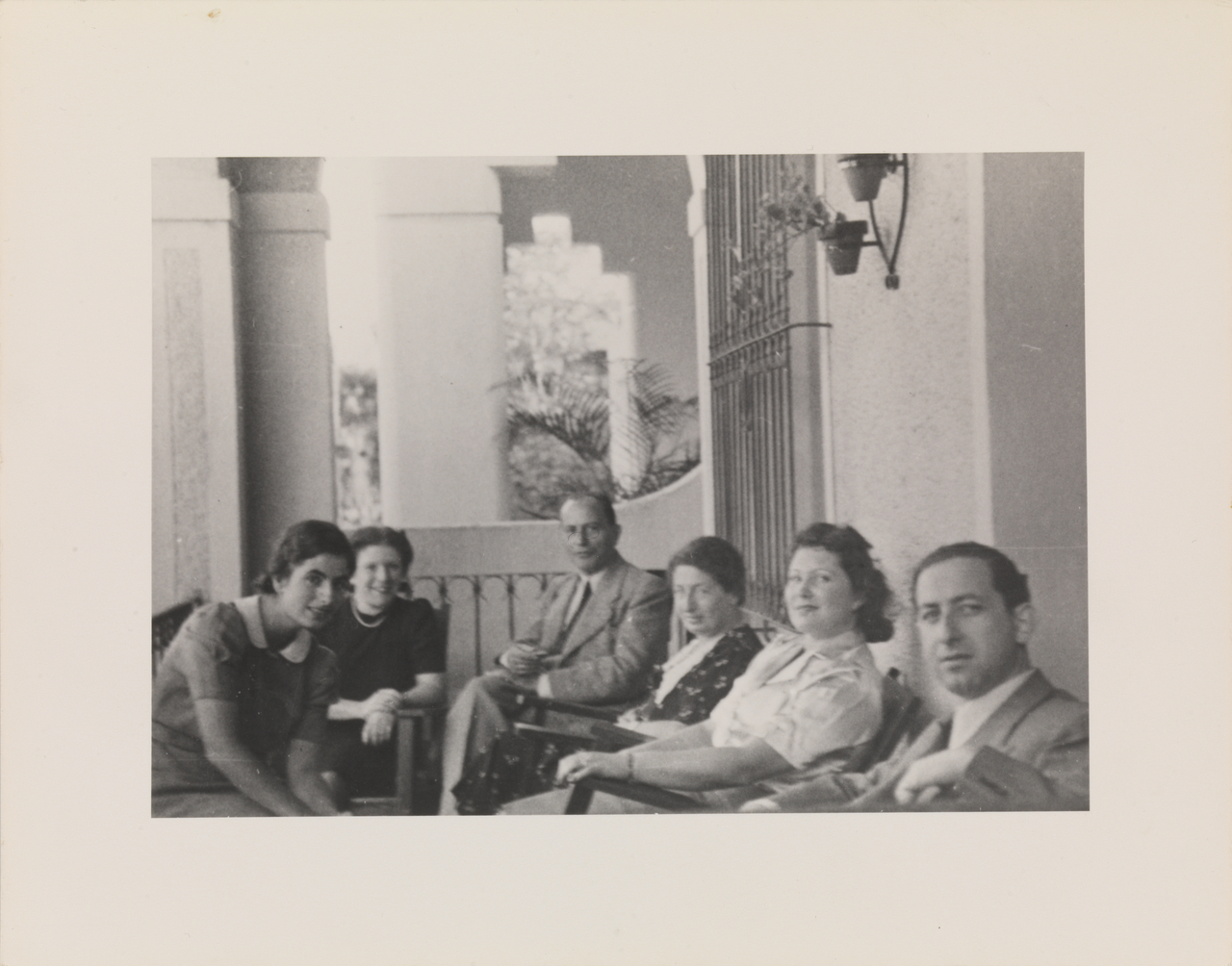
Fig. 7: The Jacobsohn family from Berlin with friends in Havana, 1939–40; Jewish Museum Berlin, inv. no. 2007/127/68, gift of Ilse Jacobson.
The German-Jewish community that emerged in Cuba was insular, with only sporadic contact with other local Jews and members of mainstream Cuban society. A small subset of this group, numbering around a hundred people, had been persecuted for both their politics and their Jewishness. Unlike in cities with more established German-speaking communities, such as New York, Mexico City, or Buenos Aires, however, they were scarcely politically active in Cuba, as most of them regarded their country of residence as a temporary waystation. Another factor was the political restraint common among refugees, who continued to rely on the goodwill of the host society and on changing, sometimes authoritarian governments.
As in many other Latin American places of refuge, Havana’s political exiles were divided and fragmented into small factions. Alongside older, lasting differences that traced back to Europe, disputes often centered on attitudes toward Stalinism. Two of the more prominent figures were August Thalheimer (1884–1948) and his wife, Cläre Thalheimer, née Schmidt (1892–1983). August Thalheimer, who was raised Jewish in the small town of Affaltrach, in southwestern Germany, had presented a widely discussed analysis of fascism in 1928 and was regarded as a pioneering theorist of German communism. As a vehement critic of Joseph Stalin (1878–1953), however, he had broken with the Communist Party. In 1933, Thalheimer fled from Germany to France. After he was later denied entry to the United States as a seasoned leftist, he moved to Cuba in 1941. In Havana, a small circle of former sympathizers of the Communist Party Opposition (KPO), which Thalheimer had co-founded, quickly formed and engaged with theoretical questions of Marxism. Before Thalheimer was able to return to West Germany as planned, he died in September 1948. He was buried in the Guanabacoa Jewish cemetery in Havana.
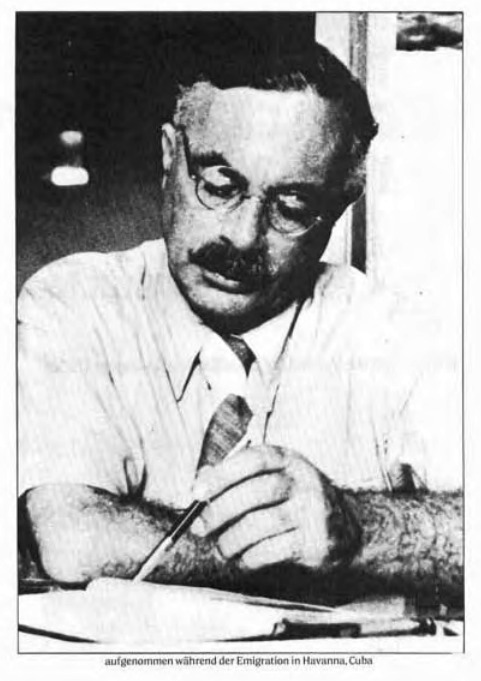
Fig. 8: August Thalheimer in Havana, 1940s; Wikimedia Commons .
A loose circle around Boris Goldenberg (1905–1980) and Fritz Lamm (1911–1977), both former members of the Socialist Workers’ Party of Germany (SAP), maintained sporadic contact with the group around Thalheimer. Lamm had fled Europe in 1942 on one of the last ships. In Cuba, he worked as a diamond cutter and became one of the secretaries of the newly founded union of Jewish diamond cutters. Goldenberg had lived in Havana with his wife, Rosa Goldenberg (?–?), since September 1941. He published newspaper articles and gave guest lectures at the local university. It was later said that his introductions to Marxism influenced some of the intellectual circles that later helped shape the Cuban Revolution led by Fidel Castro (1926–2016), which began in 1953. At the same time, Goldenberg was active in the aforementioned Asociación Democrática de Refugiados Hebreos.
By contrast, Lisa Fittko, née Ekstein (1909–2005) and her husband Hans Fittko (1903–1960) had social-democratic sympathies. She was raised Jewish in Budapest and Vienna; he grew up in Berlin’s outlying borough of Spandau. Before leaving Europe in mid-1941, they had belonged to the network around the US journalist Varian Fry (1907–1967) and the Emergency Rescue Committee and had helped numerous intellectuals, writers, and artists escape from Banyuls-sur-Mer, France, across the Pyrenees. Although they were unable to rescue the philosopher Walter Benjamin (1892–1940), who took his own life in Portbou, Spain, many others assisted by the network managed to cross the Atlantic. In Cuba, Hans Fittko worked as a diamond cutter. Lisa Fittko worked as a translator and secretary.
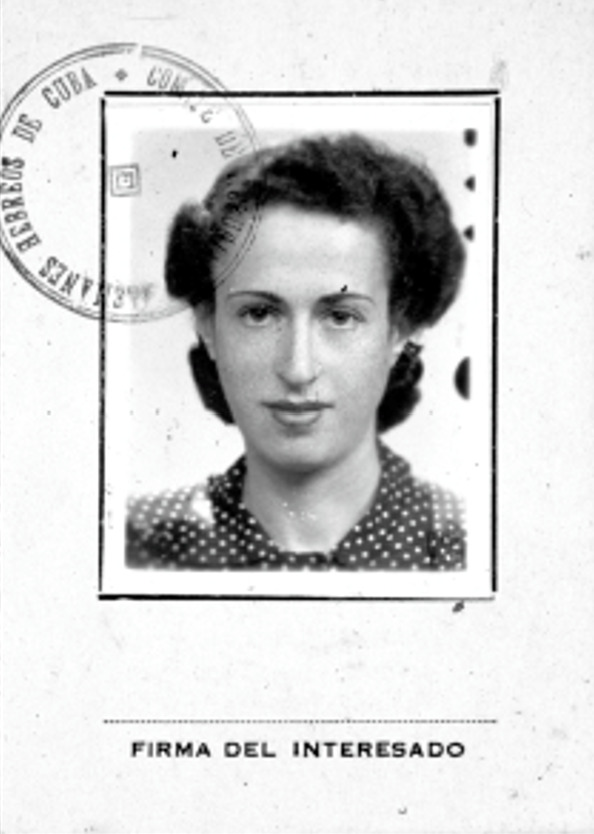
Fig. 9: Lisa Fittko’s passport photograph bearing a stamp of the Committee for German-Jewish Refugees in Cuba, 1942; Wikimedia Commons.
Among German-speaking Jews in Cuba, communists were the largest and most politically active group. From 1942 onward, they initially formed a loose association, the Amigos del Movimiento Alemania Libre (Friends of the Movement for a Free Germany). On 1 June 1943, this developed into the Comité Alemán Antifascista de Cuba (German Antifascist Committee of Cuba, CAAC). It consisted of twenty-five permanent members. Led by the artist Gert Caden (1891–1990, whose legal name was Ernst Richard Gert Kaden), it included many German-speaking Jews who had fled the Nazi regime. Among them were the future book editor, Ruth Herrmann (1906–1983), and Heinz Geggel (1921–2000), who later directed the Agitation Department of the Central Committee of East Germany’s ruling Socialist Unity Party of Germany (SED).
The CAAC was modeled on the Free Germany Movement, founded by Communist exiles in Mexico around the writer Ludwig Renn (1889–1979), the politician and KPD functionary Paul Merker (1894–1969), and the publicist Otto Katz (1895–1952). Like Free Germany, the CAAC was influenced by the Soviet Union and its ‘popular front strategy,’ which sought broad alliances. The CAAC became the only association to articulate a political position to any significant extent. The anti-Stalinist circles kept their distance and sometimes accused the organization of exerting ideological pressure. Attempts to create a lasting political association beyond the communist milieu, however, failed.
When travel restrictions were relaxed at the end of the Second World War, Jewish refugees began departing Cuba in massive numbers. By the second half of 1945, most had already left the Caribbean island. Within several years, the Jewish population had fallen back to its prewar level of around 11,000 people. There were clear differences between those persecuted as Jews and those who, regardless of their Jewish identities or ancestry, had fled primarily for political reasons. Only three to four percent of the first group returned to Germany or Europe. A far larger share continued to the United States or Mandatory Palestine. The political exiles returned to Europe at significantly higher rates. In most cases, however, the refugees had to organize remigration themselves. For those persecuted for political reasons, this could take some time. Aspiring returnees who did not want to go to the Soviet Occupation Zone (SBZ) – later East Germany – often had to wait longer for permission to enter, because the Allies were suspicious of their past membership in parties such as the SAP, which they saw as potential communist footholds.
By 1948, nevertheless, almost all German-Jewish refugees who had moved within Cuba’s political exile milieu had left the country. Boris Goldenberg was one exception. He applied for Cuban citizenship in 1946. In the following years, he accepted a teaching position at the well-known bilingual Ruston Academy in Havana, was briefly active in the Movimiento Socialista Revolucionario (Socialist Revolutionary Movement), and wrote political essays for its journal Tiempo en Cuba (Time in Cuba). After Fulgencio Batista was overthrown by Fidel Castro’s revolution in January 1959, Goldenberg remained in Havana for another year. Disappointed by the revolutionary government’s increasingly authoritarian policies, he too left the island and returned in 1960 to Cologne, West Germany, where he headed the Latin America desk for the country’s international broadcaster Deutsche Welle.
Castro never specifically targeted Cuba’s Jews. Some members of his government had Jewish heritage themselves, among them Richard Wolf (1887–1981), who came from Hanover and whom Castro appointed as Cuba’s first ambassador to Israel. Nevertheless, the revolution led many members of Cuba’s Jewish population, many of whom had built stable livelihoods by then, to leave, above all for economic reasons. Around seventy percent had turned their backs on the country by 1962.
Today, only around 1,200 Jews live on the island, most of them in the capital, Havana. The country has a total of six synagogues. The Joint has also operated there once again since 2000. This short-lived German-speaking Jewish Diaspora in Cuba – shaped by transit migration – left few long-term traces in the increasingly mixed community. In 2005, Havana’s Sephardic community commemorated the experience of Jewish refugees in Cuba with the exhibition Nosotros Recordamos (We Remember).
Cuba’s Forgotten Jewels: A Haven in Havana, documentary film by Robin Truesdale and Judy Kreith, 2017: https://forgottenjewelsfilm.com/
Conversation with Marion Finkels Kreith about her escape from Nazi Germany to Cuba and her life in the USA, Museum of Boulder, 05/15/2025: https://www.youtube.com/watch?v=w2ywjgfABXY
This work is licensed under a Creative Commons Attribution - Non commercial - No Derivatives 4.0 International License. As long as the material is unedited and you give appropriate credit according to the Recommended Citation, you may reuse and redistribute it in any medium or format for non-commercial purposes.
Dr. Lukas Böckmann is a historian specializing in the history of ideas and intellectual history, as well as Latin American and Jewish history. He is currently preparing a research project on the historical semantics of the term ‘Global South’ at the Chair of Historical Dictatorship Studies at Humboldt University of Berlin. In 2023, he completed his doctorate at the Leibniz Institute for Jewish History and Culture – Simon Dubnow with a dissertation on the religious undercurrents of the Latin American guerrilla movement. The work will be published in summer 2026 under the title „Ein Paradies auf Erden. Politische Theologie und die lateinamerikanische Guerilla der 1960er Jahre“ by Vandenhoeck & Ruprecht.
Lukas Böckmann, A Caribbean Way Station: The German-Speaking Jewish Diaspora in Cuba (translated by Jake Schneider), in: (Hi)stories of the German-Jewish Diaspora, March 24, 2026. <https://diaspora.jewish-history-online.net/article/gjd:article-56> [September 14, 2026].
 This work is licensed under a Creative Commons Attribution - Non commercial - No Derivatives 4.0 International License. As long as the material is unedited and you give appropriate credit according to the Recommended Citation, you may reuse and redistribute it in any medium or format for non-commercial purposes.


