
Born on May 12, 1921 in Chemnitz,
Germany
Died on October 14, 2006 in Wellington, Aotearoa/New Zealand
Occupation: Professor, historian, philosopher, public intellectual
Migration: Italy, 1933
| Mandatory Palestine,
1939 (?) | Aotearoa/New
Zealand, 1940
“People in Europe were getting killed; it was a small price to pay for being safe, when we couldn’t go to the opera in the evening,” Ann Beaglehole, Interview with Peter Munz, 23 November 1984, Oral History Archive, Alexander Turnbull Library, Wellington, http://www.natlib.govt.nz/records/35829736. recalled Peter Munz, looking back in 1984 at his early years in his country of refuge – New Zealand. Escaping Nazi Germany and Fascist Italy, he arrived in 1940 at the age of nineteen, with his mother, who later became established as a photographer specializing in children’s portraiture, and his sister, who became an environmentalist. Despite his ambivalence towards the cultural life of Christchurch – (the main city in the South Island), where the family first settled, Munz believed it was a lucky decision to migrate to New Zealand. While maintaining a lifelong connection with European, including German culture and scholarship, he became an eminent New Zealand scholar, an internationally recognized medievalist, a historian of science and ideas, and a stimulating and highly entertaining teacher at Victoria University of Wellington.
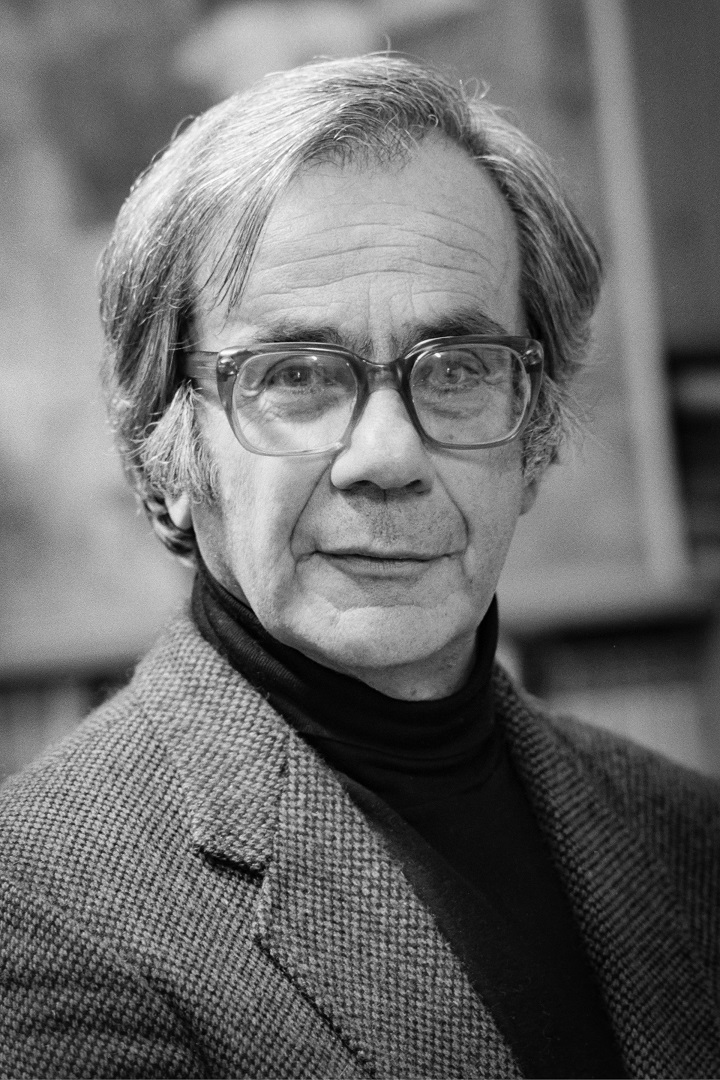
Fig. 1: Peter Munz, n.d.; Image courtesy of Te Herenga Waka, Victoria University of Wellington.
Peter Munz was born in Chemnitz, in the German state of Saxony. His father, Leopold (Leo) Munz (1882–1928), an eye specialist, died when Munz was a young child. His mother, Agnes Carlotta Munz, née Lichtenstein (1900–1992), was also born in Chemnitz. Munz was educated in Germany, Switzerland, and Italy.
Antisemitic policies forced the Munz family from a settled life to a precarious existence on the move. They were able to avoid the fate of Munz’s grandfather, who died in Theresienstadt Ghetto. Munz, along with his mother and sister, first moved to Berlin in 1930, and then – after the Nazis came to power in 1933 – to Italy.
When the family left Berlin, Munz attended a co-educational boarding school at Lake Lugano in the north Italian mountains, a school which aroused his “academic fire”. As his son Jake Munz recalled, Munz began to understand that “ethnicity was outmoded” and was a “cause of strife in the world.” Jake Munz email to writer, 2 September 2024. The family lived on a Tuscan hill with views of Florence and Fiesole, where they enjoyed hosting visitors from many places in the world.
In the late 1930s, Peter Munz’s mother found out that they had six months to leave Italy, following the implementation of the 1938 leggi razzialifasciste (racial laws), which imposed severe restrictions on Jews, including the expulsion of foreign Jews from the country. The possibility of New Zealand as an interesting country with progressive ideas, which was also life-saving, emerged. A chance encounter resulted to a family in Methven, near Christchurch, assisting the Munz family with their application for residence in New Zealand. On the way to New Zealand, Peter Munz spent six months in Haifa in Mandatory Palestine alone, intending to stay with his uncle Peretz Leshem (born Fritz Lichtenstein in Saxony in 1903), who had emigrated to Palestine in 1926. But Munz likely wanted to be with his immediate family and therefore left Palestine. The family arrived in Wellington in 1940, surprised by the “crude and uncivilized” capital city. As Munz recalled, they wanted “to buy some food, but all the shops were shut, and there were no restaurants […]. Finally, we found a shop open and ate spaghetti on toast.” Interview, 23 November 1984.
New Zealand in 1940 was not hugely welcoming, with many locals suspicious of the new arrivals. Yet there were kind people, and the Christchurch Refugees’ Emergency Committee helped the family settle, for example, by supplying necessary mattresses and helping Peter Munz find work. At first, he tried humping bales of wool and delivering milk. Later, the father of the Methven family, who had assisted with the Munz family’s application to migrate to New Zealand, became unimpressed with Munz’s potential as a farmer. He then helped him access Christchurch Teachers’ Training College and Canterbury University College, where he studied German, history, and philosophy.
Refugees fleeing from Nazism, particularly those from Germany, encountered a mix of hostility, intolerance, and kindness during the Second World War, though not in equal measure. New Zealand was not a sanctuary from antisemitism and minor harassment. One of the biggest hardships was that refugees from Germany were barred from taking part in the war effort for much of the conflict because they were suspected of being potential Nazi collaborators. New Zealand had declared war on Nazi Germany in September 1939, and this worsened the situation for Peter Munz and other Jewish refugees. Anti-German sentiment increased. During the war, some Jewish refugees – regarded as likely security risks – were interned together with avowed Nazis.
Aspects of the alien controls, set up to maintain wartime security and to respond to anti-alien sentiments in the community, were slapdash, unjust, and showed the ignorance of the authorities. Munz recalled the lengthy police interview he underwent. One question was about religion:
“I said I had no religion. The policeman said, ‘Ah, you’ve just betrayed yourself. That’s what Hitler teaches – no religion, he’s against Christianity, so now I’ve got you nailed.’ I had some time persuading him that I had got this idea without listening to Hitler.” Interview, 23 November 1984.
Despite these restrictions and difficulties, Munz completed his M.A. in history in 1944, studying philosophy with distinguished scholar Karl Popper (1902–1994), a fellow Jewish refugee originally from Austria, who was a lecturer in philosophy at Canterbury University during the war. Munz also completed teacher training. As a trainee teacher, he refereed football matches without knowledge of the rules. He later recalled how he resorted to blowing the whistle at frequent but irregular intervals, expecting that his pupils would know what to do.
Driven by his passion for philosophy and the intellectual traditions of Central Europe, Munz’s first-class M.A. gained him a travelling scholarship back to Europe. In 1945, he followed the path of several Jewish émigré scholars and entered St John’s College in Cambridge.
At Cambridge, Munz completed a doctoral thesis on Richard Hooker (1554–1600), an English theologian and philosopher, published in 1952 as The Place of Hooker in the History of Thought. The topic was a start to his future research into the relationship between philosophical ideas and the historical record. Munz was also a member of Austrian philosopher Ludwig Wittgenstein’s (1889–1951) seminar at Cambridge, and renewed his contact with Karl Popper, who was by this time at the London School of Economics. Munz’s engagement with Popper and Wittgenstein became life-long.
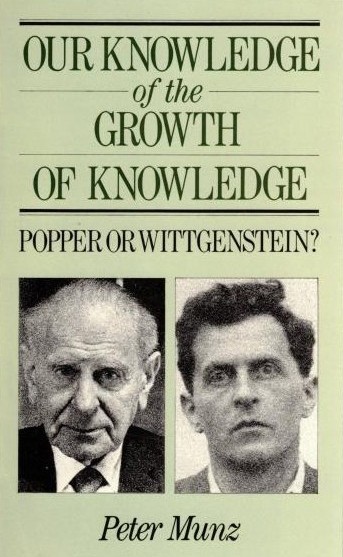
Fig. 2: Peter Munz’s book Our Knowledge of the Growth of Knowledge: Popper or Wittgenstein? (1985), in which he contrasted the positions of his two teachers, Karl Popper (left) and Ludwig Wittgenstein (right).
With his Cambridge degree completed, Peter Munz seemed set for a high position in European scholarship. Yet he chose to return to New Zealand, a decision that might reflect his wish to be reunited with his family in a land remote from Europe with its fascist past. For the remainder of his career, he participated in the intellectual to-and-fro, linking his adopted country with his European origins. Through sabbaticals, conferences, and later emails, he maintained friendships with overseas scholars, including those based in West Germany. A significant relationship was with Paul Hoffmann (1917–1999), who emigrated from Austria to New Zealand in 1938 and was first a Professor in German literature at Victoria University in Wellington and subsequently held a chair in German literature at the University of Tübingen. Another colleague, feminist scholar and Germanist Livia Käthe Wittmann (1938–), born in Berlin, contributed to New Zealand’s intellectual life through her work at Canterbury University. Munz was one of several German-Jewish academics who settled in New Zealand during the 1930s and 1940s, collectively shaping the country’s intellectual and cultural landscape in the post-war era. In 1950, Munz married Keelah Anne Vickerman (*1930), an artist born in Auckland. They had one son, Jacob (*?).
Munz was appointed lecturer in history at Victoria University in 1949 and became a professor of history in 1965 following the almost simultaneous retirements from the History Department of John Beaglehole (1901–1971) and Fred Wood (1903–1989). Beaglehole was an eminent New Zealand historian, author of a biography of James Cook (1728–1779), and editor of Cook’s exploration journals. Wood, also a notable New Zealand historian and professor, was educated in Australia and became a major influence on New Zealand’s intellectual and administrative life.
In the 1950s and 1960s, Munz developed his research in two central areas. The first was the place of religion in the scheme of thought, which resulted in his 1959 book Problems of Religious Knowledge. Munz’s second field was medieval history, leading to his books Frederick Barbarossa: A Study in Medieval Politics and Life in the Age of Charlemagne, both published in 1969. In his 1969 Inaugural Address at Victoria University, entitled “The Concept of the Middle Ages as a Sociological Category”, Munz commented on the role of historians, emphasizing that history was not a science but an art. These ideas were developed more in-depth in his 1977 book The Shapes of Time: A New Look at the Philosophy of History.
In the years ahead, Munz had a wide range of research interests, including topics related to German intellectual and cultural history. As noted in his preface to Philosophical Darwinism (1993), his researches were first driven back to the sixteenth century and then to the Middle Ages, and from there, to ancient history and prehistory, and, finally, to the evolution of the earliest hominid societies, where he encountered Charles Darwin (1809–1882), evolution, and biology.
At Victoria, Munz saw himself as a scholar with common ground and interest in European scholarship, including in German-language scholarship, not an administrator. He eventually viewed the roles as incompatible and gave up being head of the History Department to work entirely as a scholar.
Peter Munz was a stimulating teacher with a vivid and effective teaching style, mentoring many younger colleagues. As one of his students, historian Malcolm McKinnon (*1950), recalled, Munz lectured without notes and without the now ubiquitous PowerPoint. It was a tour de force, leaving students nothing to concentrate on but what he said. McKinnon noted that it was a testimony to Munz’s teaching and to the relevance of history that they resonate and stimulate to this day. One of the important lessons he took away from his teaching was that societies can change dramatically. The history of Europe, for example, its transformation after 1933, could equally be applied to understanding nineteenth-century New Zealand. Munz was an academic who challenged received wisdom. He was a rationalist in an age of fundamentalist certainties.
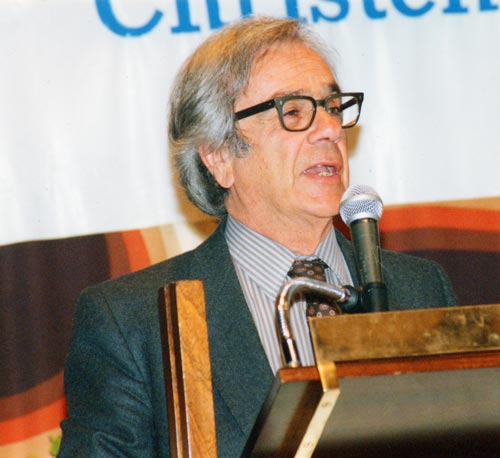
Fig. 3: Peter Munz at a conference, n.d.; Peter Munz, Te Ara photo: James, N. Bade, ‘Germans – Immigration after 1914’, Te Ara – the Encyclopedia of New Zealand, https://teara.govt.nz/en/photograph/564/peter-munz-historian; Image courtesy of Te Herenga Waka, Victoria University of Wellington.
As a public intellectual, Munz engaged with great thinkers of the past, including German-language thinkers, and with issues of the day. Bibliographies of his published works include such topics as “Goethe and Modernity” (1994) and “How Nietzsche’s idea about language came to be transformed into Derrida’s ideology of Reconstruction” (1994). His letters, published regularly in the New York Review of Books and the Guardian Weekly, expressed his concerns about current events and the impact of some academic research and ideas on society. In an essay in the New Zealand Journal of History in 1994, Munz discussed the “repression” of cultural diversity in Europe and globally. He cited the ongoing Yugoslav Wars (1991-2001), a period marked by ethnic violence and the collapse of the socialist federation, as the “recent horrors in what used to be Yugoslavia” as an example of “temporary irrepressibility”. Munz was stimulating to read and to listen to. He was also a dedicated skier and tennis player.
Munz’s interests extended beyond academia, encompassing literature, music, the visual arts, and film. In his essay “Five evenings in Marienbad” for Landfall, he reviewed the film L’année dernière a Marienbad, drawing on German-language thinkers and writers such as Franz Kafka (1883–1924), Thomas Mann (1875–1955), and Wittgenstein among others.
Peter Munz did not think of himself as a Jew. He viewed Jewish identity as anachronistic and retrograde and had an antipathy to Zionism and the State of Israel. This was despite his own experiences of antisemitism in Nazi Germany, Fascist Italy, and later in New Zealand. He did not view himself as a German either, or as a Kiwi, or as a member of any culturally defined group, but as liberated from all forms of ethnic identity, which he referred to as “tribalism”. His writing about ‘tribalism’ later caused controversy when he applied the term to the indigenous population of mainland Aotearoa/New Zealand, the Māori, and their colonization.
Munz’s attitude to tribalism can perhaps be viewed as reflecting his own experience as a persecuted Jew needing to flee Germany and Italy due to the growth of ‘anti-Jewish tribalism’ in the 1930s.
In his ‘retirement’, Peter Munz embarked on research developing a critical theory of knowledge. The first outcome was his book Our Knowledge of the Growth of Knowledge: Popper or Wittgenstein? (1985) in which he contrasted the positions of his two teachers to develop a critique of relativism. He agreed with Popper that there was no certain knowledge and that societies benefited from being free and open. From 1987, Munz became professor emeritus at Victoria University. In 2003, he received an honorary doctorate from the University of Canterbury.
In the Festschrift in honour of his seventy-fifth birthday, published in 1996 as The Certainty of Doubt: Tributes to Peter Munz, essays showed a huge appreciation of Munz and gratitude by his peers. Notable contributors included historian Bill Oliver (1925–2015), philosopher Friedel Weinert (*1950), and anthropologist Derek Freeman (1916–2001), among others. Oliver suggested that ambivalences due to Munz’s immigrant status may have blocked his path. Compared to the esteem he received from overseas, he may have been undervalued when it came to rewards given by universities and the government of his adopted country.
Munz was the prolific author of at least thirteen major books, and countless monographs and articles. He was also the author and translator into English, from both German and Italian, of major books of historical scholarship, such as works by Austrian historian Heinrich Fichtenau (1912–2000) and Italian philosopher Eugenio Garin (1909–2004), indicating his lifelong connection to German-language culture.
Munz was one of a group of formidable intellectuals, many of whom were Jewish, who fled Nazism in the 1930s. Although Munz rejected ethnic identities – including German and Jewish ones – he nonetheless had connections to the German-speaking world, he had connections to the German world through German-speaking Jewish philosophers such as Wittgenstein and Popper. Strongly impacted by becoming a refugee, he wanted to create a new life unfettered by the past. He forged a career in his adopted country, which became a sanctuary for him and his family. His approach differed markedly from that of many New Zealand-born academics, reflecting the experiences and perspectives of a refugee scholar shaped by displacement and the intellectual traditions of Central Europe. Peter Munz died on 14 October 2006 at the age of 85.
Munz Bibliography, 1949–1980 (published works), Munz Papers, Box 17, Item 470, Beaglehole Room, Victoria University Library, Wellington.
Peter Munz Interview by Ann Beaglehole, 1984, Oral History Archive, Alexander Turnbull Library, Wellington: https://natlib.govt.nz/records/35829736.
Papers of Peter Munz, 1921–2006, which include research notes, offprints, books, correspondence, typescripts of conference papers, lectures, and articles. The papers are in English, German, Italian, and occasionally Latin or Greek; Victoria University of Wellington: https://tapuaka.wgtn.ac.nz/nodes/view/8309.
This work is licensed under a Creative Commons Attribution - Non commercial - No Derivatives 4.0 International License. As long as the material is unedited and you give appropriate credit according to the Recommended Citation, you may reuse and redistribute it in any medium or format for non-commercial purposes.
Dr. Ann Beaglehole (born Szegö Aniko in Hungary) is a historian and former public servant, and the author, among other works, of Refuge New Zealand: A nation’s response to refugees and asylum seekers (Otago University Press, 2013) and of A Small Price to Pay: Refugees from Hitler in New Zealand (Allen & Unwin, 1988). Her essay ‘The children are a triumph’ appeared in The Young Victims of the Nazi Regime: Migration, the Holocaust and Postwar Displacement, edited by Simone Gigliotti and Monica Tempian (Bloomsbury, 2016).
Beaglehole’s recent publications include ‘Beyond polarization?’ a conversation on the Israel-Hamas conflict (New Zealand International Review, 2024, Vol.49, Number 3). Her essay ‘Aotearoa New Zealand’ was in Global Approaches to the Holocaust: Memory, History and Representation, edited by Mark Celinscak and Mehnaz Afridi (University of Nebraska Press, 2025). Another recent publication was Beaglehole’s memoir How to be an Alien: A sort of Memoir (Fraser Books, 2025). More information about her work can be found at Read NZ Te Pou Muramura: https://www.read-nz.org/writers-files/writer/beaglehole-ann.
Ann Beaglehole, Peter Munz (1921–2006), in: (Hi)stories of the German-Jewish Diaspora, March 30, 2026. <https://diaspora.jewish-history-online.net/article/gjd:article-58> [September 29, 2026].
 This work is licensed under a Creative Commons Attribution - Non commercial - No Derivatives 4.0 International License. As long as the material is unedited and you give appropriate credit according to the Recommended Citation, you may reuse and redistribute it in any medium or format for non-commercial purposes.